Browse

Log in / Register
 Share


Two of Europe's most distinctive electrified crossovers — the Alfa Romeo Junior Elettrica and the Renault Espace — take opposite paths to the same family-SUV idea. As of July 10, 2025, neither is sold through a US dealer, yet both deserve attention from American buyers watching Alfa's EV lineup and Renault's hybrid engineering. This comparison covers pricing, range, efficiency, and the catch for US shoppers.
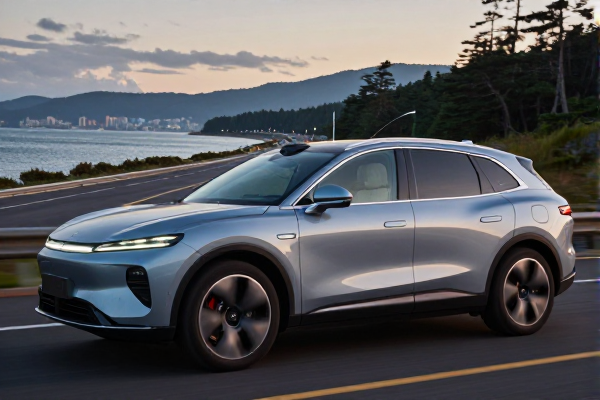
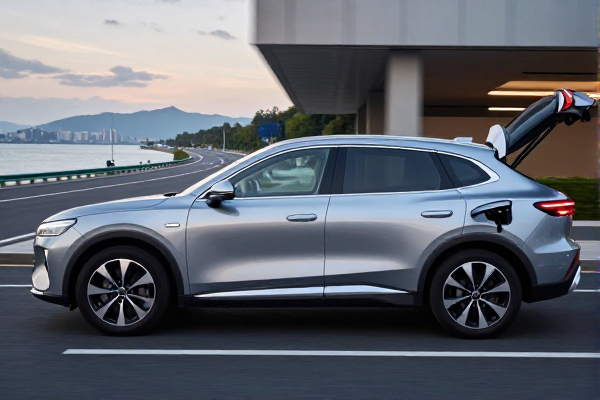
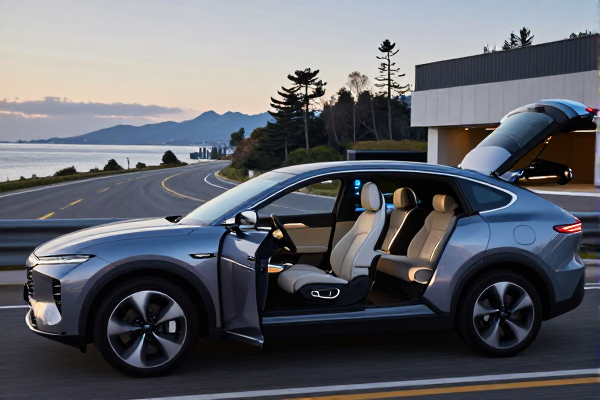
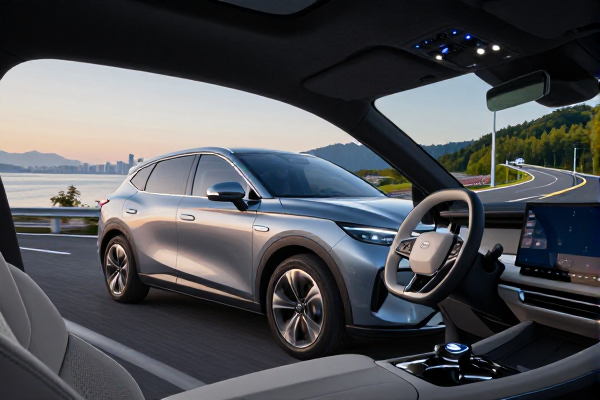
The Junior Elettrica is Alfa Romeo's entry-level EV: a 164.3-inch-long, five-door SUV with a sharp nose, 60.4-inch height, and a 100.9-inch wheelbase. Its 156 hp electric motor drives the front wheels through a single-speed gearbox, and the 51 kWh usable battery makes it a genuine city-and-commuter car. The Espace, by contrast, is a 186.9-inch-long midsize SUV with a 107.8-inch wheelbase and 7.1 inches of ground clearance. Its E-Tech Full Hybrid 200 system pairs a 1.2-liter turbocharged three-cylinder engine with electric motors through Renault's Multi-mode automatic gearbox, delivering a system output of 200 hp.
Both have five doors and five seats. Both ride on coil springs all around with disc brakes at every corner. That is where the mechanical similarities end.
Alfa Romeo originally introduced this car as the Milano, but Italian authorities objected to the badge because the plant that builds it is in Poland, not Milan. The model was quickly renamed Junior — a rear-wheel-drive coupe nameplate from Alfa's past. The Espace reaches further back: the original 1984 Espace reinvented the MPV for Europe, and the current model is a high-riding SUV that keeps the people-moving mission without the minivan looks. History doesn't decide a test drive, but it explains why the two brands talk about "family car" so differently.
The Alfa Romeo Junior Elettrica is not on the official US lineup. American Alfa dealers currently offer the Giulia, Stelvio, and the plug-in hybrid Tonale; the Junior would require dedicated DOT/EPA certification and a business case Alfa has not yet committed to. Renault left the United States in 1989 and has no official presence here today. Even enthusiasts who want to import one face the 25-year rule, which bars new cars from entering the US legally until they are a quarter-century old. So this comparison isn't a shopping tool for next weekend — it's a look at what's waiting on the other side of the Atlantic.
Neither figure in this comparison is a US price. The listed £34,031 starting point is a conversion of Czech market pricing — equal for both models in the original data — and at July 2025 rates it lands near $44,000. Read that as a European ballpark with taxes included, not an invoice you'll see in Chicago or New York. For context, Alfa's US-sold Tonale PHEV starts in the mid-$30,000s, which shows just how much the Junior's fully electric powertrain costs in Europe right now.
| Spec | Alfa Romeo Junior Elettrica | Renault Espace E-Tech Full Hybrid 200 |
|---|---|---|
| Body style / doors | SUV, 5-door | SUV, 5-door |
| Seats | 5 | 5 |
| Length / width / height | 164.3 / 70.1 / 60.4 in | 186.9 / 72.0 / 64.8 in |
| Wheelbase | 100.9 in | 107.8 in |
| Cargo volume | 400 L (14.1 cu ft) | 692 L (24.4 cu ft) |
| Curb weight | ~3,571 lb | ~3,688 lb |
| Powertrain | Electric, FWD, 1-speed | 1.2T 3-cyl + e-motor, FWD, Multi-mode auto |
| System output | 156 hp (115 kW) | 200 hp (147 kW) |
| 0–62 mph | 9.0 s | 8.8 s |
| Top speed | 93 mph | 108 mph |
| Efficiency | 15.1 kWh/100km (~139 MPGe) | 4.8 L/100km (~49 mpg US) |
| Electric range (WLTP) | 255 mi combined / 368 mi urban | N/A (self-charging hybrid) |
| Charging | 11 kW AC, 100 kW DC, heat pump | N/A |
| Towing (braked / unbraked) | Not rated / 0 kg | 1,600 kg / 750 kg |
The Junior Elettrica posts a WLTP combined range of 410 km, or about 255 miles, and 592 km — roughly 368 miles — in the urban cycle. That comes from a 54 kWh gross / 51 kWh usable lithium pack. Combined consumption of 15.1 kWh/100km equals about 4.1 miles per kWh and roughly 139 MPGe. AC charging runs at 11 kW through a Type 2 port; DC fast charging peaks at 100 kW via CCS, with the port at the rear left. A heat pump is fitted, which helps winter range, though vehicle-to-load is not offered.
The Espace's numbers are equally convincing for the anti-plug-in crowd: 4.8 L/100km combined, about 49 mpg in US measurement, with a 55-liter tank that makes highway stretches painless. The Multi-mode automatic — a clutchless, motor-assisted gearbox — lets the car creep, park, and crawl in pure electric mode at low speeds, then blends in the turbo three-cylinder without a traditional torque-converter feel. It's not a plug-in hybrid; there is no cable and no charging port for the hybrid system.
Both cars crack 62 mph in about nine seconds: 9.0s for the Junior, 8.8s for the Espace. Top speeds differ more clearly — 93 mph for the EV, 108 mph for the hybrid. Around town, the Junior's instant torque and 10-meter turning circle feel ideal. The Espace's 11-meter turning circle is still respectable for its length. Neither is a track tool, and both prioritize calm efficiency over drama; the differences live in everyday details like brake feel and body control.
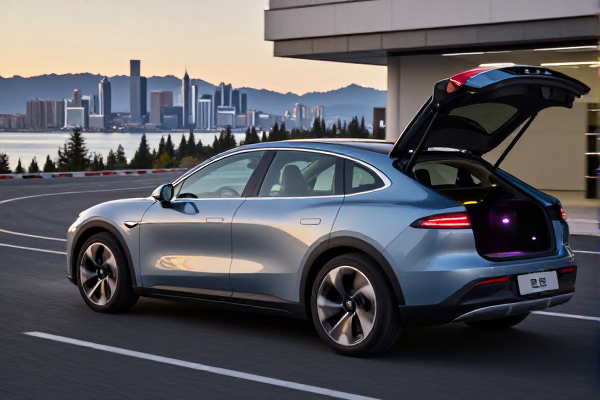
The Espace's 692-liter boot dwarfs the Junior's 400 liters. The Renault also takes trailers seriously: up to 1,600 kg braked (about 3,527 lb), 750 kg unbraked, plus an 80 kg roof load. The Alfa is not rated for towing, and its roof can carry only 50 kg. Curb weights are similar — roughly 3,571 lb for the Junior versus 3,688 lb for the Espace — but the Espace puts its mass into luggage space and trailer capability. Families with boats, bikes, or seasonal road trips will quickly notice the gap.
In Europe, the choice is lifestyle first: the Junior Elettrica wins for city drivers who can charge at home and want a stylish, emissions-free daily driver with a real 255-mile range; the Espace wins for everyone who needs to move more, tow more, and never think about a charging cable on a family trip. For US readers, neither car is orderable at a local dealer today. But the Junior shows where Alfa Romeo is likely heading in the electric era, and the Espace demonstrates the efficiency advanced self-charging hybrids can still deliver. Ask yourself which philosophy fits the next five years of your driving life — the answer is your winner.