Browse

Log in / Register
 Share

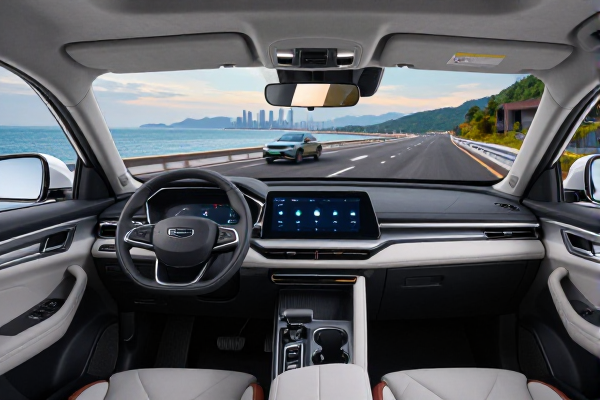
As of late October 2026, Geely Auto Australia's top product planner has delivered a clear message: the Chinese brand won't be following the local-tuning playbook favored by Hyundai, Kia and GWM. Instead, Geely says it will lean on European engineering talent from its parent group—led by Volvo and Lotus—rather than build a dedicated ride-and-handling operation in Australia.
Andrew Tuitahi, Geely Auto Australia's director of product planning and marketing, said the brand has no plans—at least for now—to rework suspension, steering, or powertrain settings specifically for Australian roads. His comment carries particular weight: before joining Geely, Tuitahi led Hyundai Australia's local ride-and-handling program.
"Not at this stage," he said when asked directly whether Geely would commission its own local tuning development.
The decision sets Geely apart from a wave of Chinese brands that treat "Australian tuning" as a badge of commitment. Hyundai, Kia, and GWM have all invested heavily in adapting vehicles for local conditions. Geely's counterargument is simple: the group behind it already owns enough engineering firepower to handle that work from overseas.
Local ride tuning has traditionally been seen as proof that an automaker takes Australia seriously. Coarse-chip bitumen, corrugated dirt roads and long-distance highway travel all punish poorly judged damping and steering calibration. That is why Hyundai built a dedicated Australian ride-and-handling program in the past, and why GWM has openly promoted its local testing and development work. By declining to do the same, Geely is deliberately choosing a different path—one that leans on group resources rather than onshore engineering teams.
"Certainly when we look at Geely Holding Group relative to some of the other Chinese brands, I think we're in a unique position," Tuitahi said. "Under our umbrella, we carry a lot of European brands that are well renowned for various disciplines, whether that be safety with Volvo, or things like ride and handling dynamics with Lotus."
Tuitahi did not completely close the door on Australian engineering involvement. "That's not saying that programs wouldn't take place here," he said. "But certainly, I think a lot of that engineering excellence could be deployed here and in other parts of the world to deliver a product that will perform well in Australia and wouldn't need to be done by us alone on-ground in full."
Where Geely is turning its attention to local feedback is in software. Earlier in 2026, the company pushed out over-the-air (OTA) updates that improved the usability of its driver-assist technology. Drivers can now choose a set of favorite assistant features, apply them as presets, and have the car restore those choices automatically every time it restarts—no more hunting through menu screens on each journey.
That focus on software is telling. As vehicle behavior becomes increasingly defined by code, the line between "local tuning" and "connected services" is blurring. Geely may not have engineers on the ground in Australia adjusting damper rates, but it can still react quickly to complaints about how its cars feel in daily use. In that sense, OTA updates have become Geely's substitute for the conventional local-engineering playbook.
The approach appears to be paying off commercially.
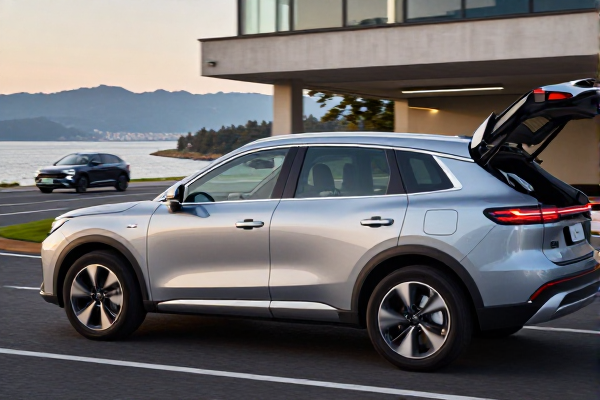
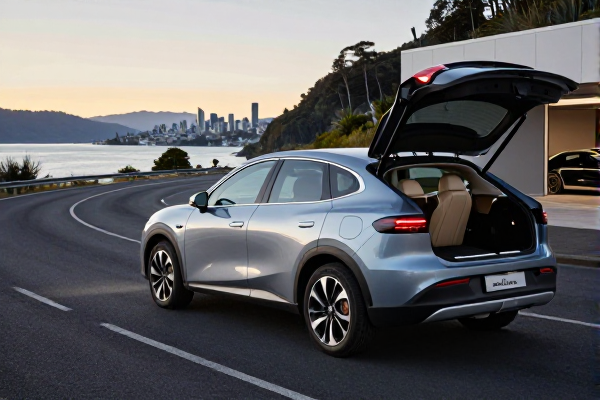
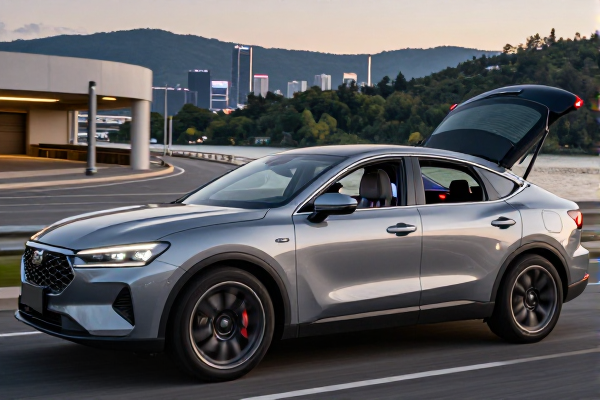
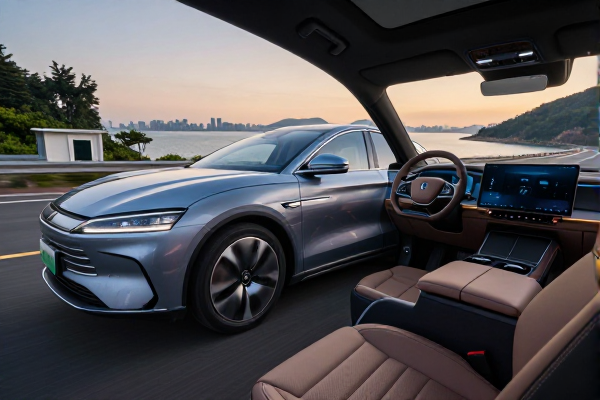
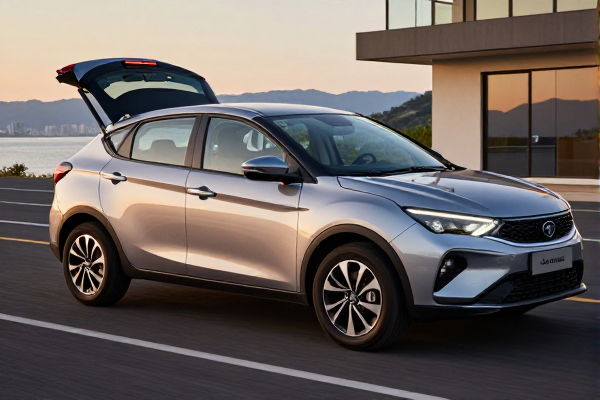
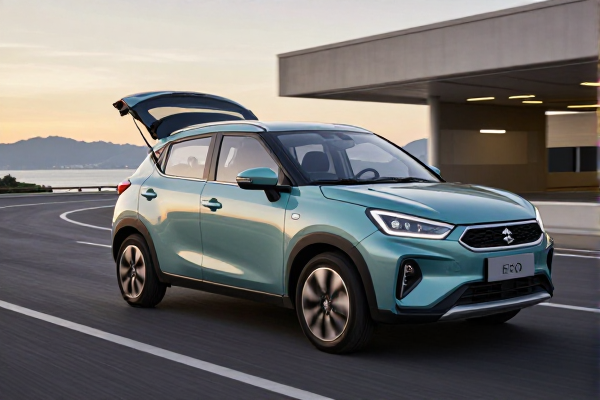
Geely has only been operating in Australia for 18 months. Its local lineup is compact: the EX5 electric mid-size SUV, the Starray EM-i plug-in hybrid mid-size SUV, and the recently launched EX2 budget electric hatchback. None of the three has been locally tuned, yet the brand climbed into the national top 10 for new-vehicle registrations in both August and September.
The achievement is all the more striking because Geely remains a small-scale player by dealer count. Rivals such as MG, GWM and BYD have deeper retail footprints in Australia, and several have been on sale for far longer. Geely has reached the top 10 with just three models and a fraction of the showroom network.
September was the strongest month yet. Geely registered 4,473 vehicles, a year-on-year leap of 870.3 percent. The EX5 led with 2,008 registrations, the Starray contributed 1,254, and the EX2 hit 1,211—enough to lead the passenger-car segment outright for the month.
The retail side is moving just as quickly. Geely recently opened its 100th Australian dealership and service point, and has confirmed plans to expand to 130 within six months. Much of that growth will target regional and rural areas, which aligns with the type of vehicles Geely is preparing to bring in.
The product pipeline is filling up fast. The Monjaro PHEV SUV—a five-seat model positioned above the Starray—lands in late 2026. In 2027, the Battleship 700 PHEV 4x4, possibly renamed for Australia, and the Emgrand L EM-i plug-in hybrid sedan are both scheduled to arrive.
Tuitahi confirmed the brand intends to widen its range considerably before the end of 2028. "We've got six in the next 12 months, a few more if we stretch that out to 18," he said.
He pointed to medium SUVs, plus larger SUVs positioned above the Starray and EX5, as the biggest near-term volume opportunity. He also acknowledged a smaller SUV in the Corolla Cross or Kona class, and a three-row family model comparable to the Toyota Kluger, Hyundai Santa Fe, or Mitsubishi Outlander. That three-row model could well be a localized version of the Geely M9 six-seater.
Unsurprisingly, pickups came up in the conversation. "Pickup truck is a big gap, and I can't speak to that right now," Tuitahi said, making clear he had more to say on the topic than he was allowed to share.
Geely has also been strengthening the models it already sells. The Starray EM-i is now available with an all-wheel-drive version, priced tens of thousands of dollars below established plug-in hybrid SUVs in its segment.
For U.S. observers, the Australian strategy offers a useful window into how Geely would approach North America if it eventually brought its own brand to the market. Chinese automakers still face significant tariff and regulatory hurdles in the United States, but Geely Holding is not a typical Chinese exporter. Its stable already includes Volvo, whose U.S. presence includes a South Carolina assembly plant, and Polestar, which sells vehicles across North America. Lotus, meanwhile, continues to expand its American showroom network.
That breadth of experience matters. Volvo's U.S. lineup, from the EX90 flagship to the compact EX30, highlights the group's scalable electric-vehicle architecture. Polestar, meanwhile, demonstrates how the same underlying technology can be tuned for sportier personalities. A future Geely-badged vehicle sold in the United States could draw on any of those building blocks without requiring a brand-new, market-specific development center.
That structure gives Geely an unusual option: it could leverage group-wide engineering talent for future U.S. models rather than paying for expensive local development programs. The same logic Tuitahi described for Australia—tap Europe's know-how, deploy it globally—would likely apply to a potential U.S. entry.
Tuitahi's message, in the end, was about efficiency. Australian buyers want well-sorted cars, he suggested, but they don't necessarily need them developed at a local engineering center. Geely's group talents can deliver the same result from anywhere. He added that Geely remains committed to making sure R&D teams get specification, technology and suitability right for Australian conditions—wherever those engineers are based.
Whether Geely eventually crosses into the American market remains an open question. Tariffs, certification costs and franchise laws all stand in the way. But the Australian roll-out indicates a brand that is learning fast, listening to feedback and growing quickly—while keeping its engineering eggs firmly in the group's global basket. For now, that strategy appears to be working.