Browse

Log in / Register
 Share

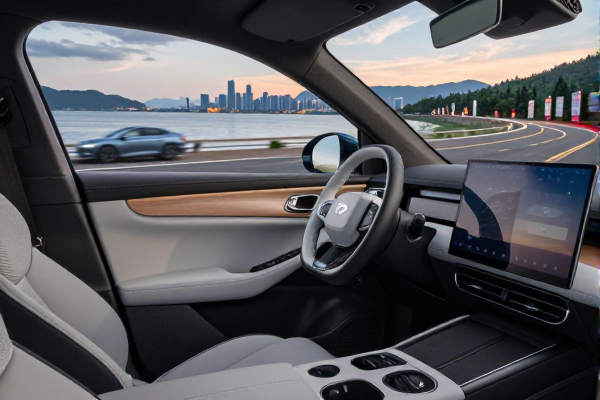
ACMobility is preparing its biggest public demonstration of an all-in-one electric vehicle ecosystem at the 14th Philippine Electric Vehicle Summit (PEVS), scheduled for Oct. 22–24 at the SMX Convention Center in Manila. The mobility firm said the showcase will combine vehicle brands, charging infrastructure, and digital services in one integrated experience—sending a clear signal that EV adoption in the Philippines has moved beyond isolated product launches.
As of May 9, 2026, executives say the company is focused on proving that “charging anywhere and driving everywhere” is possible today. The event will feature the full suite of ACMobility's solutions, from home charging installations to a nationwide network with more than 600 charge points.
ACMobility's display is built around the idea that no single EV component should work in a silo. Its strategy connects hardware, software, and services through four distinct offerings:
Greenstrum covers the starting point of EV ownership: professional charger installation, preventive maintenance, and local technical support for homes and businesses. The service is designed to eliminate the common “range anxiety” caused by unreliable home charging.
The Philippine EV Spine functions as the backbone of long-distance travel. According to ACMobility, the public charging hub network now spans more than 240 strategic locations, with over 600 charge points from Pagudpud in the north to Davao City in the south. As of the end of June 2026, that represents more than 40% of the country's total public charging network. Each hub provides AC and DC fast charging, with speeds up to 480 kW.
Power-on-Wheels is a flexible mobile charging fleet for roadside emergencies, events, and areas where permanent chargers are not yet viable. This gives the network an extra layer of resilience in a country made up of more than 7,000 islands.
Evro, the company's partner charging app, coordinates all of the above. With more than 100,000 registered users, Evro is currently the country's leading e-mobility service platform. Motorists can search for DOE-accredited chargers, plan routes, monitor charging sessions, and make digital payments across both ACMobility-operated and partner charging points.
“Through the Philippine EV Spine, our nationwide mobility infrastructure now connects drivers all the way from Northern Luzon down to Mindanao, proving that long-distance EV travel is a reality today,” said Carla Buencamino, ACMobility's Head of Mobility Infrastructure. “By combining home charging solutions, public hubs, mobile charging support, and a seamless digital experience via the Evro app, we are ensuring that EV drivers can truly charge anywhere and drive everywhere.”
Alongside infrastructure, ACMobility will showcase two global vehicle brands covering different market segments.
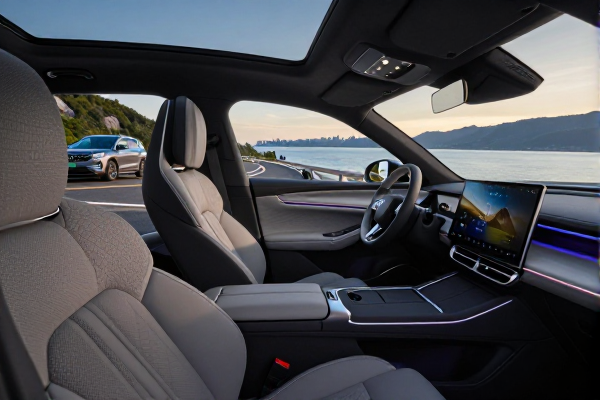
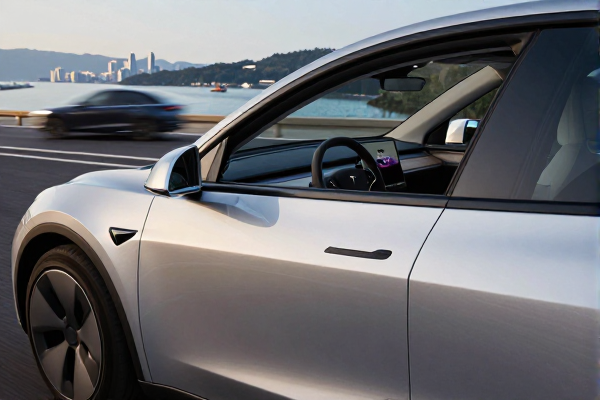
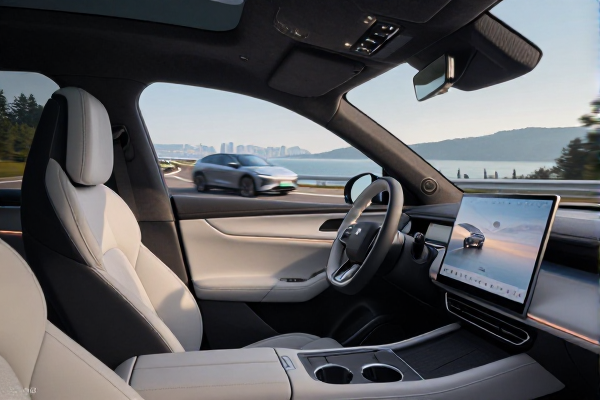
BYD brings accessible new-energy vehicles with advanced battery technology and a growing track record in safety. For the Philippine market, the brand is positioned as the practical bridge between conventional vehicles and full electrification.
Kia, meanwhile, represents the premium side of the portfolio. The company is highlighting the all-new Kia PV5 Cargo, a purpose-built electric commercial van designed for local logistics needs. The vehicle is aimed at business owners who want lower operating costs without compromising cargo space or reliability.
“At ACMobility, our mission has always been to make innovative and reliable mobility solutions accessible to more Filipinos,” said Jaime Alfonso Zobel de Ayala, ACMobility’s Chief Executive Officer. “We’re working toward that goal by expanding our charging network and offering vehicles from global brands such as BYD and Kia. Through these efforts, we hope to make modern mobility a part of everyday life for more Filipinos.”
PEVS takes place as Philippine policymakers refine their approach to EVs. The Electric Vehicle Industry Development Act underpins government ambitions to reshape transport, and national agencies have been working on charging standards. At the ACMobility exhibit, Department of Energy Director Patrick Aquino and Energy Secretary Sharon Garin were pictured alongside company leadership, illustrating the level of institutional support behind the network's expansion.
This public-private alignment is one reason the Philippine EV Spine has grown so quickly. It also helps build consumer confidence: a charging station that appears in the DOE-accredited directory is more likely to be trusted by drivers unfamiliar with EV technology.
The event itself is organized by the Electric Vehicle Association of the Philippines (EVAP), of which ACMobility is a member. EVAP serves as the industry platform for stakeholders across the automotive, energy, and technology sectors.
The Philippine EV market offers a useful roadmap for other countries with complex geography and growing urban congestion. The country's archipelagic structure makes charging infrastructure particularly difficult to plan. ACMobility's approach—combining fixed hubs, home installation, mobile charging, and software—shows how a private-sector player can fill gaps in areas where electricity grids and road networks remain uneven.
This is also an important moment for U.S. clean-tech investors and infrastructure firms. The Philippines is becoming one of Southeast Asia's more active markets for electric vehicle adoption, and the cross-brand strategy used by ACMobility mirrors the kind of public-private partnerships increasingly being tested in North America. By partnering with BYD and Kia, ACMobility demonstrates how global automakers and local operators can jointly lower the cost of entry.
The digital layer is another lesson. The Evro app does more than simplify payments; it generates data that helps operators decide where to install the next charging station. In an archipelago, that kind of insight is essential to expanding without building unused capacity. Data-driven charging placement will likely become a defining feature of mature EV markets, including the U.S. as federal charging programs begin to scale.
PEVS 2026 will be held at SMX Convention Center Manila from Oct. 22 to 24. Visitors can explore ACMobility’s charging infrastructure display, see the BYD and Kia lineups, and test-drive the latest electric vehicle models. The company will also show how the Evro app works in real time across its network.
For those unable to attend, ACMobility has directed interested drivers to its website at https://www.acmobility.ph/ for information on charging locations, vehicle availability, and partnership opportunities.
As Southeast Asia accelerates toward cleaner transport, ACMobility's largest showcase yet promises to underscore one key point: electric mobility is no longer a niche experiment, but a connected system ready for mass adoption.