Browse

Log in / Register
 Share

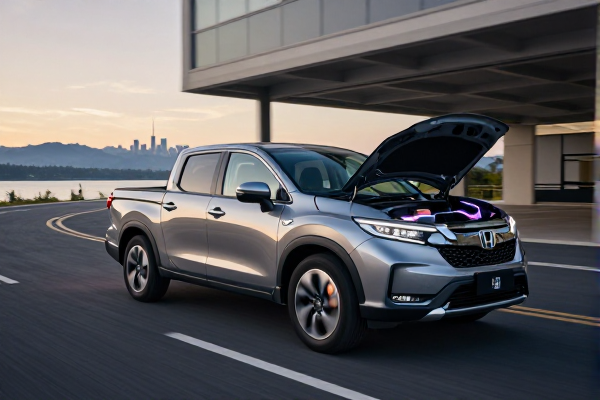
As of April 27, 2026, Honda has not confirmed anything about the Ridgeline’s future. But the signals are consistent: the current truck is winding down, and a significantly updated successor is planned for the 2029 model year. According to a recent supply-chain report, Ridgeline production will stop in the fourth quarter of 2026 and restart in the third quarter of 2028. That means a short production gap, much like the one that separated the first and second generations.
The revised timeline makes sense. Honda is dealing with a lot at the moment: financial losses, a reduced EV lineup, and new emissions rules. Keeping the Ridgeline alive on the current platform lets Honda preserve a profitable product without funding a clean-sheet design. Here’s everything we know about what’s coming, and what may still change.
Honda has used the Ridgeline name since the truck debuted in the 2006 model year. The first generation used a 3.5-liter V6 with 255 horsepower and a 5,000-pound towing rating. When that truck ended, Honda paused production for the 2015 and 2016 model years before the current second-generation truck arrived for 2017.
There is no reason to expect a name change now. The Ridgeline has stronger brand recognition than any alternative Honda could dream up, and the “Ridgeline” name still shows up in trademark filings and company documents. If anything, Honda may push the TrailSport trim harder. The TrailSport version, added for 2024, has become the visual and lifestyle flagship of the lineup, and it gives the Ridgeline some much-needed attitude in a segment dominated by tough-looking trucks.
The next Ridgeline will not be a clean-slate redesign. It will ride on the existing PF7 platform, which is shared with the Pilot and Passport. That means the general proportions and body structure will stay familiar. But Honda will give the truck a full styling makeover.
The most obvious cues should come from the refreshed Passport, which has been a sales success for Honda, especially with the TrailSport treatment. Expect a squared-off nose, a slimmer grille, rectangular headlights, red recovery hooks, a skid plate, and a more aggressive lower bumper. The rear should also borrow the Passport’s tall T-shaped taillights.
In other words, the next Ridgeline could look like a Passport pickup. The bed itself is likely to keep the dual-action tailgate and the in-bed trunk, because those features are the Ridgeline’s calling cards. Nobody else offers a lockable storage bin built into a pickup bed, so Honda would be foolish to drop it.
The current Ridgeline uses Honda’s 3.5-liter J35Y6 V6, which produces 280 horsepower and works with a nine-speed automatic. That engine has been around for a long time, and it is showing its age. Stricter emissions regulations are pushing Honda to update it.
Honda already has the J35Y8 V6 in the Pilot and Passport. That engine makes 285 hp and uses dual overhead cams instead of the older single-cam design. It also drops VTEC. The Ridgeline could switch to a version of this newer engine, or at least adopt some of its tech.
There is also a new V6 under development for Honda’s next hybrid system. That engine is expected to appear in a production vehicle before the updated Ridgeline goes into production, so it is tempting to think the pickup could get a hybrid option. Don’t bet on it yet. Honda has said very little about a Ridgeline hybrid, and the refreshed truck may not even get the fully new engine. A safer prediction: the Ridgeline will use a revised version of the current V6, tuned for lower emissions, and it will almost certainly trade its nine-speed transmission for the 10-speed automatic already found in the Pilot and Passport. That is a meaningful improvement, because the 10-speed shifts faster and is smoother under load.
The PF7 platform has served the Ridgeline well. It is a unibody structure with fully independent suspension, which is why the Ridgeline drives more like a crossover than a traditional body-on-frame pickup. That’s a feature, not a bug, for anyone who uses a truck as a daily driver.
Honda will likely make structural upgrades to the platform to improve safety scores, reduce noise, and keep the truck competitive with newer rivals. But the fundamental premise remains: a comfortable, all-wheel-drive pickup with a 5,000-pound towing capacity and a 1,500-pound payload rating. There is no sign Honda plans to chase the Tacoma or Ranger extreme off-road crowd with a solid rear axle.
The current Ridgeline’s interior is practical but dated. The refresh should fix that. Buyers can expect a larger touchscreen, a digital instrument cluster, and the latest version of Honda Sensing—including adaptive cruise control, lane keeping assist, blind-spot monitoring, and traffic jam assist.
The TrailSport trim, in particular, is likely to become the tech showcase. Honda has been putting more standard driver-assistance features into its crossovers, and the Ridgeline needs to keep up with the Tacoma and Ranger, which have both raised their interior game in recent years. A nicer cabin won’t turn the Ridgeline into a luxury truck, but it will close a gap that has started to show.
If production restarts in the third quarter of 2028, the reveal will probably happen sometime in 2027 at the earliest. Honda could wait until late 2027 or early 2028 to unveil the truck, with deliveries starting shortly after. The truck would be badged as a 2029 model.
That timeline sets up a strange situation. The current Ridgeline will effectively be sold through late 2026, then the model disappears from showrooms for roughly a year and a half. Honda did this before between the first and second generations, so it is not unprecedented. But it does mean anyone wanting the current truck should not wait too long.
The current Ridgeline is not cheap. The 2026 Sport starts at $42,290, including destination. The TrailSport costs $46,490, and the Black Edition tops out at $49,390. Those numbers put the Ridgeline at the upper end of the mid-size class, above the base Ranger, Tacoma, Colorado, and Frontier, all of which start in the low- to mid-$30,000 range.
Don’t expect the refreshed truck to get any cheaper. The updated Ridgeline will likely start around $45,000, with TrailSport versions creeping toward $50,000. That sounds steep, but the Ridgeline has always sold on comfort, refinement, and clever practicality rather than price. Honda knows that, and it positions the truck as a premium alternative, not a value pick.
The competition, though, is getting hotter. Ram is reportedly working on a Dakota revival, and Hyundai is planning a Santa Cruz replacement. Both will target the same non-traditional truck buyers the Ridgeline has owned for years.
This refresh is not the third-generation ground-up overhaul some people hoped for. It is a comprehensive mid-cycle-plus treatment: new looks, updated powertrain, newer transmission, and likely a nicer cabin with Honda’s latest digital displays and driver-assistance technology. The next Ridgeline will still share its bones with the Pilot and Passport.
Given Honda’s current financial trouble and its recent decision to cancel several planned EVs, the Ridgeline refresh is a conservative move. It allows Honda to keep a solid profit center alive without committing billions to a new truck platform. Whether that’s enough to keep buyers interested in 2029 is another question. But all signs point to the Ridgeline returning, and it should be a genuinely better truck when it does.