Browse

Log in / Register
 Share

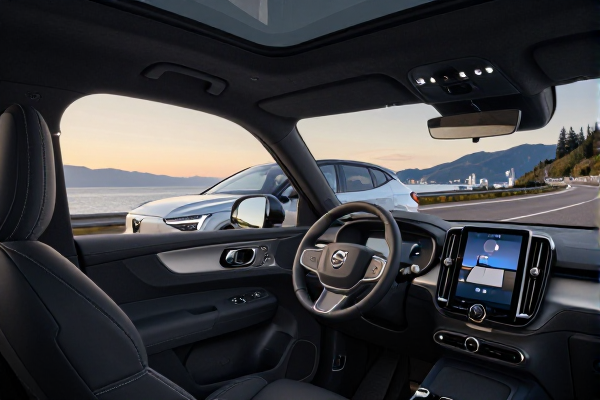
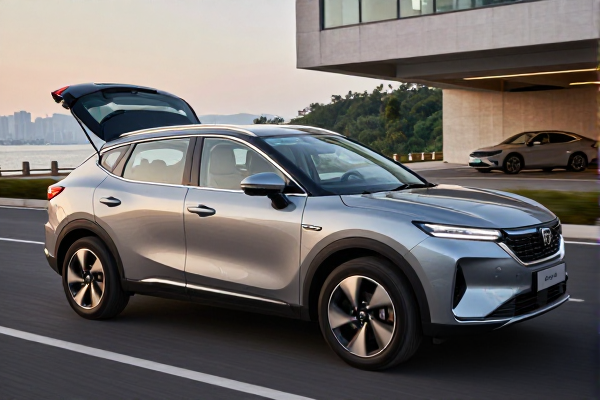
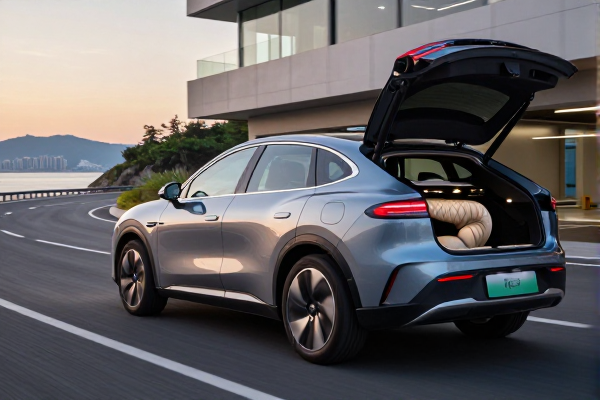
As of May 13, 2026, Volvo is carrying the EX40 into 2027 as a fully electric compact SUV. The lineup consists of three battery-electric drivetrains: two rear-wheel-drive single-motor versions and one all-wheel-drive twin-motor flagship. Together they cover a power spread from 175 kW (238 hp) to 300 kW (408 hp), and every variant carries a zero tailpipe-emissions rating.
The EX40 is the newer naming for Volvo’s electric compact SUV, which some markets previously knew as the XC40 Recharge. For anyone researching the 2027 model, the main story is not under the hood but under the floor. There is no petrol engine, no diesel, and no manual gearbox. What Volvo offers is a clean slate of electric motors, two battery choices, and two drive layouts.
In this guide:
The current specification sheet lists three versions. “Automatic” on an EV means a single-speed reduction gearbox. The base car is rear-driven, the top car uses two motors for all-wheel drive, and all versions are rated at 0 g/km CO₂.
| Variant | Power | Drive | Gearbox | Battery | WLTP range |
|---|---|---|---|---|---|
| Single Motor | 175 kW (238 hp) | Rear-wheel drive | Automatic (single-speed) | 70.0 kWh | 477 km (~296 mi) |
| Single Motor Extended Range | 185 kW (252 hp) | Rear-wheel drive | Automatic (single-speed) | 82.0 kWh | 575 km (~357 mi) |
| Twin Motor AWD | 300 kW (408 hp) | All-wheel drive | Automatic (single-speed) | 82.0 kWh | 537 km (~334 mi) |
The table confirms the EX40 is not a one-size-fits-all EV. Volvo is deliberately separating buyers by range, performance, and traction. The Single Motor is the entry point, the Extended Range is the distance specialist, and the Twin Motor is the performance version.
Because the EX40 is electric, the “automatic gearbox” is not a conventional transmission with multiple gears. Most EVs, including Volvo’s, use a single-speed reduction unit. There are no clutch shifts or gear changes; the electric motor simply spins across a wide rpm range, and the software controls torque delivery.
That simplicity has real-world benefits. It makes the powertrain quieter, reduces moving parts, and lowers maintenance compared to internal-combustion models. It also means the difference between the three EX40 versions is chiefly about motor count, battery capacity, and drive configuration rather than mechanical complexity.
Battery capacity is the biggest differentiator between the base car and the rest of the range. The entry-level Single Motor uses a 70.0 kWh pack, while both the Extended Range and Twin Motor AWD use an 82.0 kWh pack.
The database does not yet list separate gross and net figures for the 2027 model, so the kWh values should be treated as the official Volvo figures from the specification card. What matters for drivers is the WLTP range estimates:
Those are useful reference points, but U.S. buyers should not expect the same numbers on an EPA label. WLTP is run on a more favorable cycle, and the EPA’s testing tends to produce lower range figures. Until Volvo releases official EPA numbers for the 2027 model, the WLTP values are the best comparative measure we have.
Comparing the base Single Motor with the Single Motor Extended Range is instructive. The power increase is only 10 kW, from 175 to 185 kW, yet the range jumps by about 98 km. That tells us the Extended Range’s bigger battery is doing the heavy lifting, not a dramatically stronger motor.
For most people, the Extended Range is the version that removes range anxiety. It adds roughly 60 miles of WLTP range over the base car, while staying in a rear-wheel-drive layout that is efficient and easy to live with. The extra battery capacity also gives the car more flexibility for highway driving and cold-weather use.
If you take the Twin Motor AWD instead, you gain a second motor on the front axle, all-wheel drive, and a large power jump to 300 kW (408 hp). The cost is a shorter WLTP range than the Extended Range: 537 km versus 575 km, about 38 km less. That is the classic trade-off between performance and efficiency.
For now, the 2027 EX40 specification summary does not include AC and DC charging figures. That makes it harder to benchmark the car against rivals on charging speed. Charging time depends on onboard charger size, DC peak rate, and battery thermal management, so this information matters just as much as range.
Buyers who plan to rely on public fast chargers should wait for Volvo to publish the full charging curve. The range numbers tell us what the battery can hold, but not yet how quickly it can be refilled.
The EX40 competes in the compact premium electric SUV segment, sometimes called lower medium class in European market data. The comparison universe currently includes 98 electric drivetrains, with an average output of 163.5 kW.
For 2027, the EX40’s average output across its three versions is 220 kW, which is about 34.6% higher than the segment average. Even the base Single Motor is stronger than the average competitor, and the Twin Motor outperforms the class norm by roughly 84%.
| Parameter | 2027 EX40 | Segment average |
|---|---|---|
| Average power | 220.0 kW | 163.5 kW |
| Average kerb weight | Not published | 1,887 kg |
| Power-to-weight ratio | Not published | 85.4 kW/t |
The segment average curb weight is 1,887 kg, and the average power-to-weight ratio is 85.4 kW/t. Volvo has not yet published the EX40’s kerb weight in the current spec sheet, so a precise power-to-weight comparison is impossible right now. We can say with confidence, though, that the EX40 is well above average in output.
The same specification sheet leaves some data blank for 2027. Towing capacity, kerb weight, and heat pump details are not confirmed yet. That is not unusual this early in the model cycle; final homologation data often appears closer to the on-sale date.
Buyers who need a specific payload figure or a braked towing limit should hold off until Volvo updates its technical documentation. For an electric SUV in this class, towing capability is typically modest, but we won’t fill that gap with speculation here.
Volvo’s EV lineup has generally behaved well in owner surveys, but the 2027 EX40 is too new for meaningful long-term failure data. The best source of current information is the dedicated EX40 reliability breakdown in our database. It compares known faults, age-related trends, and owner-reported issues against the model’s main rivals.
For drivetrain-level decisions, remember that the base and Extended Range versions share a rear motor, while the Twin adds a second front motor. That means the Twin has more moving parts and more software complexity, although it also has redundant motor hardware.
If you want the most efficient and longest-range EX40 for 2027, choose the Single Motor Extended Range. It has the biggest battery, the best WLTP range, and still gets rear-wheel-drive handling with enough power for daily driving.
If you want the full performance experience, the Twin Motor AWD is the one to buy. You give up some range but gain 115 kW (154 hp) and all-wheel-drive traction. The base Single Motor remains a strong entry EV for city and regional use, especially if the lower price matters more than the extra range.
All three versions keep the EX40 firmly electric, and none of them will surprise you with a fuel bill or a gear lever. For the latest updates on charging times, U.S. pricing, and official EPA figures, keep an eye on the Volvo EX40 model page and our specification comparator.