Browse

Log in / Register
 Share

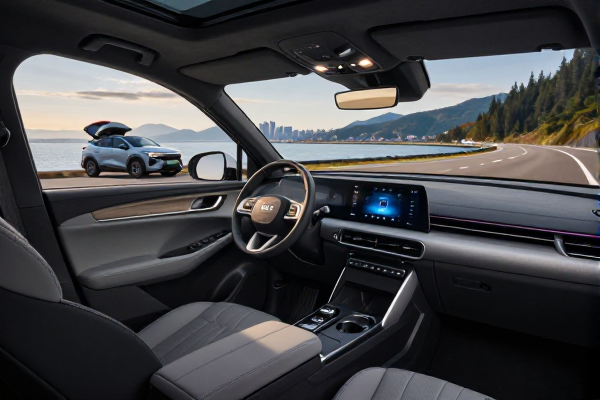
As of May 9, 2026, the 2026 Kia Sorento HEV is one of the more straightforward hybrid three-row crossover lines to shop. There are only three trims — LX, EX, and SX — and every one of them uses the same gas-electric powertrain, standard all-wheel drive, and identical safety foundation. The real shopping question is simple: how much interior comfort and tech are worth to you. With a price spread of $12,300 between base and top trim, the answer can cost thousands.
The mechanical package doesn't change as you move up the trim ladder. Every 2026 Sorento HEV is powered by a 1.6-liter turbocharged four-cylinder engine paired with a 44-kW electric motor and a 1.49-kWh lithium-ion battery. Total system output is 227 horsepower at 6,400 rpm and 258 lb-ft of torque at 5,200 rpm, sent through a six-speed automatic transmission to an all-wheel-drive system that's standard on every trim.
That means performance, towing capacity, and fuel economy are effectively trim-neutral. Published figures work out to roughly 33 mpg combined, with city/highway estimates near 33/35 mpg. Kia also claims a total driving range of about 595 miles from a 67-liter fuel tank. Towing capacity stays at 1,202 pounds regardless of trim, and the hybrid never asks you to choose between a cheaper trim and a weaker drivetrain.
The Sorento HEV is a six-seater with 2+2+2 captain's chair seating, and the third row is standard across the range. Interior room is the same in all trims: 41.4 inches of front legroom, 40.7 inches of rear legroom, and just under 66.7 inches of overall height.
Cargo space also holds steady. You get 12.6 cubic feet behind the third row, 45.0 cubic feet with the third row folded, and 75.5 cubic feet with the second and third rows down. If your priority is hauling people and gear, the base LX gives you the same usable space as the loaded SX.
Kia doesn't gate its core safety tech behind expensive packages. All three trims include nine airbags, forward collision avoidance, blind-spot monitoring, lane departure warning, rear cross-traffic alert, roll stability control, hill start assist, and a tire pressure monitoring system. The published crash-test picture is strong across the board, with Good ratings in the moderate-overlap and small-overlap front tests and essentially equal structural performance among trims.
Warranty coverage is also identical. The full new-vehicle package applies to every Sorento HEV, and there's no extended coverage reward for buying a higher trim. From an ownership-cost standpoint, you're paying extra for features — not for extra mechanical reliability or safety assurance.
The base LX is more generously equipped than many buyers expect. Standard items include 19-inch alloy wheels, roof rails, keyless entry and start, dual-zone automatic climate control, heated front seats, a remote-release liftgate, and a six-speaker audio system with Apple CarPlay and Android Auto.
What the LX doesn't have are some of the creature comforts that matter to daily drivers. There's no heated steering wheel, no wireless charging pad, no navigation, no sunroof, and no power hands-free tailgate. Seat upholstery is cloth, and the infotainment screen is the smaller 4.0-inch touchscreen. You also get an analog instrument cluster rather than the full digital display found on the SX.
For a family that mainly wants a hybrid AWD three-row with strong safety ratings, the LX is the honest value pick. It still gets the same hybrid efficiency, cargo capacity, and safety technology as the most expensive version.
Moving to the EX adds $2,700, bringing the price to $46,395. That purchase gets you synthetic leather upholstery, heated steering wheel, wireless device charging, a hands-free power liftgate, and a few interior convenience upgrades. It's a meaningful step up in daily comfort for a relatively modest price increase.
But don't assume the EX gives you the full modern infotainment experience. The EX still uses the same 4.0-inch touchscreen as the LX. There's still no embedded navigation, no sunroof, no premium audio, and no upgraded digital instrument panel. The EX is best described as a comfort-trim upgrade rather than a technology-trim upgrade.
If the small touchscreen is a dealbreaker, the EX could be frustrating despite its otherwise solid feature list. If you can live with phone projection through Apple CarPlay or Android Auto, the EX is likely the best balance between cost and refinement for most households.
The SX is the big jump: $55,995, or $9,600 above the EX and $12,300 above the LX. This trim is where Kia fills in all the missing technology and premium amenities.
The SX swaps the small display for a 12.3-inch touchscreen, adds embedded navigation, and upgrades the audio to a 12-speaker Bose system with surround sound. It also adds a sunroof, leather seating surfaces, ventilated and power-adjustable front seats, driver's seat memory, heated second-row captain's chairs, rain-sensing wipers, and a camera-based rearview mirror.
The instrument cluster changes to a TFT digital screen, and the SX gets what feels like a completely different cabin ambience. If you want the Sorento HEV to feel genuinely upscale, the SX delivers it. But it does not deliver more towing capability, more cargo room, better fuel economy, or stronger crash protection than the LX.
Looking at the trim gaps puts the value discussion into perspective. Moving from LX to EX is a modest $2,700 and brings real comfort upgrades. Moving from EX to SX is a $9,600 jump and mostly buys luxury extras.
Financially, that SX premium adds up quickly. On a 72-month loan at around 6.5 percent APR, the difference between EX and SX is roughly $160 per month before taxes and fees. Higher trim levels also typically cost more to insure and register in many states. Over a five-year ownership period, you're not just paying the window sticker premium — you're paying it every month.
That doesn't mean the SX is a bad buy. If you plan to keep the SUV for a long time and genuinely use the navigation, sunroof, ventilated seats, and premium audio, the comfort return can be worth it. But if you're buying the SX mainly for badge status or a bigger screen, it's a costly way to get there.
For most practical buyers, the EX is the sweet spot. It adds the daily convenience items you'd miss on the LX — heated steering wheel, wireless charging, synthetic leather, hands-free liftgate — without forcing you into the SX's steep price jump. The 4.0-inch touchscreen is the main weakness, but smartphone projection covers most needs.
The LX remains the smartest pick for value-focused shoppers who care more about the hybrid drivetrain, safety, and cargo space than about cabin trimmings. It's a legitimate family SUV at the lowest entry price.
The SX is the choice only if you want the full premium experience and understand that $12,300 over the base buys pampering, not capability. There's no mechanical difference to justify the spend. The 2026 Sorento HEV is one of those rare lineups where the base model is genuinely capable, the mid-level is genuinely sensible, and the top trim is genuinely optional.
Before you choose, get the exact out-the-door price for each trim, because dealer markup, destination charges, and regional fees can shift the comparison. The published MSRPs are the starting point; the final number is where the real value decision gets made.