Browse

Log in / Register
 Share
Share
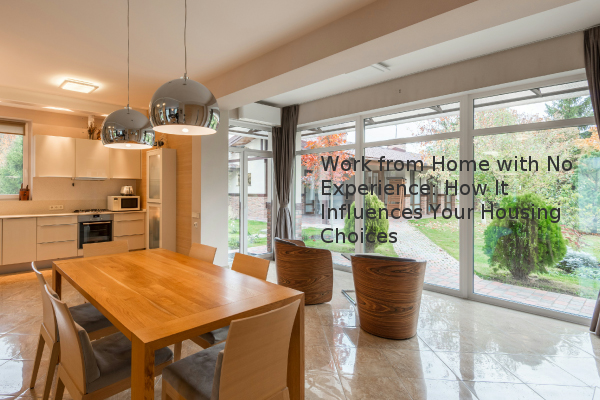
For individuals seeking to work from home with no prior experience, the primary impact on housing is a significant increase in location flexibility and a re-prioritization of home features, such as the need for a dedicated office space. This shift allows for consideration of more affordable housing markets outside major metropolitan areas. However, it also introduces new financial considerations, as income stability may be different from traditional employment. This guide outlines the key housing-related factors to assess when your career is remote and new.
The first step is to realistically evaluate your potential income. Jobs that allow you to work from home with no experience often include roles like customer service representative, data entry clerk, or virtual assistant. While these positions offer flexibility, starting salaries can vary. Creating a conservative budget based on verifiable income is crucial before making any long-term housing commitment. You must account for all housing costs, including mortgage or rent, Property Tax (a levy imposed by a government on a property owner's holdings), utilities, and Homeowners Association (HOA) fees if applicable. Lenders will scrutinize your income history, so a shorter track record may affect mortgage approval amounts. It's advisable to base your housing budget on a stable, confirmed income rather than projected earnings.
The ability to work from home with no experience fundamentally alters the calculus of location. You are no longer geographically tied to a specific employer's office. This freedom enables you to explore housing in regions with a lower Cost of Living, which is the price level for goods and services in a given area. You might consider suburbs, smaller cities, or even rural areas where your budget can secure more space. However, this decision requires research. Prioritize locations with reliable, high-speed internet infrastructure, as this is your essential connection to work. Additionally, consider proximity to amenities, community vibe, and potential for future resale value, even if a daily commute is eliminated.
When your home is your workplace, its layout becomes a professional necessity. A dedicated office space is no longer a luxury but a requirement for productivity and work-life balance. When searching for a rental or a property to buy, prioritize layouts that can accommodate a quiet, distraction-free workspace. This could be a spare bedroom, a finished basement, or a well-converted alcove. Assess the natural light, electrical outlets, and door for privacy. For those in smaller apartments, creative solutions like room dividers can help define a work zone. Investing in a functional home office setup directly supports your ability to succeed in a work-from-home role with no experience.
| Housing Consideration | Key Questions for Remote Workers |
|---|---|
| Budget & Affordability | Is my income stable? How does my Debt-to-Income (DTI) ratio look to a lender? |
| Location & Community | Does the area have reliable internet? Does the community fit my lifestyle? |
| Property Features | Does the layout allow for a dedicated, productive office space? |
Transitioning to a work-from-home role with no experience can be a strategic move for long-term financial health, largely through housing savings. Relocating to a more affordable area can free up significant capital for savings, investments, or paying down debt. However, it's vital to approach this with caution. Rushing into a home purchase without a stable income history can be risky. Renting for a period to ensure the remote career and location are a good fit is often a prudent strategy. This allows you to build up your experience and savings before taking on the long-term responsibility of a mortgage.
In summary, successfully integrating a work-from-home career with your housing plans requires a methodical approach. Focus on verifying income stability, prioritizing reliable internet and a functional office space, and carefully selecting a location that aligns with both your budget and lifestyle goals. This calculated strategy maximizes the benefits of remote work while minimizing financial risks.