Browse

Log in / Register
 Share
Share
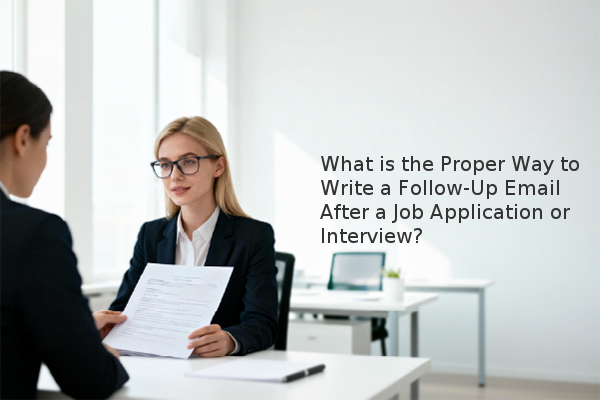
Sending a well-timed, professional follow-up email after applying for a job or completing an interview can significantly increase your visibility and reinforce your candidacy. Based on our assessment experience, the optimal time to send a follow-up is 1–2 weeks after applying or 1 business day after a stated decision timeline has passed post-interview. The email must be concise, value-driven, and respectful of the hiring manager's time.
A follow-up email is more than a reminder; it's a strategic touchpoint in the candidate screening process. It serves to reaffirm your enthusiasm, highlight key qualifications that may have been missed, and demonstrate proactive communication skills—a trait highly valued in any role. When done correctly, it can positively influence your talent retention rate in the hiring pipeline. However, a poorly executed follow-up can have the opposite effect, making timing and tone critical.
Crafting an effective email requires a balance of professionalism and persuasion. Each element, from the subject line to the call to action, must be intentional.
A Clear Subject Line: The subject line should immediately signal the email's purpose. For an application follow-up, use a format like "Follow-Up: Application for [Job Title] - [Your Name]". For a post-interview thank you, "Thank You - [Job Title] Interview on [Date]" is effective.
Polite Context and Purpose: Open by politely stating your reason for writing. Remind the recipient of your interaction (e.g., "I recently applied for the X position on [Date]" or "Thank you again for the informative conversation on Tuesday"). This provides immediate context.
Reinforcement of Your Value: This is the core of your message. Briefly connect one or two of your most relevant skills or accomplishments directly to the role's requirements. For example, "During our interview, we discussed the challenge of [specific challenge]. My experience in [relevant skill] at my previous role led to a [quantifiable result], and I am confident I can bring similar success to your team."
A Subtle Call to Action (CTA): Conclude with a polite request for the next step, such as, "I am eager to learn more about the next steps and am available to provide any further information." This encourages a response without being demanding.
Professional Closing: End with a standard closing like "Best regards" or "Sincerely," followed by your full name and phone number.
The entire message should be brief enough to be read in under 30 seconds. Hiring managers often review hundreds of emails; respect for their time is paramount.
Timing is a crucial aspect of recruitment process optimization from the candidate's perspective. Sending an email too early can seem impatient, while sending it too late may cause you to be forgotten. The following table outlines general guidelines based on common scenarios.
| Scenario | Recommended Waiting Period | Key Consideration |
|---|---|---|
| After Submitting an Application | 1 - 2 weeks | This allows the hiring team sufficient time to conduct an initial review of applications. |
| After a First Follow-Up (No Response) | 3 - 5 business days | A single, polite follow-up to your first email is acceptable. If there's still no response, it's best to move on. |
| After a Job Interview | Within 24 hours for a thank-you note; 1 business day after the stated decision date for a check-in. | Always adhere to the timeline provided by the interviewer. If no timeline was given, waiting 1-2 weeks is standard. |
The tone and content of your follow-up should be tailored to the situation. A one-size-fits-all approach is less effective.
In summary, the key to a successful follow-up email is to be timely, relevant, and respectful. A well-crafted follow-up reinforces your value and keeps you at the forefront of the hiring manager's mind without creating unnecessary pressure. By focusing on what you can offer rather than what you want to receive, you make a positive and lasting impression.