Browse

Log in / Register
 Share

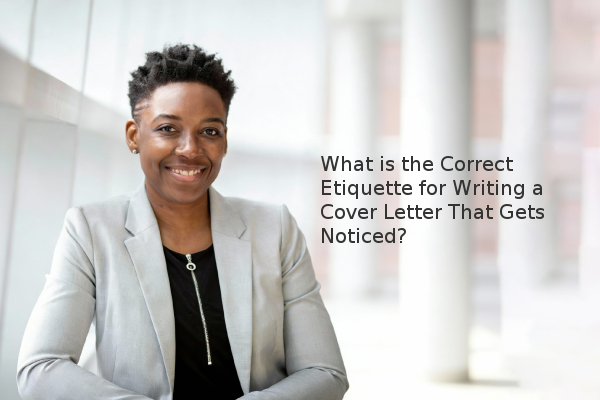
A well-written cover letter, following proper business etiquette, is a critical tool for landing job interviews. It is not an optional formality but a strategic document that, when concise, personalized, and employer-focused, significantly increases your chances of your resume being read. The most effective cover letters shift the focus from what you want to what you can do for the employer.
The first rule of cover letter etiquette is to always send one. Even if a job posting does not explicitly request it, omitting a cover letter is a missed opportunity. Based on standard hiring manager assessments, a resume submitted without a cover letter can appear lazy or disinterested. This document is your chance to provide context, showcase your personality, and make a compelling sales pitch before the hiring manager even reviews your qualifications. It is a fundamental part of professional business communication.
Hiring managers often screen hundreds of applications, so brevity is essential. Your cover letter should be a quick, impactful read, ideally three to four short paragraphs. Avoid dense blocks of text; any paragraph longer than seven lines should be broken up. For email applications, this is even more critical due to on-screen readability. However, conciseness does not mean being terse. A one-line message like "Please see my attached resume" fails the etiquette test. A strong cover letter can be both brief and convincing, highlighting your most relevant achievements directly tied to the job's requirements.
While a resume is a formal record of your experience, a cover letter allows you to reveal your professional character. The goal is to strike a balance between friendly and formal. You want to seem like a person someone would want to work with. Appropriate use of a conversational tone, or even mild, professional humor, can help you build a connection with the reader. The key is to remain respectful and focused on demonstrating that you are not only qualified but also a good cultural fit for the team.
Generic salutations like "To Whom It May Concern" signal a lack of effort. Whenever possible, address your letter to a specific hiring manager by name. If the name isn't in the job posting, invest time in research. You can call the company's main line (respecting "no calls" instructions) and politely ask the receptionist for the hiring manager's name for the specific role. This simple step shows initiative. Furthermore, personalization extends to content. Research the company's current projects, challenges, and goals. Then, frame your skills as solutions to their specific needs, which leads to the next critical point.
A common mistake is writing a cover letter filled with "I" and "my" statements. The most compelling letters flip this perspective. Instead of listing what you hope to gain, demonstrate what you can deliver. For example, if the employer seeks someone to improve team efficiency, don't just say "I want to develop my leadership skills." Instead, state, "My experience in implementing new project management software increased my previous team's productivity by 15%, and I am confident I can achieve similar results for your department." This approach proves your value directly.
A cover letter with typos or grammatical errors is often immediately discarded, as it signals carelessness. Always proofread your letter meticulously before sending. If proofreading isn't your strength, ask a detail-oriented friend or colleague to review it. Pay special attention to the hiring manager's name, the company name, and any specific details mentioned in the job ad. If you are customizing a template, double-check that you have removed all placeholder text like "[Insert Company Name Here]" to avoid embarrassing mistakes.
Following these cover letter etiquette rules requires extra effort, but the reward—more interview invitations—is undeniable. By being concise, personal, and employer-centric, you transform your application from a simple resume into a powerful personal introduction.