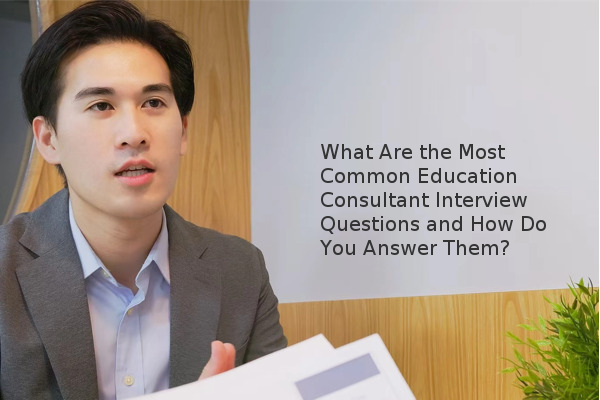
Securing a role as an education consultant hinges on effectively demonstrating your expertise during the interview. Interviewers are primarily assessing your knowledge of educational trends, problem-solving abilities, and communication skills through a series of targeted questions. This guide provides a comprehensive breakdown of what to expect, complete with sample answers and strategies to articulate your value persuasively.
What Key Skills Do Interviewers Look for in an Education Consultant?
A successful candidate must blend deep sector knowledge with strong interpersonal abilities. Recruiters use a structured interview format—a systematic method where each candidate is asked the same set of predetermined questions—to fairly evaluate these competencies. The most in-demand areas include:
- Communication Skills: The role requires explaining complex concepts to diverse audiences, from teachers to administrators. Your interview is a prime opportunity to demonstrate clear, persuasive verbal communication.
- Problem-Solving Skills: Consultants are hired to overcome challenges. Prepare specific examples that showcase your ability to analyze an issue, develop a solution, and implement it successfully.
- Knowledge of the Education Sector: Expect questions probing your understanding of current policies, pedagogical models, and technological trends. Your answers must reflect up-to-date, practical knowledge.
How Should You Answer Common Education Consultant Interview Questions?
Your responses should follow the STAR method (Situation, Task, Action, Result), a structured technique for answering behavioral questions. This ensures your answers are concise, factual, and highlight your direct impact.
1. "What motivated you to become an education consultant?"
- Sample Answer: "My passion lies in scaling positive educational impact beyond a single classroom. After a decade of teaching, I found immense satisfaction in coaching fellow educators, which led me to pursue consulting. This role allows me to use my experience to enhance learning experiences across entire institutions, which is my core motivation."
2. "Can you tell us about a problem you solved at an educational institution?"
- Sample Answer: "At my previous school, data analysis revealed a significant achievement gap in science classes. The situation was that standardized curricula weren't meeting diverse learning needs. My task was to design a more inclusive approach. I acted by researching and proposing an adaptive learning plan, which involved training teachers on differentiated instruction. The result was a 15% increase in average test scores within one semester."
3. "How do you stay updated with the latest trends in the education sector?"
- Sample Answer: "I maintain a disciplined approach to professional development. I subscribe to journals like 'Educational Leadership,' participate in webinars from organizations like the Association for Supervision and Curriculum Development (ASCD), and am part of several online professional learning communities where educators share best practices."
4. "How would you deal with resistance when implementing new policies?"
- Sample Answer: "Based on our assessment experience, resistance often stems from a lack of clarity or fear of added workload. I would first organize workshops to transparently communicate the 'why' behind the change, using data to show the benefits. Then, I’d provide supportive, hands-on training and create a feedback loop to address concerns early, turning potential resistors into champions."
What Are Some Advanced Questions You Should Prepare For?
For senior roles, interviewers will delve deeper into your strategic thinking and change management capabilities.
How do you approach conflicts among staff when proposing new strategies?
Frame your answer around mediation and data. Emphasize listening to all perspectives, facilitating collaborative meetings to find common ground, and using research-backed evidence to support your proposals, showing a willingness to adapt based on valid feedback.
How do you evaluate the effectiveness of your educational consulting?
Cite a mix of quantitative metrics (e.g., student performance data, attendance rates) and qualitative feedback (e.g., teacher surveys, classroom observations). This balanced approach demonstrates you measure success holistically.
What is the biggest challenge facing education today, and how would you address it?
A strong answer identifies a specific, relevant challenge. For example: "One significant challenge is effectively integrating technology to bridge equity gaps, not just adding it as a tool. I would address this by advocating for targeted professional development for teachers and working with districts to create sustainable device-access programs."
Key Takeaways for a Successful Interview
- Master the STAR method to structure your experience-based answers clearly and impactfully.
- Research the institution beforehand to tailor your examples to their specific challenges and goals.
- Prepare insightful questions for the interviewer about their strategic priorities, which demonstrates genuine interest and strategic thought.
- Your portfolio is key; bring examples of successful projects, curricula you've designed, or data showcasing your achievements.


 Share