Browse

Log in / Register
 Share

Navigating the Washington DC real estate market requires a precise understanding of its zip codes, as prices and neighborhood characteristics can vary dramatically from one code to the next. In 2026, the median home price across DC is projected to be approximately $835,000, but this figure masks significant disparities. Key factors such as school districts, proximity to Metro stations, and local amenities are primarily defined by zip code, making this geographic identifier critical for buyers and investors. This guide provides an objective analysis of the most searched DC zip codes to inform your property search.
The highest real estate values in the nation's capital are consistently found in a few core areas. Zip code 20007, encompassing the neighborhoods of Georgetown and Burleith, leads the market. As of early 2026, the median home value here exceeds $1.9 million. This area is defined by its historic Freehold properties (a type of outright ownership of the property and the land on which it stands), prestigious schools, and high-end retail. Similarly, zip code 20008, which includes Kalorama, Crestwood, and parts of Cleveland Park, maintains a median price point around $1.4 million. The demand in these areas is driven by a combination of architectural significance, low crime rates, and exclusive community feel.
| DC Zip Code | Representative Neighborhoods | Projected 2026 Median Home Price |
|---|---|---|
| 20007 | Georgetown, Burleith | Over $1,900,000 |
| 20008 | Kalorama, Cleveland Park | ~$1,400,000 |
| 20016 | Wesley Heights, American University Park | ~$1,250,000 |
| 20003 | Capitol Hill, Lincoln Park | ~$850,000 |
| 20002 | Trinidad, Kingman Park | ~$620,000 |
The choice of zip code directly influences your annual financial obligations, most notably Property Tax. In Washington DC, the residential property tax rate is a uniform $0.85 per $100 of assessed value. However, because the assessed value is intrinsically tied to the zip code's market activity, the dollar amount paid varies significantly. A homeowner in 20007 might pay over $16,000 annually, while a homeowner with a similarly sized property in 20002 might pay around $5,270. Furthermore, securing Title Insurance (a form of indemnity insurance that protects against financial loss from defects in a property's title) is a standard step in the DC home buying process, and its cost is also influenced by the property's value and location.
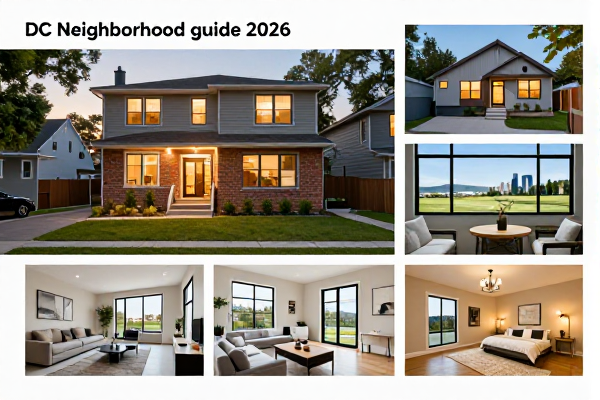
For those seeking relative value or investment potential, looking beyond the most expensive codes is essential. Zip code 20003, covering Capitol Hill East and Lincoln Park, offers a median price near $850,000 with strong demand due to its proximity to the U.S. Capitol and the H Street Corridor. Northeast DC's 20002 (Trinidad, Kingman Park) presents a lower entry point, with median prices around $620,000, indicating areas of ongoing growth and development. When evaluating these markets, consider factors like future transit developments, new commercial projects, and demographic trends, which can be more impactful than current price alone.
Prospective buyers should prioritize neighborhood visits at different times of the day, research specific block-level crime statistics, and consult recent sales data for identical property types within their target zip code. Relying solely on median price data can be misleading, as a single zip code can contain a mix of condominiums, single-family homes, and multi-unit buildings. Ultimately, the best zip code is one that aligns with your budget, lifestyle needs, and long-term financial goals, based on our experience assessment of the market.