Browse

Log in / Register
 Share
Share
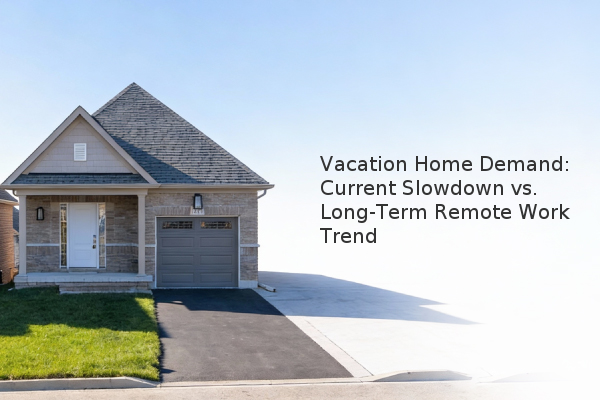
Despite a recent cooldown, demand for vacation homes in the U.S. is expected to remain permanently higher than pre-pandemic levels, fueled by the widespread adoption of remote work. While year-over-year demand has declined for three consecutive months, the underlying desire for second homes is structurally elevated, with their share of existing-home sales holding significantly above 2019 figures. This creates a nuanced market for buyers and sellers to navigate.
A mortgage-rate lock—an agreement between a homebuyer and a lender to secure an interest rate for a set period—is a reliable indicator of future home purchases. Recent data shows demand for second-home mortgages fell 19.3% year-over-year in August, a steeper decline than the 1% drop for primary residences. This slowdown is partly a correction from an unprecedented surge; in April of the previous year, demand for vacation homes skyrocketed by as much as 172% as affluent Americans sought refuge from cities during lockdowns. As daily life normalizes with children returning to school and cities reactivating, the intense, pandemic-driven "escape" motive has diminished.
Yes, absolutely. While down from its peak, the baseline interest in second homes is fundamentally higher than it was before 2020. According to the National Association of Realtors (NAR), vacation homes comprised 6.7% of all existing-home sales in the first four months of this year, a notable increase from the 5% share in 2019. Redfin Lead Economist Taylor Marr attributes this lasting shift to the "permanent shift to remote work for many Americans." This newfound location flexibility continues to support a higher level of demand for properties outside of primary urban centers.
For potential buyers, the cooling demand may translate into less frenzied competition and more negotiating power compared to the height of the market. However, it is crucial to recognize that the market is not returning to pre-2020 conditions. Based on our experience assessment, the pool of interested buyers is still larger than it was several years ago. For sellers, this means property values in desirable vacation areas are likely to be supported by this sustained, structurally higher demand, even if the pace of sales has moderated from record highs.
The key takeaway is that the vacation home market is maturing, not collapsing. The permanent adoption of remote work has created a new class of potential second-home buyers, ensuring that demand will remain elevated for the foreseeable future. Buyers should approach their search with less urgency but with the understanding that the fundamental appeal of these properties has changed. Sellers can be confident in sustained interest but must price their homes competitively to align with the current, more balanced market conditions.