Browse

Log in / Register
 Share

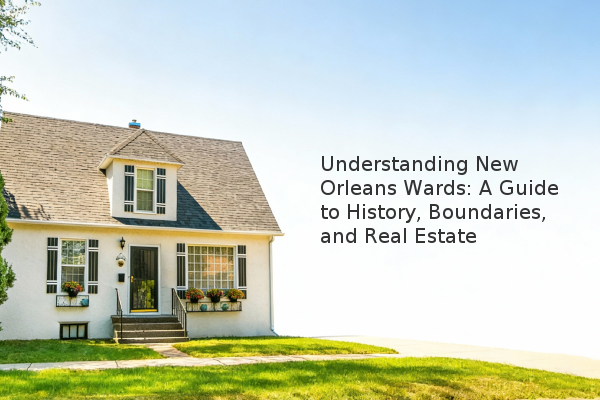
New Orleans wards are historical political districts that no longer serve an official governmental purpose but remain crucial for understanding the city's cultural geography, neighborhood identities, and real estate market trends. While modern-day property searches rely on zip codes and neighborhood names like the Garden District or Bywater, knowledge of the ward system provides a deeper, more nuanced context for location, history, and community character. For home buyers and real estate investors, understanding the ward system is key to grasping the historical underpinnings of New Orleans's unique property landscape.
Originating in the early 19th century, the wards were initially established as political subdivisions for city council representation. At their peak, the city was divided into 17 wards, each functioning as a self-contained political unit. The concept is similar to the borough system in other cities, but unique to New Orleans. While their official role was phased out in the 1950s with the advent of a single-city council, the ward boundaries have left an indelible mark. The term "ward" persists in local parlance, often used interchangeably with—or to provide historical context for—well-known neighborhoods. For example, the French Quarter is historically part of the First Ward (or Vieux Carré Ward), and the Garden District falls within the Second Ward.
The relationship between historical wards and contemporary neighborhoods is not always a perfect one-to-one match. Over time, official neighborhood boundaries and community identities have evolved. However, the ward system still offers valuable insights. Realtors and long-term residents often reference wards to describe a property's general location and historical significance. For a buyer, knowing that a home is in the "Third Ward" immediately conveys its proximity to the Irish Channel and the Garden District, suggesting a specific architectural style and community vibe. This historical context can influence property values and buyer perception, making it an intangible factor in the real estate market.
| Historical Ward | Key Modern Neighborhoods | Notable Characteristics |
|---|---|---|
| First Ward | French Quarter (Vieux Carré) | Historic core, Spanish & French architecture, high tourism. |
| Second Ward | Garden District, Central City | Stately mansions, lush gardens, St. Charles Avenue streetcar. |
| Third Ward | Irish Channel, Lower Garden District | Shotgun houses, vibrant community festivals, close-knit feel. |
| Fourth Ward | Faubourg Marigny, Bywater | Colorful Creole cottages, strong arts scene, music venues. |
| Seventh Ward | Faubourg Tremé, Esplanade Ridge | Birthplace of jazz, significant Creole of Color history. |
For a modern home buyer, the primary practical value of wards is contextual. When evaluating a property, consider the following:
It is critical to verify all property-specific information, such as flood zones, property taxes, and zoning regulations, using the official parish (Orleans) and zip code systems, as these are not governed by the outdated ward boundaries. Relying solely on a ward for practical transaction details would be a significant error.
In commercial real estate, location analysis is paramount. Understanding the ward system provides a layer of demographic and historical data that can inform investment decisions. A commercial investor looking at a property on St. Claude Avenue benefits from knowing it traverses several wards, each with a distinct commercial character and consumer base. The foot traffic and business environment in the Bywater area of the Fourth Ward differ from those in the Upper Ninth Ward areas further downriver. This granular understanding helps in tailoring business models, marketing strategies, and assessing long-term viability based on the deep-seated community fabric.
In summary, while New Orleans wards are not a tool for modern legal or transactional purposes, they are an essential key to understanding the city's soul. For any real estate endeavor in New Orleans, appreciating the history and cultural boundaries of the wards will lead to a more informed and context-rich decision-making process. Focus your search on modern neighborhoods and zip codes, but use ward knowledge to gain an invaluable historical perspective on your potential new community.