Browse

Log in / Register
 Share

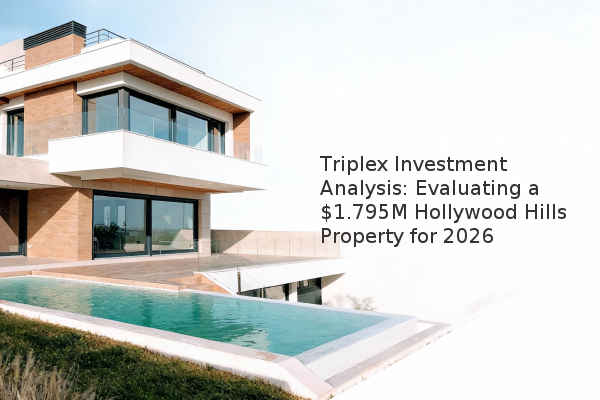
Investing in a multifamily property like a triplex can provide significant rental income and long-term appreciation. Based on our experience assessment, a well-located triplex in a market like Los Angeles can generate positive cash flow, particularly if it has a strong rental history. For example, a property generating $7,200 in monthly gross rent can cover a substantial portion of the mortgage, making it a compelling investment opportunity for 2026. This analysis uses a specific Hollywood Hills triplex as a case study to explore the key financial and physical attributes that contribute to its market value.
What are the key financial metrics for a triplex investment? The primary financial consideration is the property's income potential versus its purchase price and operating costs. The gross rental income is the total revenue collected from all units before expenses. In this case, the gross monthly rental income is $7,200, equating to $86,400 annually. To understand profitability, investors calculate the capitalization rate, or cap rate, which is the net operating income divided by the property's price. While a precise cap rate requires detailed expense data, a gross income of this level on a $1.795 million property suggests a potential for a competitive return in the current market. Investors should also factor in property taxes, insurance, maintenance, and potential vacancy rates to determine net cash flow.
| Metric | Value | Notes |
|---|---|---|
| Listing Price | $1,795,000 | - |
| Total Monthly Gross Rent | $7,200 | From three separate units |
| Annual Gross Rent | $86,400 | $7,200 x 12 months |
| Down Payment (45%) | $807,750 | Required to cover mortgage with income |
| Mortgage Loan Amount | $987,250 | Price minus down payment |
What physical characteristics affect a multifamily property's value? The unit mix, condition, and unique features directly influence rental appeal and value. This triplex offers a diversified unit mix: two two-bedroom/one-bathroom units and a one-bedroom/one-bathroom loft (a large, adaptable open space often with high ceilings) above a garage. This diversity attracts different tenant profiles, potentially reducing vacancy risk. Hardwood floors throughout are a desirable, low-maintenance feature. Unique amenities, like a fireplace, Palladian windows (a large arched window flanked by two smaller rectangular windows), and even a dancing pole in one unit, can justify premium rents. The four-car garage is a significant asset in a dense urban area like Hollywood Hills, adding substantial value.
How does location impact a rental property's success? Location is arguably the most critical factor in real estate investment. A property in the Hollywood Hills benefits from high demand due to its prestige, proximity to entertainment industry employment centers, and overall desirability. This location typically commands higher rents and experiences lower vacancy rates compared to less central areas. Furthermore, properties in established, desirable neighborhoods often demonstrate stronger, more resilient long-term appreciation. The 1925 construction date and Mediterranean-revival architecture also contribute to the property's unique character, which can be a major selling point for certain tenants.
What should a potential investor consider before purchasing? Beyond the initial numbers, thorough due diligence is essential. A potential investor must verify the actual rental income and expense history. It is crucial to review existing lease agreements to understand terms and tenant stability. A professional inspection is necessary to identify any needed repairs to the nearly 100-year-old structure, including the roof, plumbing, and electrical systems. Investors should also understand property transfer taxes, which are government fees imposed when ownership of a property is transferred. Consulting with a real estate attorney and a tax advisor is highly recommended to navigate the purchase process and understand ongoing financial obligations.
In conclusion, a multifamily property investment requires a careful analysis of both financial data and physical attributes. Key takeaways for 2026 include: