Browse

Log in / Register
 Share
Share
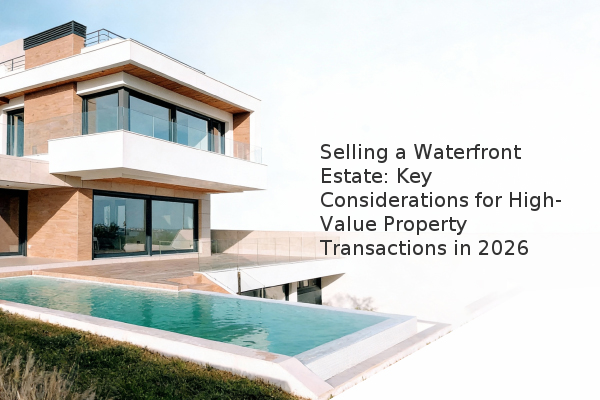
Selling a high-value waterfront estate involves unique market dynamics, specialized marketing strategies, and a deep understanding of luxury buyer expectations. For properties like the recently listed $2 million Florida estate, success hinges on accurately conveying the combination of privacy, unique amenities, and irreplaceable location to the right audience. Based on our experience assessment, sellers of comparable properties in 2026 should anticipate a longer market timeline and prioritize showcasing features that justify the premium price point.
A true waterfront property, often held under a freehold ownership structure (meaning the owner has full, perpetual ownership of the land and buildings), is distinguished by its direct access to a body of water. The value is not solely in the square footage but in the land itself. Key value drivers include the amount of water frontage—in this case, 510 feet on the St. John's River—and the acreage, which at over 12 acres offers significant privacy. Unique features like a private dock, mature landscaping with century-old trees, and dedicated structures like a guest house and workshop compound the value. These elements are often assessed against recent sales of comparable properties, or comps, to establish a competitive listing price.
For a property with historical elements, such as a structure dating to 1900, marketing must balance historic charm with modern luxury. The conversion of the original building into a 2,406-square-foot guest house is a significant selling point that should be emphasized. Marketing materials should professionally highlight:
High-quality video tours that showcase the property's relationship to the water and the expansive grounds are essential in 2026 to attract out-of-state or international buyers who may not visit in person immediately.
The transaction process for a multi-million dollar property involves more complexity than a standard residential sale. Sellers must account for property transfer taxes, which are state-imposed fees on the deed transfer, and potentially higher closing costs. It is standard for the buyer to purchase title insurance, a policy that protects the buyer and lender from financial loss due to defects in the property title. Given the property's size and features, a specialized appraisal will be necessary to secure financing for potential buyers. Sellers should be prepared for negotiations that may include contingencies related to inspections of the dock, seawall, and other unique structures.
Understanding the seller's motivation is a key part of the narrative, though it must be handled with discretion. A decision to sell can be influenced by a desire for a lifestyle change, financial planning, or personal circumstances. In any case, the marketing strategy is tailored to achieve the seller's goals within a realistic timeframe. The luxury market can be less liquid than the standard housing market, so patience is often required. A well-priced property with exceptional features, however, will attract serious interest.
Navigating the sale of a distinctive waterfront estate requires a strategic approach focused on its unique assets. Sellers should work with a real estate professional experienced in high-value, unique properties to accurately price and market the home. Emphasizing the blend of privacy, history, and modern luxury through professional visuals is non-negotiable in today's market. Finally, understanding the extended timeline and financial nuances of a luxury transaction ensures a smoother process from listing to closing.