Browse

Log in / Register
 Share

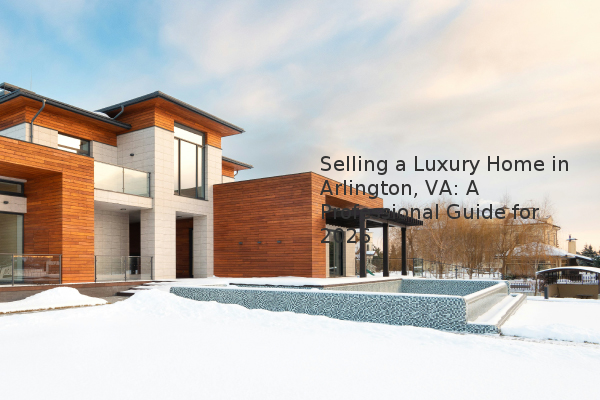
Navigating the sale of a high-value property in a competitive market like Arlington, Virginia, requires a strategic approach. Based on our experience assessment, successfully selling a luxury home hinges on accurate pricing, professional marketing, and understanding the local real estate dynamics. This article provides a professional framework for sellers, using a recent transaction as a contextual example of market activity.
The Arlington real estate market is characterized by its proximity to Washington, D.C., high-demand neighborhoods, and a well-educated buyer pool. Luxury properties, often defined as those in the top 10% of the local market, command premiums for specific features. These include proximity to Metro stations, high-quality school districts like those in Arlington County, and unique architectural details. For instance, a French Provincial-style home in a private community exemplifies the type of property that attracts discerning buyers in this area. Understanding these key value drivers is the first step toward setting a competitive asking price.
Accurate pricing is critical and should be based on a Comparative Market Analysis (CMA), a professional assessment conducted by a real estate agent that compares your home to recently sold, similar properties (comparables). Unlike automated online estimates, a CMA considers unique features, condition, and current market trends. For a seller, a price that is too high can lead to a stagnant listing, while a price that is too low leaves money on the table. A modest profit, as seen in a past sale where a home bought for $1.57 million was listed at $1.9 million, reflects a market-responsive pricing strategy. It's essential to cite recent, relevant data; for example, the average days on market for luxury homes in Arlington can provide a realistic timeframe expectation.
| Feature | Impact on Value | Market Expectation |
|---|---|---|
| Square Footage (e.g., ~3,000 sq ft) | High | Spacious, open layouts are preferred. |
| Bedrooms/Bathrooms (e.g., 5 beds, 5.5 baths) | High | Ensuite bathrooms for primary and guest rooms. |
| Outdoor Space (e.g., large patio) | Medium-High | Functional outdoor living areas for dining/entertaining. |
| High-End Appliances (e.g., six-burner range) | Medium | Professional-grade kitchens are a significant selling point. |
| Community Amenities | Variable | Gated communities or limited-unit developments add exclusivity. |
The process involves several key stages beyond just listing the property. First, pre-listing preparations are crucial. This includes professional home staging to highlight the property's best features, such as a cozy living room with a fireplace or a media room with a bar, making it appealing to the widest audience. High-quality photography and virtual tours are non-negotiable in the luxury segment. Secondly, once an offer is received, negotiations begin. This stage involves the purchase agreement, which outlines the terms, contingencies (like home inspection and financing), and the closing timeline. Finally, the closing process involves a title search to ensure there are no ownership disputes and the transfer of the deed, the legal document that transfers ownership from the seller to the buyer.
In Virginia, a key cost for sellers is the property transfer tax, also known as the grantor's tax. This is a state and local tax paid by the seller upon transfer of the property title. In Arlington County, the combined rate is typically $1 per $1,000 of the sale price. For a home selling at $1.9 million, this would result in a transfer tax of $1,900. It is vital for sellers to budget for these closing costs, which also may include agent commissions and other fees. Consulting with a real estate attorney or tax professional is recommended to understand the full financial implications.
To maximize your home's sale potential in 2026, focus on a data-driven pricing strategy, invest in professional marketing that showcases unique amenities, and prepare for all associated closing costs. By understanding the Arlington market's expectations and following a structured process, sellers can navigate the transaction effectively.