Browse

Log in / Register
 Share
Share
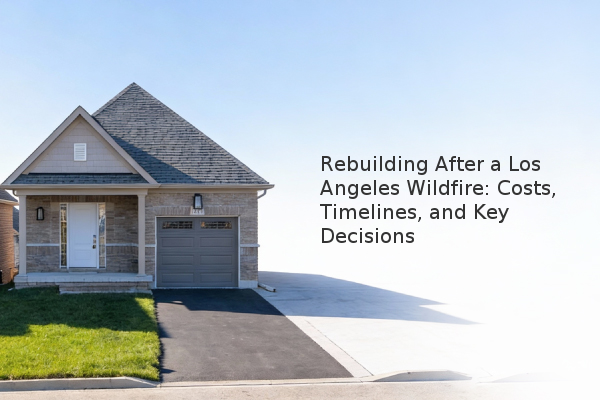
For Los Angeles homeowners who have lost a property to wildfire, the decision to rebuild involves a complex assessment of insurance coverage, rebuilding costs, and a multi-year timeline. Based on expert analysis, the process is fraught with challenges, including a shortage of qualified builders, a strained permitting system, and significant financial hurdles. This guide outlines the critical factors to consider, from initial debris removal to final construction, to help you make an informed choice.
Rebuilding cannot begin until the property is safe. The first step, debris removal, involves clearing toxic materials and repairing utility lines, a process estimated to take approximately three months. Following this, homeowners must navigate the permitting process. Although state officials have taken steps to streamline approvals, the unprecedented volume of applications is expected to create significant delays. Architectural plan approvals, which can be slow under normal circumstances, could potentially take years without systemic improvements. Homeowners should prepare for a lengthy waiting period before any physical construction can start.
The cost to rebuild varies dramatically based on the home's size, materials, location, and current market demands. An analysis of recent data puts the average rebuild cost at approximately $947,000 in areas like Pacific Palisades and around $262,000 in neighborhoods like Altadena. However, these figures are likely to rise due to supply and demand. With many properties needing reconstruction simultaneously, the costs for labor and materials will increase. Furthermore, the shortage of reputable contractors may lead some homeowners to hire underqualified builders, which can result in higher costs and longer timelines due to inexperience with local building codes.
A homeowner's ability to rebuild often hinges on their insurance coverage. A standard policy should cover structural damage up to the insured amount, with personal belongings covered under separate personal property coverage. California’s FAIR Plan provides coverage for high-risk properties, offering up to $3 million in damages and additional living expense reimbursements. However, a major challenge is the potential for coverage gaps. If a policy is insufficient or a homeowner lacks insurance, the financial burden can be overwhelming. Even with adequate insurance, payout delays are common, as insurers aim to minimize claims payouts, creating a adversarial process that can stretch on for years.
The long-term challenges extend beyond initial costs and permits. The massive scale of destruction will overload the local construction industry. From architects to plumbers, every trade will be in high demand, likely leading to slower workmanship as teams are stretched across multiple projects. For some homeowners, particularly retirees, the emotional and physical energy required to manage a multi-year rebuild may be prohibitive. Past disasters, like the Camp Fire in Paradise, CA, serve as a sobering precedent; six years later, only a fraction of the destroyed homes had been rebuilt.
Key practical advice for homeowners includes:
The path to rebuilding is a deeply personal and difficult decision. While the desire to restore a family home is powerful, the reality involves navigating a perfect storm of logistical, financial, and bureaucratic hurdles. A careful, informed assessment of your individual financial capacity and personal resilience is the most critical first step.