Browse

Log in / Register
 Share

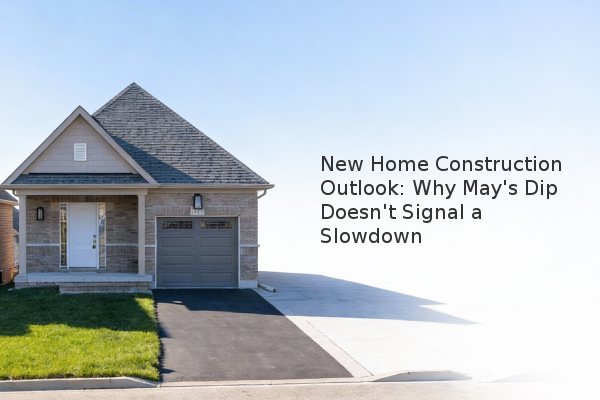
New home construction experienced a temporary slowdown in May 2026, but a surge in building permits points to robust growth for the rest of the year. According to recent government data, while housing starts fell, permits reached their highest level in nearly two decades. This indicates that strong underlying demand, fueled by job growth and rising wages, is setting the stage for a busy summer for homebuilders. For prospective buyers, considering a new construction home can be a strategic way to navigate competitive markets with limited existing home inventory.
The primary reason for the 11% month-over-month decrease in housing starts—a term for when construction officially begins on a new home—was record-breaking rainfall across the United States. Nationwide precipitation levels were the highest recorded in over 120 years, making it difficult for builders to break ground. As Chief Economist Jonathan Smoke noted, "You can easily pull a permit in the rain, but it's a bit harder to break ground and start construction." This weather-related delay is considered temporary and not a reflection of weakening demand in the housing sector.
Building permits, which are official approvals granted by local governments before construction can begin, are a more reliable gauge of future housing market activity. Unlike physical construction, the permit application process is not hindered by weather. In May, permits surged 12% to an annual rate of 1.275 million, the highest level since August 2007. This significant increase suggests that builders are preparing for a period of intense activity, confident that buyer demand will remain strong. When analyzing market health, experts often prioritize permit data over starts for this reason.
| Metric | May 2026 Performance | Key Takeaway |
|---|---|---|
| Housing Starts | Decreased 11% (Month-over-Month) | Temporary slowdown due to weather. |
| Building Permits | Increased 12% (Month-over-Month) | Strong indicator of future growth. |
| Building Permits | Increased 25% (Year-over-Year) | Demonstrates sustained, long-term demand. |
The permit data reveals a housing market on a solid growth trajectory. The 25% year-over-year increase in permits underscores a sustained recovery. Key economic fundamentals support this growth:
Based on our experience assessment, these factors collectively point toward 2026 being on track for the best year in residential real estate since 2006.
For buyers entering a competitive market with limited supply of existing homes, exploring new construction can be a wise strategy. Considering an option to sign a contract with a builder for a to-be-built home is a great way to avoid bidding wars. This approach allows you to secure a home at a set price before construction is complete, often with the ability to select certain finishes. It provides an alternative path to homeownership that can be less stressful than competing for a scarce inventory of existing properties.
In summary, while May's weather caused a temporary dip in construction activity, the sharp rise in permits signals strong confidence and demand. The health of the housing market is assessed by looking beyond short-term fluctuations to these leading indicators. For buyers, new construction presents a viable strategy to secure a home in a tight market.