Browse

Log in / Register
 Share
Share
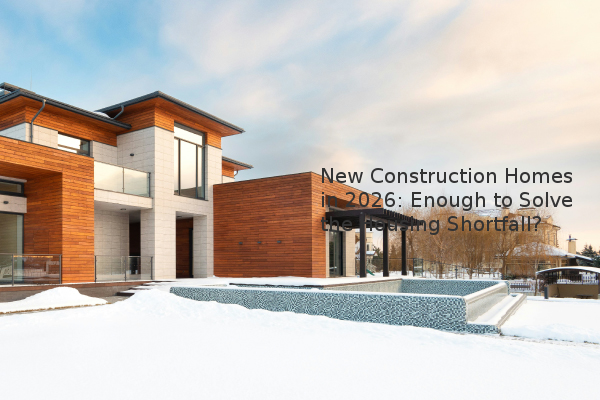
A surge in new home construction is providing a crucial influx of inventory for the 2026 housing market, yet it remains insufficient to fully meet buyer demand or significantly lower prices. While the number of completed homes has reached levels not seen in nearly two decades, the market continues to operate at a deficit, requiring approximately 1.25 million new single-family homes annually to achieve balance. This article examines the latest data, the persistent price gap between new and existing homes, and what these trends mean for today's buyers.
Based on our experience assessment of current data, the pace of new residential construction is a positive sign but falls short of what is needed. The market requires about 1.25 million new single-family homes to be completed each year to keep up with demographic trends and demand. While recent completion numbers are strong, the market is still operating about 30% below this target. This deficit means that despite the increased activity, competition for available homes remains high, and buyers should not expect a sudden, market-wide drop in prices due to this new supply alone.
The primary challenge is that construction has been unable to accelerate rapidly enough to close a gap that developed over many years. The underlying demand is fueled by demographic factors like household formation, which continue to outstrip the current pace of new builds. While the trend is moving in the right direction, it will take sustained effort over multiple years to achieve a balanced market.
Prospective buyers often notice a significant price difference between new and existing homes. This disparity, which was approximately 21.1% according to recent historical data, stems from several key factors. New homes command a premium due to higher costs for land, materials, and labor, all of which have seen substantial increases. Furthermore, regulatory requirements and potential delays during the construction process add to the final cost.
For example, the median price of a new home has historically been higher than that of an existing home. These costs are passed on to the buyer, making new construction a premium product. While new homes offer modern amenities, energy efficiency, and fewer immediate maintenance concerns, buyers must weigh these benefits against the higher upfront cost compared to an existing home.
| Factor | Impact on New Home Cost |
|---|---|
| Land Acquisition | Scarce desirable lots in developed areas drive up price. |
| Materials & Labor | Rising costs for lumber, steel, skilled workers increase build costs. |
| Regulatory Compliance | Permits, impact fees, and building code standards add expenses. |
| Modern Features | Inclusion of current technologies and energy-efficient systems adds value and cost. |
Housing permits and starts are leading indicators of future housing supply, providing a glimpse into the pipeline of homes that will become available in the coming months. A 'housing start' refers to when construction officially begins on a home's foundation. A 'permit' is authorization granted by a local government before construction can legally start.
In 2026, analyzing the regional data for these indicators reveals important trends. While some regions may see monthly fluctuations, the year-over-year increase in permits suggests that builders are planning for continued activity. The Midwest, for instance, has shown significant annual gains, which could help maintain affordability in that region. Conversely, a decline in permits in the West indicates that the intense housing shortage there may persist, keeping upward pressure on prices. Monitoring these permits is crucial for understanding where new inventory will emerge.
For buyers in 2026, the new construction market offers both opportunities and challenges. The opportunity lies in having more options that are move-in ready and built to modern standards. The challenge remains the premium price point. Buyers should get pre-approved for a mortgage specific to new construction, as the process can differ from purchasing an existing home.
It is also advisable to research builders' reputations and understand warranty coverage. While the overall supply is improving, competition for well-priced new homes in desirable locations can still be fierce. Being financially prepared and working with a real estate agent experienced in new construction can provide a significant advantage.
The key takeaway is that new construction is a vital component of solving the housing shortage, but it is not an immediate cure-all. The market is making progress, but buyers should enter with realistic expectations about availability and cost. The gradual increase in supply should, over time, help moderate price growth and provide more choices.