Browse

Log in / Register
 Share

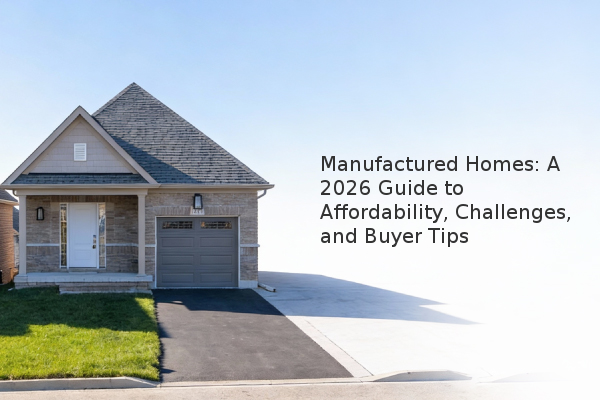
For many aspiring homeowners, a manufactured home can be a viable and affordable path to building equity, offering significant savings compared to traditional site-built houses. Based on our experience assessment, while challenges like land leasing and specific financing exist, the potential for appreciation and lower entry costs makes this housing option a serious consideration, especially for first-time buyers in high-cost markets. This guide provides a clear, objective look at the realities of manufactured home ownership in 2026.
A manufactured home is a dwelling that is entirely constructed in a factory-controlled environment and then transported to a permanent site. It's crucial to distinguish these from mobile homes. The term "manufactured home" specifically refers to units built after June 15, 1976, when the U.S. Department of Housing and Urban Development (HUD) established federal construction and safety standards (the HUD Code). These homes are built on a non-removable steel chassis. In contrast, "mobile homes" were built prior to 1976 and are often associated with a more transient lifestyle.
The affordability is a primary driver. According to data from the Manufactured Housing Institute, the average sales price of a new manufactured home was approximately $126,000 in 2025, a fraction of the median price for a site-built single-family home. This price point directly addresses housing affordability challenges across many U.S. states.
The benefits extend beyond the initial price tag. Modern manufactured homes are built to rigorous federal standards, and studies, such as a recent analysis by the Institute for Building Technology and Safety, have found that post-1994 manufactured homes perform as well as site-built homes in severe weather events.
Key advantages include:
Prospective buyers must navigate a set of unique considerations that differ from traditional real estate transactions.
A common misconception is that manufactured homes depreciate in value. However, historical data suggests they can appreciate, albeit at a potentially different rate. A 2018 analysis by the Urban Institute found that between 1996 and 2018, manufactured homes appreciated at an average annual rate of 3.4%, compared to 3.8% for site-built homes. Proper maintenance and the desirability of the community it resides in are significant factors in a manufactured home's long-term value.
In summary, a manufactured home can be a strategic first step into homeownership. Key due diligence is required: secure financing pre-approval, understand all costs associated with land leasing, and thoroughly inspect the home's condition. For buyers willing to navigate its unique aspects, a manufactured home offers a financially accessible way to build equity and achieve homeownership in 2026.