Browse

Log in / Register
 Share

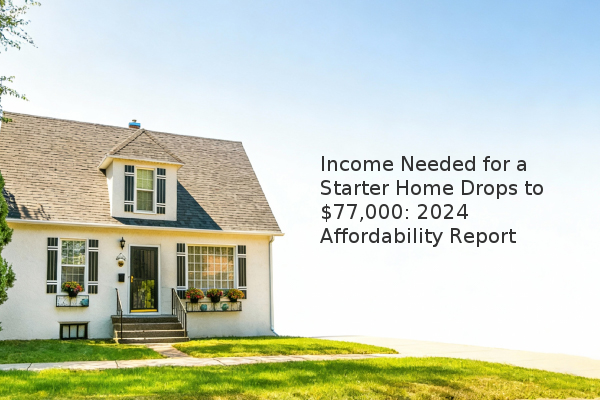
The annual income required to afford a typical starter home in the U.S. has decreased for the first time since 2020, dropping to $76,995. This 0.4% year-over-year decline is primarily due to falling mortgage rates, offering a slight reprieve for first-time buyers. However, affordability remains a significant challenge, with starter homes being 51% more expensive than before the pandemic.
Based on recent data, a household needs an annual income of approximately $77,000 to afford the median-priced U.S. starter home of $250,000 without becoming cost-burdened. This term means spending more than 30% of one's pre-tax income on housing costs. This calculation assumes a 30-year fixed-rate mortgage with a 3.5% down payment and includes principal, interest, property taxes, and homeowners insurance. While the median U.S. household earns about $84,000—making a starter home technically affordable on paper—other financial obligations like student debt often complicate the picture for many potential buyers.
The modest improvement in affordability is a direct result of lower mortgage rates. The average interest rate on a 30-year mortgage fell to 6.5% in August 2024 from 7.07% a year earlier. This marked the first annual decrease in three years and was enough to offset a 4.2% year-over-year increase in starter-home prices. It is important to note that this improvement is relative; the income needed today is still only 3.6% below the record high set in the fall of 2023.
Starter home affordability remains severely strained compared to pre-pandemic levels. In August 2019, the typical household earned 57% more than needed to afford a starter home. Today, that cushion has shrunk to just 9%. The core issue is that home prices have skyrocketed—up 51% since 2019—while incomes have not kept pace, rising only 33% in the same period. This means the financial barrier to entry for homeownership has risen dramatically for a new generation of buyers.
Affordability trends vary significantly by location, highlighting distinct regional market dynamics.
While the slight improvement is welcome, buyers should temper their expectations for rapid gains in affordability. Future interest rate cuts may already be factored into current mortgage rates, and home prices tend to rise over time. Prospective buyers are advised to focus on their personal financial readiness rather than trying to time the market. Key steps include getting pre-approved for a mortgage to understand your true budget and carefully weighing monthly housing payments against other debts and living expenses. The definition of a "starter home" has also evolved, often now representing a smaller condominium or a fixer-upper rather than a turnkey single-family house.