Browse

Log in / Register
 Share
Share
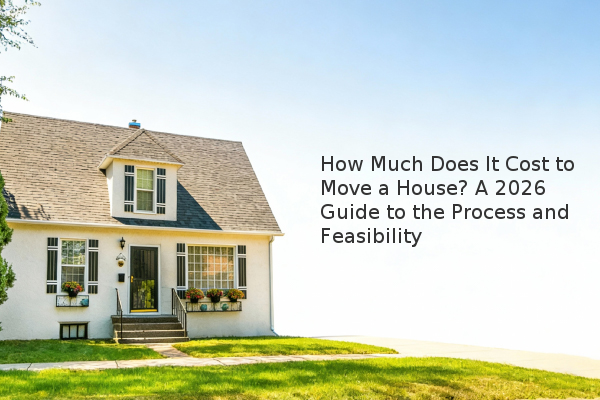
Relocating an existing house is a complex, multi-stage process where total costs can range from several hundred thousand dollars to over $4 million, with feasibility heavily dependent on the home's size, the distance of the move, and local topography. For many homeowners facing coastal erosion or flood risks, moving a structure can be a financially prudent alternative to demolition and new construction, preserving both the property's value and sentimental history. This guide outlines the key factors, costs, and logistical considerations based on current industry standards.
The process begins with a feasibility study conducted by a structural mover, a specialist in relocating buildings. This involves assessing the home's construction, weight, and the proposed path to the new site. For the house to be moved, it must first be separated from its foundation. Crews then install a network of steel support girders (heavy-duty beams that provide underlying support) beneath the structure. A unified hydraulic jacking system, invented in the 1950s, is used to lift the house uniformly and place it onto rolling equipment.
The method of transport depends on the distance. For short moves, a house may be placed on skates (rolling fixtures that glide on steel rails). For longer distances, multi-axle dollies or even barges are used. The move is executed incrementally, with constant checks for stability. Once at the new location, the house is carefully lowered onto a newly constructed foundation, and utility connections are restored. The entire process, from planning to completion, can take many months.
The cost of moving a house is highly variable. A significant move for a large home can cost millions. For example, one documented relocation of a 10,000-square-foot home involved a moving cost of approximately $1.6 million. This fee typically covers disconnecting utilities, site preparation, the physical move, and the basic setup on the new foundation.
However, this is rarely the total expense. Homeowners must also budget for:
The decision to move or demolish is primarily an economic and sentimental one. Moving becomes a viable option when the cost of relocation and necessary renovations is significantly lower than the combined cost of demolition, debris removal, and new construction. In some high-cost construction areas, rebuilding can exceed $1,000 per square foot, making moving a large, well-built home a potential savings.
Beyond finances, sentimental attachment and a desire to avoid waste are powerful motivators. Furthermore, for properties in FEMA-designated floodplains, relocation may be a condition for receiving federal grant money. In such cases, FEMA may offer grants for acquisition and demolition, but accepting these funds often prohibits future rebuilding on the property, making house moving the only way to preserve the structure.
The primary limitation is often the physical environment. The home's size, the distance to be traveled, and obstacles like power lines, narrow roads, and trees can make a move impossible. On compact lots, especially in coastal areas like California, there may simply be no room to maneuver the structure away from the hazard. Large, single-family homes typically require ample space to be relocated successfully.
Industry experts estimate that only a small fraction of inquiries about moving large homes result in an actual project, often due to these logistical and cost barriers. A professional assessment is essential to determine if a move is feasible before committing significant resources.
Ultimately, the decision to move a house requires a careful cost-benefit analysis. Homeowners should prioritize a professional feasibility study, secure multiple detailed quotes, and factor in potential hidden costs. For those with a strong attachment to their home or who are in areas susceptible to environmental hazards, relocation can be a strategic investment that preserves both a property and a piece of personal history.