Browse

Log in / Register
 Share

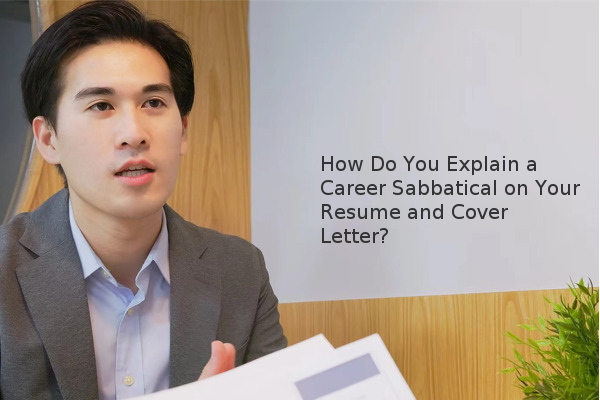
Explaining a career sabbatical effectively on your resume and cover letter can transform a potential red flag into a compelling asset, showcasing enhanced skills and renewed focus to potential employers. Based on expert assessments, the key is to frame your time away as a period of productive professional development rather than a simple gap in employment.
A resume must present your candidacy in the best possible light, and the approach to a sabbatical depends on the nature of the break. Unexplained employment gaps can lead to negative assumptions, such as incarceration or an inability to work. However, a well-presented sabbatical can demonstrate valuable qualities like self-reliance and creativity.
Career experts like Michelle Dumas, a certified resume writer, recommend including most sabbaticals. The goal is to show how activities like volunteering, caring for a relative, writing, or research enhanced your qualifications. Even an unplanned break can be framed productively.
Be strategic about placement. Your most recent experience doesn't always need to be listed first. If the sabbatical is unrelated to your current goal, consider an "Additional Information" section toward the bottom of the resume. This allows you to account for the time without highlighting it as your primary recent activity.
The cover letter is often the optimal place to introduce a sabbatical, as it provides a more conversational tone to contextualize your career timeline. Jewel Bracy DeMaio, a certified resume writer, emphasizes this advantage. You can briefly state the reason for the break and express enthusiasm for discussing how the experience has prepared you for the role.
For example, you might write, "I would enjoy discussing my recent sabbatical, during which I conducted independent market research, when we meet." This approach proactively addresses the gap and turns it into a talking point that illustrates your initiative and relevant skills. It ensures the employer's first impression is one of transparency and strategic career management.
The most critical step is to reframe the sabbatical from a break in employment into a period of legitimate professional endeavors. As outplacement expert Ford R. Myers advises, focus on the potential advantages for the employer. Avoid personal reasons like "I always wanted to travel." Instead, illustrate what you did, the findings, and their implications.
Present your sabbatical activities with tangible outcomes. For instance:
| Sabbatical Activity | Skills Gained / Outcomes |
|---|---|
| Volunteering for a Non-Profit | Project management, stakeholder communication, event coordination |
| Conducting Independent Research | Data analysis, in-depth knowledge of a specific industry trend, report writing |
| Caring for a Family Member | Crisis management, organization, patience, and empathy |
Keep the explanation brief and professional. State when it occurred, the professional reason (e.g., "to lead a pro-bono project"), and a concise outcome. This demonstrates that you used the time constructively to build skills that are transferable to the workplace.
To successfully return to work after a sabbatical: