Browse

Log in / Register
 Share

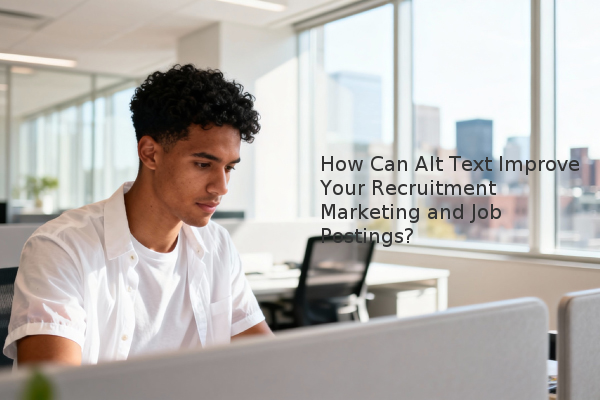
Implementing alt text (alternative text) is a proven method to enhance the accessibility and search engine visibility of your career site and job postings, directly impacting your ability to attract qualified candidates. This technical SEO practice, often overlooked in recruitment marketing, provides a significant edge in a competitive talent market by making your digital content accessible to all users, including those using screen readers. Based on our assessment experience, companies that optimize their online presence with techniques like alt text see improved candidate engagement and a stronger employer brand.
Alt text is a concise, written description embedded within a website's HTML code that conveys the content and function of an image. For recruiters and HR professionals, this means every image on your career page—from photos of your team to infographics about company culture—can be understood by search engines and assistive technologies. When an image fails to load, the alt text is displayed in its place. More importantly, screen readers used by visually impaired individuals will vocalize this description, making your content accessible.
From an SEO (Search Engine Optimization) perspective, which refers to strategies that improve a website's ranking on search engine results pages (SERPs), alt text is crucial. Search engines like Google cannot "see" images; they rely on text to understand and index visual content. By providing clear, descriptive alt text, you are giving search engines more context about your career site, which can help your job postings rank for relevant candidate search queries. This practice is a key component of a modern talent acquisition strategy, ensuring your vacancies are discoverable by a wider, more diverse pool of applicants.
The strategic use of alt text addresses several core recruitment challenges. Its benefits extend beyond basic SEO to directly influence the quality and inclusivity of your hiring process.
Enhances Employer Branding and Accessibility: A career site that is accessible to people with disabilities demonstrates a commitment to Diversity, Equity, and Inclusion (DEI). This strengthens your employer brand and makes your organization more attractive to top talent who value inclusive workplaces. It also ensures compliance with web accessibility standards like the Web Content Accessibility Guidelines (WCAG).
Improves Job Posting Visibility: When you include images in a job posting—for example, a picture of the office location or a graph detailing career progression—adding keyword-rich alt text helps search engines understand the context of the page. A job posting for a "Senior Software Engineer in Chicago" with an image alt text like "Our software engineering team collaborating in a modern Chicago office" provides stronger semantic signals than an image with no description.
Reduces Candidate Drop-off: If a candidate has a slow internet connection and an image on your application page fails to load, alt text ensures they don't miss critical information. This creates a smoother candidate experience, reducing frustration and potential drop-off during the application process.
Writing high-quality alt text requires a balance of description, context, and keyword usage. Follow these steps to ensure your visual content is fully optimized.
Be Accurate and Descriptive: Describe the image succinctly and truthfully. Focus on content that is relevant to a job seeker. Instead of "office photo," write "Diverse team of accountants discussing a project in a collaborative meeting room at our headquarters."
Incorporate Relevant Keywords Naturally: Identify keywords a candidate might use to find a role like yours. If you're hiring a "Remote Marketing Manager," an image alt text could be "Marketing manager working remotely from a home office, analyzing campaign data on a laptop." Avoid keyword stuffing (overloading the text with keywords), which is penalized by search engines.
Keep it Concise: Aim for 125 characters or less to ensure compatibility with all screen readers. Be direct and avoid phrases like "image of..." or "picture of...".
Context is King: The same image requires different alt text depending on its context. A photo of an employee in a "Day in the Life" blog post should be described differently than the same photo in a page about your company's values.
Handle Special Cases Pragmatically: If an image is purely decorative (e.g., a stylistic divider), you can use an empty alt attribute (alt="") so screen readers skip it. For images containing text, like an infographic about benefits, the alt text should convey the key information presented.
Here are examples comparing weak and strong alt text for common recruitment scenarios:
| Scenario | Weak Alt Text | Strong, Optimized Alt Text |
|---|---|---|
| Team Photo on Culture Page | Team picture | Software development team celebrating a project launch at ok.com's Austin office |
| Infographic on Benefits | Benefits infographic | Ok.com employee benefits summary including 401k matching, health insurance, and flexible PTO |
| Image in a Job Posting | Job image | Interior designer using CAD software at a modern workstation in our Seattle studio |
By integrating these alt text best practices into your recruitment content strategy, you can build a more accessible, discoverable, and effective talent pipeline. Start by auditing your career site's existing images and systematically adding descriptive alt text. This investment not only improves your technical SEO but also builds a more inclusive and candidate-friendly application process, ultimately enhancing your overall recruitment marketing efforts.