Browse

Log in / Register
 Share

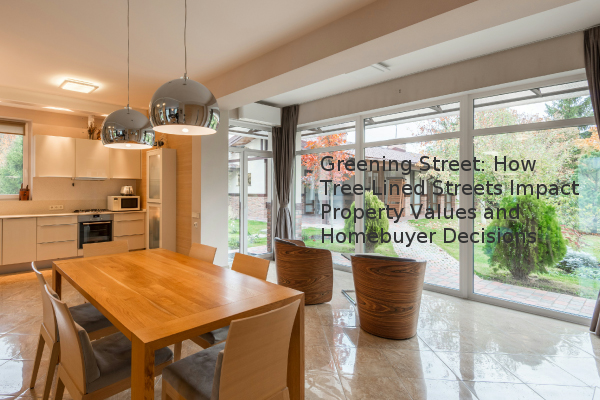
Homes located on tree-lined, or "greening," streets often command a premium, with studies indicating a potential increase in property value of up to 15%. This phenomenon is driven by the tangible benefits of mature trees, including enhanced curb appeal, energy savings, and improved quality of life. For homebuyers and sellers, understanding the impact of a greening street is a critical factor in real estate valuation and purchasing decisions.
In real estate terminology, a greening street refers to a residential street characterized by a well-maintained canopy of mature trees, either planted by the municipality or by homeowners over many decades. This is distinct from simply having a few shrubs in the yard. The key factors that define a high-quality greening street include the species of trees, their health and maturity, and the uniformity of the canopy. These elements contribute significantly to the neighborhood's aesthetic and environmental profile, making it more desirable to potential buyers.
The correlation between tree-lined streets and higher property values is well-documented by urban planners and real estate appraisers. The premium is not arbitrary; it is based on several quantifiable factors. Firstly, the shade provided by mature trees can reduce cooling costs by up to 30% during summer months, a direct financial benefit for homeowners. Secondly, the aesthetic appeal creates a stronger emotional connection for buyers, often leading to competitive bidding situations. Appraisers may use comparative market analysis (CMA), a method of evaluating properties based on recent sales of similar homes, to assign a higher value to a home on a greening street compared to an identical home on a barren one.
| Factor | Impact on Property Value | Key Reason |
|---|---|---|
| Mature Tree Canopy | Increase of 5-15% | Enhanced curb appeal and perceived desirability. |
| Energy Efficiency | Indirect value increase | Reduced costs for air conditioning. |
| Neighborhood Appeal | Community-wide uplift | Creates a cohesive, established community feel. |
While the benefits are clear, a savvy homebuyer should conduct due diligence. The species of tree matters; some have invasive root systems that can potentially threaten sewer lines or foundations. It is advisable to inquire about maintenance responsibilities—are trees pruned by the city or the homeowner? A home inspection should include an assessment of trees close to the house to check for health and stability. Furthermore, verify if there are any local ordinances or Homeowners Association (HOA) rules, a governing body for a community that sets rules and standards, regarding tree removal or planting that could limit your options in the future.
For sellers, highlighting a property's position on a greening street is a powerful marketing tool. Professional photography that captures the dappled sunlight through the trees can significantly enhance listing photos. For developers and builders, incorporating mature tree preservation into construction plans or investing in strategic landscaping can yield a high return on investment by elevating the entire project's marketability. It signals a commitment to quality and long-term value, which resonates deeply with today's environmentally conscious buyers.
In summary, the presence of a greening street is a significant positive attribute in residential real estate. It leads to higher property values, lower energy costs, and increased neighborhood appeal. Buyers should weigh the benefits against potential maintenance concerns, while sellers should prominently feature this asset. Ultimately, a tree-lined street is more than just a aesthetic feature; it is a sound investment in a higher quality of life and long-term financial return.