Browse

Log in / Register
 Share

Becoming an energy broker requires a combination of formal education, industry certifications, and practical experience in energy markets, negotiation, and client management. This role acts as a crucial intermediary, helping businesses secure favorable energy contracts. The most effective path involves earning a relevant degree, obtaining professional certifications, gaining hands-on experience, building a strong professional network, and choosing an independent or firm-based career structure.
An energy broker is an intermediary who facilitates contracts between energy suppliers and commercial or industrial clients. Their primary duty is to negotiate optimal pricing and contract terms on behalf of their clients. Beyond negotiation, their responsibilities include analyzing complex energy data and market trends, building long-term relationships with suppliers and customers, and providing guidance on energy efficiency. This role demands a deep understanding of energy pricing models—the structures that determine how energy costs are calculated—and industry regulations. A typical day might involve reviewing contracts, creating client reports, and attending industry conferences to stay current with market developments.
The journey to becoming an energy broker is structured and can be broken down into five key steps.
An energy broker needs a balanced mix of technical and soft skills to be effective. The core competency is a thorough knowledge of the energy market. Essential skills can be categorized as follows:
| Technical Skills | Interpersonal & Business Skills |
|---|---|
| Data Analysis & Market Trend Forecasting | Negotiation & Communication |
| Understanding of Energy Regulations | Relationship Building & Client Management |
| Proficiency with Energy Management Software | Problem-Solving & Critical Thinking |
| Contract Review & Management | Time Management & Organization |
Mastering these skills allows a broker to provide accurate advice, secure the best deals for clients, and manage multiple accounts efficiently.
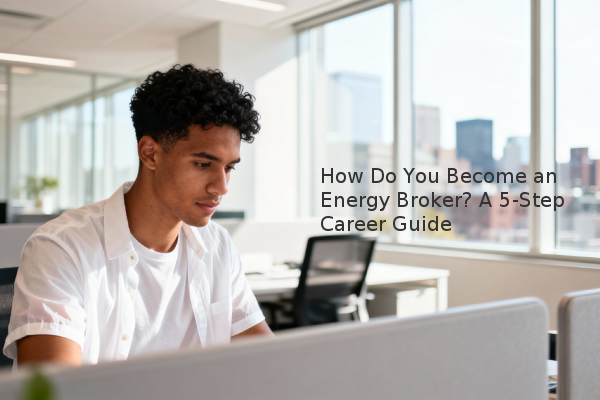
Energy brokers typically work in office settings, either remotely or on-site, and often travel to meet clients and attend industry events. The work can be fast-paced, especially during volatile market periods or at the end of contract cycles. Long hours are not uncommon when closing major deals. The environment demands a high level of professionalism, attention to detail, and the ability to make quick, data-driven decisions under pressure.
To build a successful career as an energy broker, focus on acquiring verifiable credentials, seek out mentors in the industry, and continuously monitor energy market trends to provide the best possible service to your clients.