Browse

Log in / Register
 Share
Share
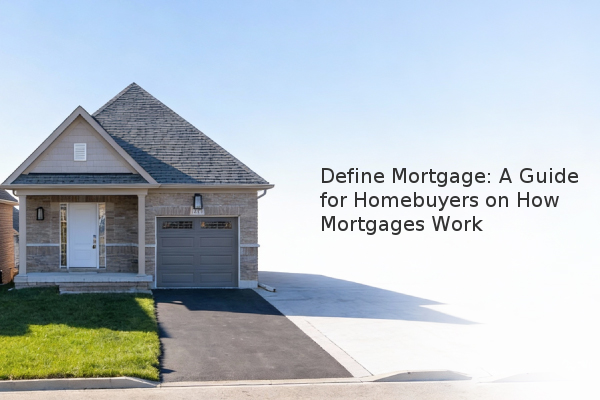
A mortgage is a specialized loan used to purchase real estate, where the property itself serves as collateral for the debt. For most homebuyers in the United States, a mortgage is the primary financial tool that makes homeownership possible, allowing them to pay for a property over a set period, typically 15 to 30 years, rather than requiring the full purchase price upfront. Understanding the components of a mortgage—principal, interest, taxes, and insurance—is the first step in the homebuying journey.
When you define mortgage, you must break it down into its essential parts. The principal is the initial amount of money you borrow to buy the home. As you make payments, you gradually pay down this balance. The interest is the cost charged by the lender for borrowing the principal, expressed as a percentage rate. Most mortgage payments also include amounts held in escrow for property taxes and homeowners insurance, which the lender manages to ensure these crucial bills are paid on time. The process of paying off the loan through regular payments is called amortization.
The U.S. real estate market offers several common mortgage products. A conventional loan is not insured by a government agency and often requires higher credit scores and down payments. In contrast, government-backed loans include FHA loans (insured by the Federal Housing Administration, popular for lower down payments), VA loans (guaranteed by the Department of Veterans Affairs for eligible military service members and veterans, often requiring no down payment), and USDA loans (for properties in designated rural areas). Another key distinction is between a fixed-rate mortgage, where the interest rate stays constant for the entire loan term, and an adjustable-rate mortgage (ARM), which has an interest rate that can change periodically after an initial fixed period.
| Loan Type | Key Feature | Best For |
|---|---|---|
| Fixed-Rate Mortgage | Interest rate remains unchanged | Buyers seeking predictable, stable payments |
| Adjustable-Rate Mortgage (ARM) | Rate adjusts after an initial fixed period | Buyers who plan to sell/refinance before adjustment |
| FHA Loan | Lower down payment requirements (e.g., 3.5%) | Buyers with lower credit scores or limited savings |
| VA Loan | Often requires $0 down payment | Eligible veterans, active service members, and spouses |
The journey to securing a mortgage follows a structured path. It begins with pre-approval, where a lender reviews your finances (credit, income, assets) to determine how much you can borrow. This step strengthens your offer when you find a home. After your offer is accepted, you submit a formal loan application. The lender then orders an appraisal to confirm the property’s value aligns with the loan amount and a title search to ensure there are no ownership disputes. This is often when title insurance is purchased to protect the lender and buyer against future claims. Finally, if approved, you'll proceed to the closing, where you sign the final paperwork and the loan is funded.
Lenders assess several key criteria to determine your eligibility and interest rate. Your credit score is a major factor; a higher score generally qualifies you for better rates. Your debt-to-income ratio (DTI), which compares your monthly debt payments to your gross monthly income, is also critically reviewed. Most lenders prefer a DTI below 43%. The size of your down payment also matters; a larger down payment reduces the loan amount and can sometimes eliminate the need for private mortgage insurance (PMI), which is an additional fee on conventional loans with less than 20% down.
Based on our experience assessment, navigating the mortgage landscape requires careful planning. Getting pre-approved before house hunting provides a clear budget. Comparing loan estimates from multiple lenders can save tens of thousands of dollars over the life of the loan. Most importantly, understanding your mortgage terms is fundamental to a successful and sustainable home purchase. Consult with lenders to find the product that best aligns with your financial goals.