Browse

Log in / Register
 Share
Share
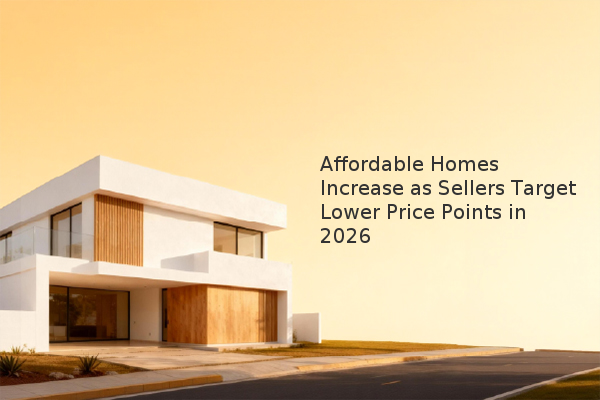
The US housing market is seeing a significant shift toward affordability in 2026, with nearly half of all sellers targeting listings at $500,000 or below. This trend is driven by move-up buyers leveraging remote work flexibility to find homes that meet their needs without exceeding their budgets, based on our experience assessment of current market data. While median home prices remain elevated, the increasing inventory of homes in more accessible price ranges offers a new dynamic for buyers who found previous years highly competitive.
Current market data indicates a pronounced focus on the lower to mid-price segments. A substantial 49% of sellers are aiming to price their homes at $500,000 and below, with 15% targeting $200,000 or less. This strategic pricing is often a response to higher mortgage rates, which have increased the average monthly payment for buyers. For sellers, this approach helps attract a larger pool of qualified buyers in a market where affordability is a primary concern. The goal for many is to facilitate a quicker sale, allowing them to purchase their next home efficiently.
The significant jump in mortgage rates from historic lows has fundamentally altered buyer calculations. To put this in perspective, a mortgage rate is the interest charged on a loan used to purchase a property. Higher rates directly increase the monthly payment, reducing a buyer's purchasing power. Consequently, more than half (53%) of current buyers are also seeking properties priced at $500,000 and below. This alignment between seller pricing and buyer search parameters is creating increased activity in this segment, though it also adds complexity for those selling and buying simultaneously.
The flexibility of remote work continues to be a powerful force in the 2026 real estate landscape. This has enabled a segment of buyers to relocate to areas that offer better value, a strategy known as geographic arbitrage. However, this trend is a double-edged sword. While it provides freedom for some, it has also been a documented contributor to rapid price appreciation in certain markets over recent years. Today, we see buyers using this flexibility more strategically, prioritizing overall affordability and lifestyle fit over proximity to a specific physical workplace.
The market is currently characterized by a diverse mix of seller motivations. Approximately 29% of sellers are considered 'trade-up' buyers, seeking a more valuable property, while 32% are making a lateral move at a similar price point. This activity underscores that home equity—the difference between a home's market value and the mortgage debt owed—accumulated during years of price growth is providing sellers with significant capital. Yet, these sellers then become buyers in the same market, facing the same challenges of higher prices and interest rates on their next purchase.
In conclusion, the 2026 market presents a more balanced environment for buyers seeking homes under $500,000. The key takeaway is that strategic pricing from sellers is meeting pragmatic budgeting from buyers. For those considering a move, focusing on precise financial pre-approval and clearly defining needs versus wants is critical in this evolving landscape.