Browse

Log in / Register
 Share
Share
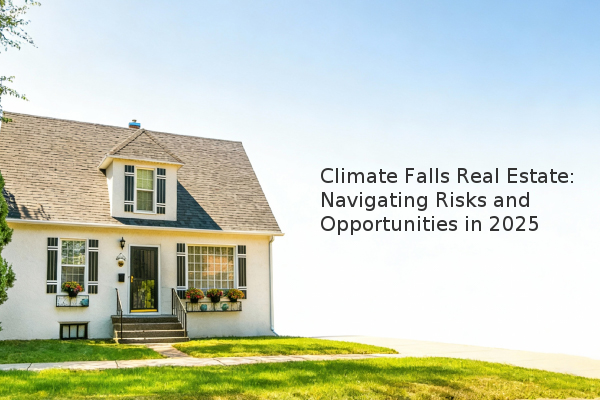
The real estate market in Climate Falls is increasingly defined by its environmental profile. For prospective buyers and investors in 2025, understanding the specific climate-related risks—from flooding to wildfire—is not just a precaution but a critical component of the financial decision-making process. Properties in areas with lower climate risk scores are commanding premium prices, while insurance costs are becoming a decisive factor in affordability. This guide provides an objective assessment of the Climate Falls real estate landscape, helping you identify both potential pitfalls and valuable opportunities based on current data.
The term climate risk refers to the potential for environmental hazards to cause property damage or financial loss. In the Climate Falls area, the most significant risks are often tied to water and extreme weather. Based on our experience assessment, buyers should prioritize reviewing two key documents: the FEMA Flood Insurance Rate Map (FIRM), which designates flood zones, and local wildfire risk assessments. A property located in a Special Flood Hazard Area (SFHA) will require mandatory flood insurance, adding significant annual costs. Furthermore, areas with a high Urban Conflagration Potential (the likelihood of fire spreading rapidly through vegetation) may face stricter building codes and higher insurance premiums. It is essential to verify these factors with official sources before making an offer.
The financial implications are substantial. Insurers are increasingly using sophisticated models to price risk, leading to soaring premiums or even non-renewals in high-risk zones. This can directly affect property value. A home that is difficult or expensive to insure becomes less attractive to future buyers, potentially limiting its appreciation. Conversely, properties with verified mitigation features, such as fire-resistant roofing or updated drainage systems, are seeing a market advantage. The table below outlines common climate risks and their direct financial impacts:
| Climate Risk | Potential Impact on Cost |
|---|---|
| High Flood Risk | Mandatory flood insurance ($1,500 - $3,500+ annually) |
| High Wildfire Risk | Increased homeowners insurance premiums (can double or triple) |
| Coastal Erosion | Depreciation of land value, potential for structural damage |
Due diligence is the comprehensive investigation a buyer conducts before finalizing a real estate transaction. For Climate Falls, this process must extend beyond a standard home inspection. Key steps include:
While risks are prominent, they create distinct opportunities. A growing segment of buyers actively seeks homes with sustainability features. Properties with solar panels, drought-tolerant landscaping, and energy-efficient systems are often more marketable. Additionally, neighborhoods that have invested in community-wide resilience projects may offer a more stable long-term investment. For investors, there may be potential in properties that can be upgraded with mitigation features, increasing their value to risk-aware buyers. The key is to align the property's features with demonstrable reductions in climate vulnerability.
Navigating the Climate Falls market requires a data-driven approach focused on verified risk. Prioritize reviewing FEMA maps and insurance claims history, secure insurance quotes during your due diligence, and consider the long-term value of resilience features. By objectively assessing these factors, you can make a more informed and financially sound real estate decision.