Browse

Log in / Register
 Share
Share
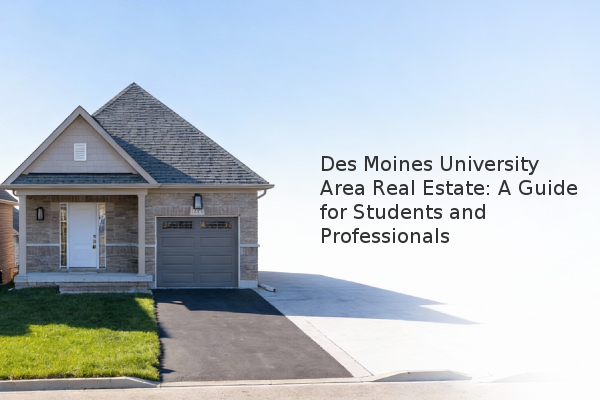
The real estate market surrounding Des Moines University (DMU) presents unique opportunities for students, faculty, and healthcare professionals seeking housing and investment properties. The core conclusion is that the demand for rental properties near the university remains consistently high, driven by the student population, while the surrounding neighborhoods of West Des Moines offer strong long-term value for home buyers. Navigating this market requires an understanding of specific property types, financing options for future medical professionals, and the balance between proximity and affordability.
Prospective residents near DMU will find a mix of housing styles. Single-family homes are prevalent in established neighborhoods, offering space for those with families or seeking a long-term investment. Multi-family properties, such as duplexes and small apartment buildings, are common and can be attractive for owner-occupants who wish to generate rental income. For students and young professionals, condominiums (Condos) and apartments provide low-maintenance living. A Condo is a type of property ownership where individuals own their individual unit but share ownership of common areas like lobbies and grounds with other residents. Rental prices for a one-bedroom apartment within a 15-minute drive of the campus typically range from $900 to $1,200 per month, with prices fluctuating based on amenities and exact location.
The most sought-after locations blend convenience with community. Areas like Clive and Windsor Heights offer easy access to campus and major highways like I-80/35, while also providing access to parks and retail centers. When evaluating a property, it's crucial to consider the cap rate (Capitalization Rate), a key metric for investment properties. This rate is calculated by dividing the property's net operating income by its purchase price. Based on our experience assessment, well-maintained multi-family properties in this corridor can achieve a cap rate between 5% and 7%, reflecting a stable investment environment.
For students at Des Moines University, the rental process involves specific considerations beyond just monthly rent. Security deposits in Iowa are typically equivalent to one month's rent and are regulated by state law, which mandates landlords must return the deposit or an itemized list of deductions within 30 days of lease termination. It is critical to conduct a move-in inspection and document any pre-existing damage to ensure the full deposit's return. Many leases near academic institutions are 12-month agreements, but some landlords may offer flexible terms aligned with the academic calendar.
Renters should also scrutinize the lease for clauses regarding subletting, which is the practice of renting the property to another tenant for a portion of the lease term. This can be important for students completing rotations outside the Des Moines area. Furthermore, understanding utility responsibilities is essential; some rentals include water and trash, while tenants are typically responsible for electricity, gas, and internet. Verifying average monthly utility costs from the landlord or previous tenants can prevent budget surprises. Always ensure the landlord is reputable and the property meets local housing codes.
For medical residents, faculty, or those planning to stay in the Des Moines area long-term, purchasing a home can be a financially sound decision. The mortgage process for professionals with student debt can be nuanced. Lenders may use programs like physician loans, which are specialized mortgage products that allow for a low or zero down payment and exclude student loan debt from debt-to-income calculations under certain conditions. Current average interest rates for a 30-year fixed-rate mortgage in Iowa are approximately 6.5% to 7% as of mid-2024, but rates are subject to change.
The table below illustrates a simplified comparison between renting and buying a $250,000 property near Des Moines University over a 5-year period.
| Factor | Renting ($1,200/month) | Buying (6.75% Interest) |
|---|---|---|
| 5-Year Total Cost | ~$72,000 (rent only) | ~$95,000 (mortgage, taxes, insurance) |
| Equity Build-Up | $0 | ~$25,000 - $35,000 (estimated) |
| Long-Term Benefit | High flexibility, no maintenance costs | Builds ownership equity, potential tax deductions |
This comparison highlights that while buying involves higher upfront costs and responsibility for maintenance, it builds equity over time. The stability of the Des Moines healthcare sector, anchored by institutions like DMU, supports property value appreciation. A title insurance policy, which protects the homeowner and lender from financial loss due to defects in the property title, is a non-negotiable and crucial part of the purchasing process.
In summary, the Des Moines University real estate market is characterized by consistent rental demand and stable property values. Key takeaways for success include: conducting thorough due diligence on rental agreements, exploring specialized mortgage products if you are a healthcare professional, and evaluating the investment potential of a property based on its cap rate and location. Whether renting or buying, aligning your housing choice with your career timeline and financial goals is the most critical step.