Browse

Log in / Register
 Share

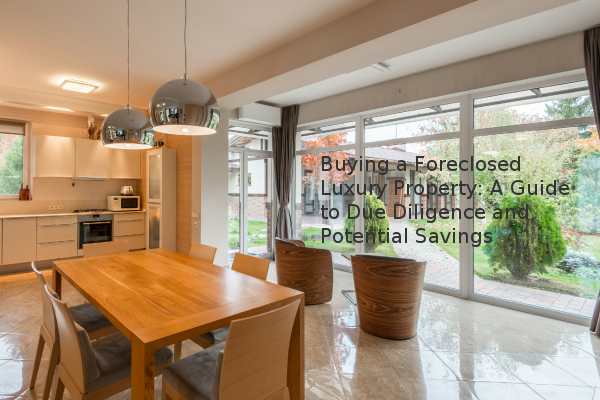
Purchasing a foreclosed luxury home can present a significant financial opportunity, but it requires meticulous due diligence to mitigate risks. Based on our experience assessment, a buyer can potentially acquire a property below its assessed value, as seen in recent transactions where multi-million dollar homes sold for 5-10% less than their official valuation. However, the process involves navigating legal complexities and potential property issues that standard transactions typically avoid. This guide outlines the essential steps for evaluating a foreclosed high-end property.
A foreclosure is a legal process where a lender, such as a bank, takes possession of a property from a borrower who has defaulted on their mortgage loan. This often results in the lender selling the property to recoup their losses. For buyers, this can create opportunities to purchase homes at a discount. Lenders are primarily motivated to liquidate the asset quickly rather than maximize profit, which can lead to sale prices below the current market or assessed value. For instance, a property with an assessed value (the value determined by a public tax assessor for taxation purposes) of $20 million might be listed by a bank for $18.6 million, representing a substantial potential saving.
The standard due diligence period—the time after an offer is accepted to inspect and investigate the property—is even more critical in a foreclosure. Since these properties are often sold "as-is," the buyer assumes all responsibility for existing problems.
Financing a foreclosure can differ from a typical mortgage. While conventional loans are an option, the property must meet certain condition standards to qualify. If the home needs significant repairs, a renovation loan might be necessary. All-cash offers are highly attractive to banks and can provide a competitive advantage, potentially leading to a faster closing and a lower accepted price. The table below outlines common financing options:
| Financing Option | Best For | Key Consideration |
|---|---|---|
| Conventional Mortgage | Properties in good, move-in condition. | Appraisal must meet loan standards. |
| Renovation Loan (e.g., FHA 203k) | Properties requiring significant repairs. | Combines purchase price and renovation costs into one loan. |
| All-Cash Offer | Buyers seeking the strongest negotiating position. | Waives financing contingency, speeding up the sale. |
The purchase price is only one part of the financial picture. Property transfer taxes, which are state or local taxes levied on the transfer of the property title, can be substantial on a multi-million dollar sale. Additionally, property taxes, insurance for a vacant or distressed property, and immediate maintenance costs must be factored into your budget. Long-term, buying a foreclosed property in a coveted area, such as an oceanfront lane, is often a sound investment due to the irreplaceable nature of the location, but the initial savings can be eroded by unexpected repair bills.
Purchasing a foreclosed luxury property requires a disciplined, analytical approach. The potential for acquiring a valuable asset below market rate is a powerful incentive, but it comes with inherent risks. Engaging a real estate attorney with foreclosure experience and conducting exhaustive inspections are the most critical steps to protect your investment. By understanding the process and preparing for the complexities, you can make an informed decision on whether this path to homeownership aligns with your financial goals and risk tolerance.