Browse

Log in / Register
 Share

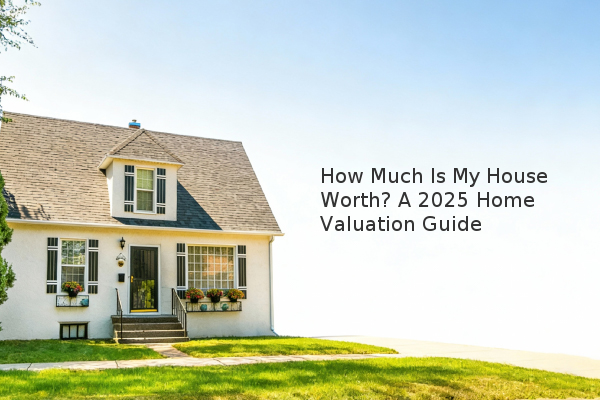
Determining your home's value is a multi-faceted process that blends online valuation tools, a comparative market analysis (CMA) from a real estate agent, and a professional appraisal. The most accurate figure is typically derived from a combination of these methods, with the final sale price ultimately being determined by what a ready and willing buyer will pay in the current local market. Key factors like your home's location, size, condition, and recent sales of comparable properties (comps) in your area are the primary drivers of value.
Your property's worth isn't a random number; it's calculated based on specific, observable data. Location remains the most significant factor, encompassing the quality of school districts, neighborhood desirability, and proximity to amenities. The home's physical attributes, such as square footage, number of bedrooms and bathrooms, and lot size, form the baseline. The property's condition is also critical; a well-maintained home with updated major systems (like HVAC and roof) will command a higher price than a similar home requiring significant repairs. Unique features like a renovated kitchen, swimming pool, or a large garage can also add value, though they may not provide a full dollar-for-dollar return on investment.
To illustrate how adjustments work based on comps, consider the following basic comparison:
| Feature | Your Home | Comparable Sale 1 | Adjustment |
|---|---|---|---|
| Square Footage | 2,000 sq ft | 1,900 sq ft | +$25,000 |
| Bathrooms | 2.5 | 3.0 | -$10,000 |
| Pool | No | Yes | -$15,000 |
| Adjusted Value | $400,000 |
You can approach valuation from several angles. Automated Valuation Models (AVMs) are computer-generated estimates used by many online platforms. They provide a quick, free starting point by analyzing public data and recent sales, but they may not account for unique property features or current condition. For a more precise estimate, contact a local real estate agent for a Comparative Market Analysis (CMA). This is typically a free service where an agent prepares a detailed report comparing your home to similar properties that have recently sold, are currently on the market, or failed to sell. For legal or lending purposes, such as during a divorce or refinancing a mortgage, a formal appraisal by a licensed appraiser is required, providing the most definitive valuation.
The real estate market is dynamic, and value is heavily influenced by whether it is a buyer's market or a seller's market. In a seller's market, characterized by low inventory and high demand, homes may sell for at or above their asking price. In a buyer's market, with more homes for sale than active buyers, properties may sit longer and sell for less. National trends provide a backdrop, but real estate is local. It is essential to understand the specific supply and demand dynamics in your city and neighborhood, as these conditions can cause values to fluctuate independently of national averages.
To ensure you get the highest and most accurate valuation, proper preparation is key. Before any evaluation, complete minor repairs, declutter the entire house, and consider a professional deep cleaning. If you're meeting with an agent, gather any relevant documents, such as records of recent upgrades, roof replacements, or HVAC servicing. This documentation provides tangible proof of your home's maintained condition and can positively influence its appraised value. Enhancing curb appeal with basic landscaping can also create a strong first impression.
To accurately determine how much your house is worth, start with online tools for a baseline, then consult a local real estate expert for a comparative market analysis. Understand that your home's final value is a reflection of current local market conditions, the property's unique attributes, and its overall condition. This multi-step approach provides the most reliable estimate for making informed real estate decisions.