Browse

Log in / Register
 Share

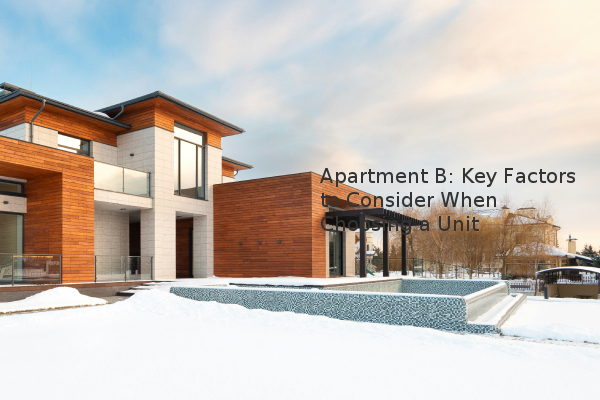
Selecting an apartment unit designated as "B" often involves specific considerations that can impact your living experience, from noise levels and natural light to privacy. While the letter itself doesn't dictate quality, its typical placement within a building's floor plan creates predictable advantages and disadvantages. Understanding these factors, including the potential for higher foot traffic near stairwells and the orientation for afternoon sun, is crucial for making an informed rental or purchase decision. This guide outlines the essential elements to evaluate before committing to an Apartment B.
What Does 'Apartment B' Typically Mean in a Building's Layout? In most multi-unit residential buildings in the United States, units are labeled alphabetically, often starting from the building's entrance or a central point. Apartment B is frequently situated next to Apartment A, commonly sharing a wall. In a simple floor-through layout, it might be a middle unit. There is no universal standard, but the letter generally indicates a specific, repeatable position on each floor. The first step is always to request the floor plan. This document, which is a scaled diagram showing the arrangement of rooms, is your most valuable tool. It reveals the unit's relationship to elevators, stairwells, garbage chutes, and other units, allowing you to assess potential noise and privacy issues objectively.
What Are the Potential Advantages of Choosing an Apartment B? Depending on the building's design, Apartment B can offer several benefits. In many complexes, units with the letter "B" are located on the side of the building that receives afternoon sunlight, which is a significant advantage in colder climates. They may also be positioned farther from high-traffic areas like mailrooms or main lobbies, resulting in a quieter environment. Furthermore, an end-unit Apartment B might feature additional windows on a side wall, enhancing cross-ventilation and natural light compared to an interior unit. A key advantage can be price; if the market perceives another unit (e.g., a corner unit with more windows) as more desirable, Apartment B might offer better value for a very similar living space.
What are the Common Drawbacks of an Apartment B Unit? The primary concerns often revolve around noise and privacy. If Apartment B is adjacent to a stairwell or elevator shaft, you may hear regular noise from residents coming and going. Similarly, its position might place it directly across from another unit's front door, leading to a lack of privacy when entering or exiting. Another consideration is orientation; if the building faces north-south, Apartment B could receive less direct morning sun than Apartment A. It is also essential to inquire about the HVAC (Heating, Ventilation, and Air Conditioning) system and whether sounds are transmitted between shared ducts or walls, a common issue in older buildings.
| Factor to Assess | Why It Matters for Apartment B | Key Question to Ask |
|---|---|---|
| Proximity to Amenities | Distance from elevators/stairs affects noise. | "Is this unit directly next to or across from the elevator bank?" |
| Window Orientation | Determines sunlight exposure (South=all day, West=afternoon). | "Which direction do the primary windows face?" |
| Floor Level | Higher floors often have less street noise and better views. | "What floor is the unit on, and what is above and below it?" |
| Wall Sharing | Identifies potential sources of neighbor noise. | "How many walls are shared with adjacent units?" |
How Can I Make the Final Decision on an Apartment B? The final choice should be based on a thorough, in-person inspection. Visit the unit at different times of the day, especially during the evening when most residents are home, to gauge typical noise levels. Test the water pressure in the showers and sinks and check that all appliances are functional. Don't rely solely on the floor plan; verify the actual living conditions. Based on our experience assessment, the most critical step is to review the building's rules and regulations regarding noise, as this will give you a clear expectation of the community's standards. Finally, consider your personal lifestyle—if you are a light sleeper, a unit away from high-traffic areas is paramount, even if it sacrifices a bit of square footage.
In summary, selecting an Apartment B requires moving beyond the letter and focusing on the unit's tangible attributes. Always obtain and study the floor plan, visit the unit at peak hours, and verify the orientation for sunlight. Prioritize your non-negotiable needs, such as quietness or natural light, over minor cosmetic details. By conducting this level of due diligence, you can confidently determine if a specific Apartment B is the right fit for you, ensuring a positive long-term living experience.