Browse

Log in / Register
 Share

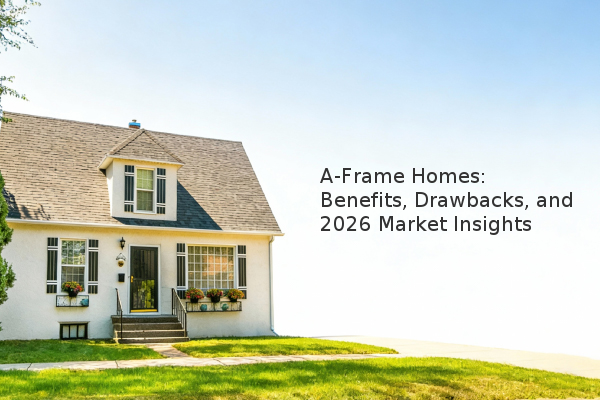
A-frame homes, characterized by their steeply pitched roofs that form a triangle resembling the capital letter 'A', offer a unique blend of rustic charm and modern appeal. Based on our experience assessment, these properties are best suited for buyers seeking a vacation or secondary residence, particularly in scenic, mountainous, or snowy regions. However, their distinct architecture presents specific maintenance and livability considerations. The high demand and limited inventory for these unique properties make them a challenging but potentially rewarding find in the 2026 real estate market.
True to its name, an A-frame home is an architectural style where the walls begin at or near the foundation and slope upward at a sharp angle, meeting at the top to form a triangular, or 'A'-shaped, roofline. This design is not merely aesthetic; it is highly functional. The steep pitch allows snow to slide off easily, making these homes particularly resilient in winter climates. Inside, the layout is dominated by a cathedral or vaulted ceiling that creates a sense of spaciousness, often featuring large windows to maximize natural light and capitalize on surrounding views. While often associated with cozy cabins, A-frame designs can range from modest, kit-built structures to luxurious, custom-built waterfront properties.
A-frame homes are most prevalent in settings that capitalize on their architectural strengths. You will typically find them in vacation-oriented areas, such as mountain retreats, wooded lots, and near lakeshores. "In markets like Southern California, A-frame homes are concentrated in mountainous areas where their large windows are designed to take full advantage of panoramic views," says a real estate agent with experience in the region. Their popularity in the United States peaked post-World War II, when build-your-own kits sold through department stores made second-home ownership accessible. Today, companies like Avrame continue to offer modernized kits, with prices for a basic shell kit starting from approximately $30,000, not including the foundation, insulation, and interior finishes. The final cost can vary significantly based on location and specifications.
The benefits of A-frame living are distinct. The most cited advantage is the abundance of natural light from the large, front-facing windows, which often frame impressive scenery. This connection to the outdoors appeals to those with a nostalgic fondness for camping or a "cabin in the woods" aesthetic. From a practical standpoint, the simple, sturdy design can be relatively low-maintenance, and the efficient use of materials can make initial construction costs manageable compared to more complex designs. For investors or first-time buyers, a smaller A-frame can be an entry point into a desirable recreational market, though high-end, custom versions also exist.
Despite their charm, A-frame houses are not for everyone. The unique shape creates inherent challenges. The vaulted ceiling, while grand, can lead to higher heating costs as warm air rises and accumulates in the peak, making the living space less energy-efficient than a traditional home of similar square footage. Practical living space is also a consideration; the sloping walls can result in limited headroom on the upper floors and minimal storage or closet space. Furthermore, as noted by a Florida-based agent, the typically wood-heavy construction may not be ideal in regions prone to termites or extreme weather events like tropical storms.
The investment potential of an A-frame home in 2026 is a balance of high demand and scarce supply. "There are not many A-frames left on the market, due to high demand and low inventory," observes a real estate professional from the Northeast. The majority of existing stock was built in the mid-to-late 20th century, and current owners tend to hold onto these unique properties. This scarcity can drive value, especially in sought-after locations. For a buyer, this means acting quickly when a well-maintained A-frame in a prime area becomes available. Their niche appeal can lead to strong rental income potential in tourist markets, but resale may take longer than a conventional home due to a smaller pool of interested buyers.
In summary, purchasing an A-frame home requires a careful evaluation of lifestyle priorities versus practical compromises. They are an excellent choice for a recreational property but may present challenges as a primary residence. If you are drawn to unique architecture and a strong connection to nature, an A-frame could be a perfect fit. Before committing, secure a specialized home inspection to assess the condition of the roof, structure, and insulation, and research local building codes if you are considering a new kit-built construction.