Browse

Log in / Register
 Share
Share
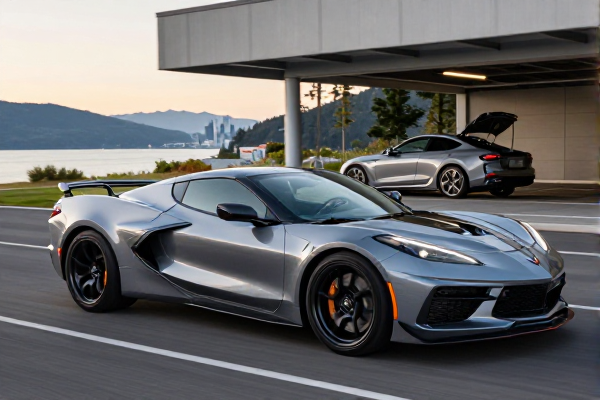
March 26, 2025 – When Chevrolet engineers embarked on the mission to create the most powerful Corvette ever—the ZR1—they didn’t just build a track monster. They also built a blueprint for the next-generation Stingray. In an exclusive interview with program chief engineer Tadge Juechter, it became clear that the 2027 Corvette Stingray will benefit from lessons learned during the ZR1’s development, from cooling systems to chassis dynamics.
The ZR1 was designed to shatter records at the Nürburgring, with a twin-turbocharged LT7 V8 producing over 1,000 horsepower. That extreme power required revolutionary cooling, aero, and structural solutions. “We knew the ZR1 would be a halo car, but we also knew that every component we validated could trickle down to the Stingray with careful scaling,” said Juechter. The 2027 Stingray, expected to debut in late 2026, will adopt a revised version of the ZR1’s front-mounted intercooler setup, allowing the base model to maintain peak performance in hot-weather conditions without adding weight.
One of the ZR1’s most talked-about features is its active rear wing and front dive planes, which adjust automatically based on speed and cornering forces. Chevrolet engineers have now confirmed that the 2027 Stingray will receive a simplified version of this system. Unlike the ZR1’s Track Mode which can generate over 1,200 pounds of downforce, the Stingray’s system will focus on reducing drag at highway speeds and improving stability in crosswinds. The system uses the same control algorithms but with a lighter, single-pivot