Browse

Log in / Register
 Share

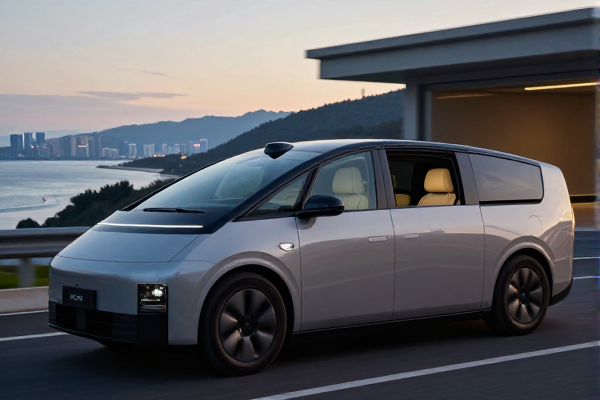
On May 23, 2024, Amazon's autonomous vehicle subsidiary Zoox unveiled a significantly upgraded, production-intent version of its purpose-built robotaxi. The announcement marks a pivotal step from prototype testing towards commercial deployment, with the vehicle slated to enter large-scale production and join Zoox's operational fleet later this year.
While maintaining its distinctive, symmetrical pod-like silhouette, the latest iteration incorporates a host of subtle yet impactful design refinements. A closer inspection reveals a cleaned-up front fascia with reconfigured reflectors and a more integrated license plate housing, contributing to a sleeter overall aesthetic. These external changes, while evolutionary, signal a maturation of the vehicle's design as it prepares for broader public exposure.
The most substantial upgrades are reserved for the passenger cabin, which has undergone a complete transformation aimed at enhancing rider experience. Zoox has moved away from a darker, utilitarian interior in favor of a brighter and more welcoming atmosphere. A new Stone Gray color scheme for the flooring and trim replaces previous black accents, while the seats now feature a lighter Aloe Green hue.
Beyond color, ergonomic improvements take center stage. The seats and headrests have been completely redesigned with additional contouring and padding, directly addressing comfort for longer urban journeys. Practicality is also boosted with larger cup holders and an enhanced wireless charging pad that includes fluting to secure smartphones during transit.
A central pillar of the upgrade is improved human-machine interaction. The interior now features a more vivid and responsive touchscreen interface. More critically, Zoox has enhanced its two-way audio system with additional speakers and microphones. This upgrade is vital for seamless communication between riders and remote support agents, as well as for interacting safely with pedestrians, cyclists, and first responders in complex urban environments.
Durability and passenger convenience were key engineering focuses. The new, lighter interior palette was intentionally selected not just for aesthetics but to make it easier for riders and cleaning crews to spot personal items like phones or bags left behind—a common issue in shared mobility. Materials throughout the cabin have been upgraded for increased resilience to withstand the rigors of continuous, round-the-clock public use.
Manufacturing will commence at Zoox's facility in Hayward, California. The company has stated its production line is capable of building up to 100 vehicles per week, indicating readiness for scaling. However, the pace of fleet expansion remains explicitly contingent on regulatory approvals from state and federal authorities, a reminder of the complex legal landscape governing autonomous vehicles.
This launch positions Zoox in a increasingly competitive segment. Unlike rivals like Waymo (which uses modified Jaguar I-PACEs) or Cruise (using Chevrolet Bolts), Zoox's vehicle is a ground-up, bidirectional design built exclusively for autonomous ride-hailing, with no manual controls. Its progress is a significant indicator of Amazon's long-term strategic investment in autonomous logistics and personal mobility.
The unveiling of a production-intent model suggests Zoox is transitioning from closed testing to preparing for more expansive commercial or public road testing. Industry analysts will be watching closely to see if the company announces initial deployment cities beyond its current testing grounds in Las Vegas, San Francisco, and Seattle, as it races to bring a viable commercial service to market.