Browse

Log in / Register
 Share
Share

New Delhi | October 9, 2026 – Zomato and Blinkit kicked off the third edition of EV Bazaar at KD Jadhav Stadium in New Delhi, creating a marketplace specifically for delivery workers who are weighing a switch to electric two-wheelers. About 2,500 delivery partners attended, with more than 20 electric vehicle manufacturers and adjacent service providers on hand.
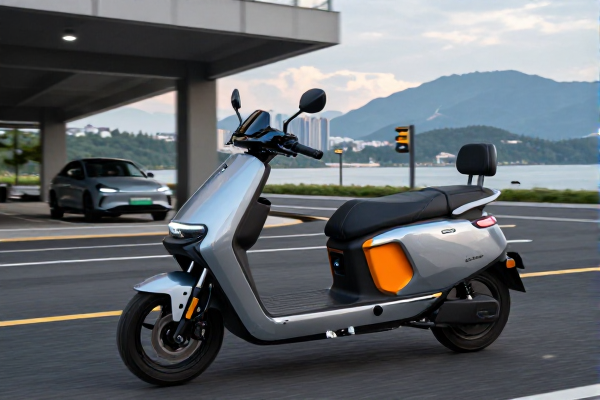
Unlike conventional auto expos, EV Bazaar focused on practical questions: How much is the monthly rental? What happens when the battery runs low? Can I charge it at home? Riders could test more than 30 electric two-wheeler models, from commuter scooters to heavy-duty delivery bikes, and compare plans side by side.
The event treated delivery partners as empowered buyers, not passive beneficiaries. Instead of being told which vehicle to use, riders walked from stall to stall, talked with manufacturers, and checked how each model behaved on the same roads they would be riding every day. That kind of direct comparison is still uncommon in the wider automotive market, and it was one of the most useful features of the day.
The event also carried official weight. Mahmood Ahmed, Additional Secretary at India's Ministry of Roads and Transport, was chief guest. Jitender Patil, head of the EV Cell at Maharashtra's Transport Department, attended as well, along with former Indian cricketer Shikhar Dhawan, who drew extra attention to the test-ride zone.
Ahmed said the EV transition is a matter of national energy security and clean air. "The adoption of EVs by delivery partners is important to accelerating the transition, because charging, swapping and servicing networks will expand for the industry and benefit other users as well," he said. He called the event "a proactive initiative" to shift the gig ecosystem toward electric mobility.
His presence mattered for a simple reason: policy support has been a major driver of India's electric two-wheeler growth. Federal purchase incentives under the PM E-DRIVE scheme have lowered sticker prices, while several states have added their own waivers and charging incentives. For gig workers, those policy layers reduce the upfront gap that often makes an electric bike look more expensive than a petrol one.
Eternal, the parent company behind Zomato and Blinkit, says the event is part of a measurable shift. More than 200,000 delivery partners were using electric two-wheelers as of September 30, 2026. During fiscal year 2026, EVs powered 228 million deliveries across both platforms, avoiding roughly 9,926 tonnes of carbon dioxide emissions.
Those figures turn the event from a marketing exercise into a serious operational signal. Electric two-wheelers are no longer a pilot project for the company; they are a core part of its delivery fleet. The scale of adoption also means that charging and battery-swapping infrastructure has shifted from a nice-to-have to a necessity, which explains why so many infrastructure partners joined the event.
Anjalli Ravi Kumar, Chief Sustainability Officer at Eternal, made the case that environmental benefits are inseparable from everyday economics. "For delivery partners, the performance of their bike is critical to their ability to earn efficiently. Delivery may only be one of their many responsibilities on the same day," she said. "That makes the move to electric a practical and financial question as much as an environmental one."
She added that EV Bazaar gives riders a place to evaluate their purchase options by directly interacting with the companies that build, rent, finance and charge electric bikes. That distinction is important. A delivery partner's math is not the same as an urban commuter's: it includes long hours, unpredictable distances, and the need for quick battery turnover between orders.
The practical tests during the event were therefore not optional extras. Riders could judge acceleration, braking, suspension and seat comfort, but they could also ask about warranty coverage, battery replacement costs and resale value. Those details often determine whether an electric two-wheeler makes financial sense in the first year, not just on a showroom floor.
Zomato and Blinkit have also tried to cut the biggest barrier: upfront purchase cost. A "Rent a vehicle" option in the delivery partner apps lets riders hire electric two-wheelers and locate nearby charging or battery-swapping stations inside their delivery zones. The company says 23,000 delivery partners used that feature in FY26.
The platforms have not left the work to third parties only. Zomato Local Services Private Limited started its own EV rental fleet in June 2025 and had deployed more than 1,500 electric two-wheelers across Delhi and Chennai by March 2026. That gives the company direct feedback on maintenance, vehicle quality and rider usage patterns.
Sheetanshu Tyagi, co-founder and CEO of EMO Energy, the event's powered-by partner, said fast charging is the missing piece for last-mile fleets. "EMO Energy brings advanced batteries and 20-minute charging together to keep last-mile vehicles moving," he said. Working with Zomato and Blinkit, he said, allows riders to "charge faster, operate with zero downtime and have greater vehicle availability."
The third edition also gave recognition to riders who are already part of the electric shift. Three delivery partners received new electric two-wheelers, one received a free one-year rental plan through the EV partner network, and selected riders were given mementos for their performance. The prizes may be modest in cost, but their symbolic value matters more: they show that EV adoption is now a measurable career advantage, not just a lifestyle choice.
This year's event arrives at a moment when the conversation about EV adoption has shifted from demonstration to deployment. For the delivery partner, the question is no longer "Should I ride electric?" but "Which electric bike, at what payment plan, with what charging support?"
For U.S. readers, the format is worth watching. Several American food-delivery platforms have tested EV rental partnerships, but few have created a physical market where riders can compare vehicles, financing offers and infrastructure options in a single afternoon. EV Bazaar treats the rider as the decision-maker and uses the scale of a delivery network to make financing and infrastructure cheaper.
That approach may be more adaptable to a gig workforce than a centralized corporate fleet policy. Instead of forcing one model across a city, Zomato and Blinkit are using their buying power to make the entire EV ecosystem more accessible. The result is a marketplace that responds to local conditions, rider preferences and changing battery technology.
The third edition has now ended, but the transition it supports is still accelerating. Between the rental program, the company-owned fleet, policy tailwinds and a steady stream of riders testing bikes, Zomato and Blinkit are betting that the next 200,000 delivery partners will be won through convenience, not subsidy alone.