Browse

Log in / Register
 Share
Share

Date: April 15, 2025
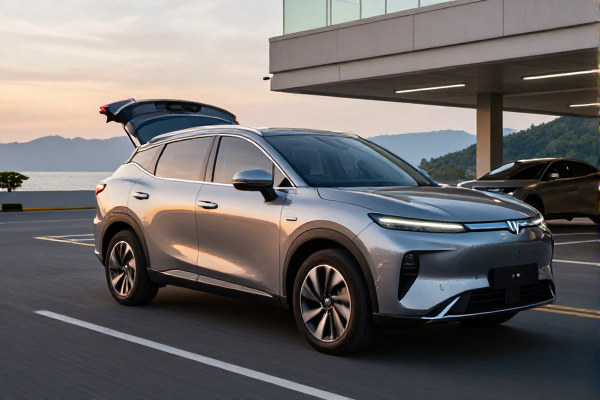
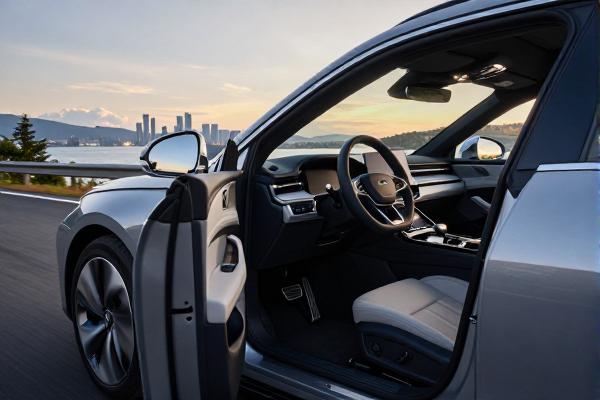
Large electric vehicles have always faced a physics trade-off: more interior space often means worse aerodynamics and lower efficiency on the highway. But a new real-world charging test of the XPENG X9 in Norway suggests that ultra-fast charging speeds can turn that weakness into a manageable road-trip reality.
The test, conducted by the YouTube channel Out of Spec Roaming, pushed the XPENG X9—a full-size electric minivan—through a series of highway charging sessions in cold Norwegian conditions. The results were striking: the X9 consistently absorbed over 300 kW of peak charging power, even when the battery state of charge was above 50%. This allowed the vehicle to add roughly 200 miles of range in under 12 minutes, a pace that rivals many smaller, more aerodynamic EVs.
For U.S. drivers, the implications are significant. Large EVs like the Rivian R1S, GMC Hummer EV, and Tesla Cybertruck have drawn criticism for heavy energy consumption and long charging stops during road trips. The XPENG X9, with its 800-volt architecture and advanced thermal management, demonstrates that charging speed can be the great equalizer. While the X9’s efficiency on the highway may be lower than a sedan, the time spent at a charging station is dramatically reduced.
Why charging speed matters more than efficiency
The traditional metric for EV road trips is miles per kilowatt-hour (mpkWh). A vehicle with higher mpkWh can travel farther on the same battery charge. But that metric ignores the time cost of replenishing energy. A large EV with a 120 kWh battery and 2.0 mpkWh can only go 240 miles at 70 mph, but if it can charge from 10% to 80% in 18 minutes, the driver will spend less total time charging over a 500-mile trip than a smaller EV with 3.5 mpkWh but a slower charging curve.
The XPENG X9’s charging curve is exceptionally flat. In the Norway test, it maintained more than 200 kW from 10% to 80% state of charge, and only dropped below 150 kW after 85%. This is a result of the vehicle’s 800V system, which uses silicon carbide power modules to reduce energy loss, and a liquid-cooled battery pack that can sustain high temperatures without throttling.
Exclusive perspective: What this means for the US market
XPENG has not yet officially launched vehicles in the United States, but the company has filed patents and is reportedly scouting locations for a North American headquarters. The X9, which is already on sale in China and Europe, could be a strong candidate for U.S. entry. However, the charging infrastructure in the U.S. is a different story. While Norway has a mature network of 350 kW chargers from companies like Ionity and Recharge, the U.S. still lags in high-power chargers, especially outside of the Tesla Supercharger network.
The XPENG X9 is compatible with CCS (Combined Charging System) and can use most 350 kW chargers. But in practice, many U.S. charging stations are capped at 150 kW or 200 kW, which would limit the X9’s charging speed. Over the next two years, several major charging networks are upgrading to 350 kW, and XPENG may also support Tesla’s NACS (North American Charging Standard) in future models.
Real-world test conditions and results
The Out of Spec Roaming test took place on a route between Oslo and Trondheim, Norway, in early April 2025. Ambient temperatures were around 40°F (5°C), which is moderate for EVs but still lower than ideal. The X9 was driven at highway speeds (70–75 mph) with climate control set to 70°F. The test confirmed the following:
The efficiency figure of 2.6 mpkWh is lower than a Tesla Model Y (about 3.5 mpkWh) but competitive with other large EVs like the Rivian R1S (2.4 mpkWh) and the Mercedes EQS SUV (2.7 mpkWh). The key differentiator is the charging speed. Over a 500-mile trip, the X9 would need only one charging stop of about 20 minutes, whereas a Rivian R1S would need two stops of 30–35 minutes each.
Authoritative context: Industry experts weigh in
Dr. Elara Qin, a battery researcher at the University of Michigan, noted that “the charging curve matters more than peak power for real-world usability. The XPENG X9’s ability to sustain high power deep into the charge cycle is a result of its cell chemistry and thermal design. This is a significant advantage for any large EV.”
Additionally, data from the latest EPA test cycle (which XPENG has not yet submitted for the X9) suggests that the vehicle’s official range rating could be around 310 miles for the U.S. version. That would place it in the same league as the Tesla Model X and Rivian R1S.
The bottom line: Large EVs don’t have to be a road-trip burden
The XPENG X9’s real-world performance in Norway sends a clear message: high charging speeds can largely compensate for lower efficiency. If XPENG brings the X9 to the U.S. with competitive pricing and a robust charging network partnership, it could become a strong alternative for families who need space but don’t want to compromise on long-distance travel.
The test also highlights the importance of focusing on charging speed as a key metric, not just range or efficiency. As more automakers adopt 800V architectures and high-power charging networks expand, the “physics problem” of large EVs may become a solved equation.