Browse

Log in / Register
 Share
Share

Chinese electric vehicle contender Xpeng has taken its advanced driver-assistance technology to the streets of Munich, offering a live preview of a system it aims to bring to international markets, including Europe, by 2027. The demonstration underscores the intensifying technological race, where Chinese automakers are leveraging AI to close the gap on—and potentially leapfrog—established players like Tesla and German automotive giants. October 26, 2023
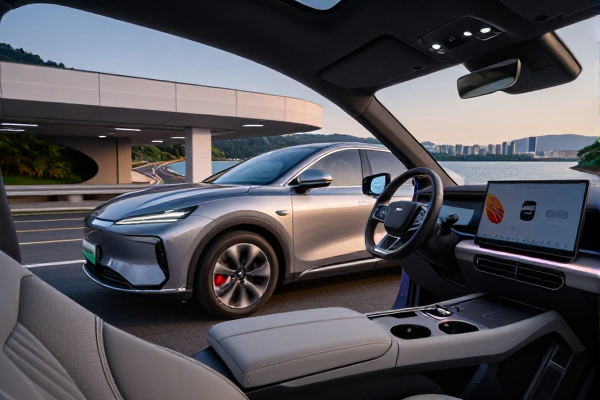
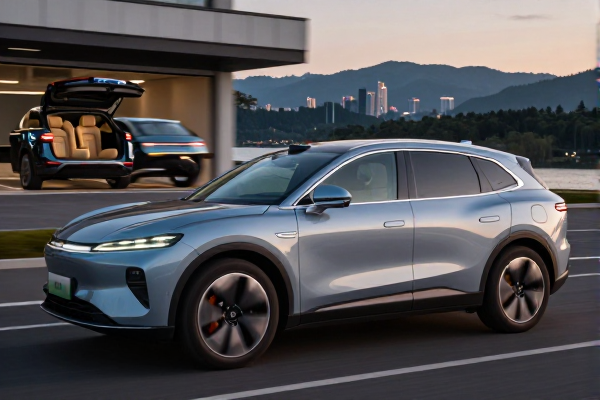
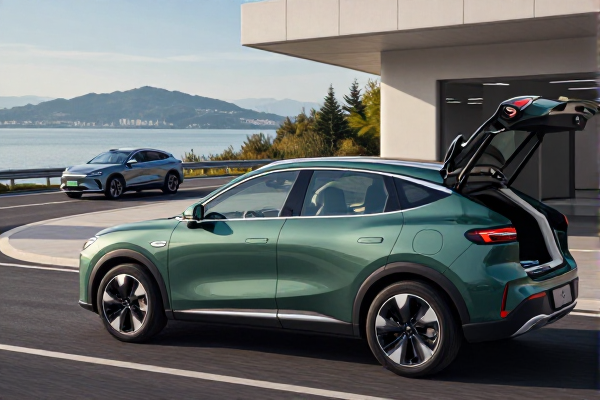
The core of the showcase was Xpeng's Next-Generation Pilot (NGP), an AI-driven system operating on the company's proprietary VLA 2.0 architecture. During public drives, the technology, housed in the new L03 SUV coupé, negotiated Munich's complex urban environment, handling scenarios from tight lanes and construction sites to roundabouts governed by local traffic rules. This European debut is a strategic move, signaling Xpeng's ambition to compete on the technological frontier, not just on price.
A Critical Look at the “Level 2++” Marketing. While Xpeng promotes NGP as “Level 2++” autonomous driving, industry experts urge caution. This classification is a marketing term, not an official designation from the Society of Automotive Engineers (SAE). In legal and functional reality, NGP remains a Level 2 advanced driver-assistance system (ADAS). This critical distinction means the human driver must remain continuously engaged, supervising the system and bearing ultimate responsibility for the vehicle's operation. It does not qualify as conditional (Level 3) or high (Level 4) automation.
The Technical Arsenal: An End-to-End AI Approach. Technically, Xpeng's strategy mirrors Tesla's vision in key aspects. The VLA 2.0 platform employs an end-to-end AI model, processing data directly from vehicle cameras without relying on pre-mapped high-definition maps or LiDAR sensors. This approach allows the system to learn and adapt from real-world driving scenarios dynamically. Powering this is Xpeng's in-house developed Turing AI chip. The company states the top-tier L03 Ultra model utilizes three such processors, delivering a staggering combined compute power of up to 2,250 TOPS (trillion operations per second).
Early Performance Metrics from China. Initial data from NGP's deployment in China suggests tangible improvements in user experience. According to Xpeng, within the first month of launch, driver interventions—instances where a human had to take control—decreased by approximately 26% per 100 kilometers. The reduction was even more pronounced on narrow roads, nearing 36%. Perhaps most telling is the adoption rate, with the company reporting nearly 97% of users activating the system, indicating strong initial user trust and perceived utility.
The European Roadmap and Regulatory Hurdles. Xpeng's targeted 2027 international expansion for NGP is contingent on navigating a complex web of regional regulations. The company is aligning its development with new UNECE standards, such as UN Regulation No. 171, which governs advanced driver-assistance systems in urban environments. Successfully meeting these diverse legal frameworks across European nations will be as crucial as the technology itself for a timely rollout.
Exclusive Perspective: The U.S. Market Calculus. For American observers, Xpeng's Munich showcase is a signal of broader competitive shifts. While the company has no immediate plans for selling cars in the U.S., its technological progression directly pressures Tesla, a dominant force in the U.S. EV and software market. "Xpeng is demonstrating that the R&D pace and ambition in China's EV sector are formidable," notes Michael Dunne, CEO of ZoZo Go, a consultancy specializing in Asian automotive markets. "Tesla's Autopilot and Full Self-Driving have set a high bar, but Xpeng's rapid iteration shows they are not alone in betting big on a vision-based, AI-centric future. This global tech race will keep pushing capabilities forward, which ultimately benefits consumers worldwide."
Beyond Personal Cars: The Robotaxi Connection. Xpeng is not developing this AI platform in a vacuum. The same underlying VLA 2.0 architecture is the foundation for the company's robotaxi testing currently underway in China. This parallel development suggests a long-term strategy where advancements in consumer ADAS directly feed into, and benefit from, the more demanding requirements of fully autonomous ride-hailing services, creating a synergistic data and development loop.
The German and European Competitive Landscape. Xpeng's demonstration in the heart of Germany's automotive industry is symbolically potent. Registration data in Germany already shows Chinese EV brands, alongside Tesla, gaining significant market share. By showcasing sophisticated AI software on German roads, Xpeng is challenging local titans like Volkswagen, BMW, and Mercedes-Benz not just on vehicle quality, but on the defining software and intelligence that will characterize next-generation cars. The pressure is on for European automakers to accelerate their own software-defined vehicle roadmaps.
Conclusion: A Preview of the Software-Defined Future. Xpeng's Munich event was more than a technology demo; it was a statement of intent. It highlights a future where competitive advantage in the auto industry will be increasingly defined by software intelligence and AI capabilities. While the "Level 2++" terminology requires clear-eyed understanding, the underlying technological push is real. As Xpeng eyes a 2027 international launch, the global automotive industry, from Silicon Valley to Stuttgart, is on notice that the race for smarter, more capable vehicles has entered a new, accelerated phase.