Browse

Log in / Register
 Share


XPENG has taken the wraps off the G9L, a new flagship SUV that will arrive in both battery-electric and range-extended forms, carry the company's "physical AI" technology, and be built in Europe as well as China. The official worldwide reveal is scheduled for October 12. With it, XPENG enters the large three-row family SUV segment for the first time, lining up squarely against Li Auto's L9 and NIO's ES family at the most consequential moment of its international expansion. (Rewritten July 21, 2025.)
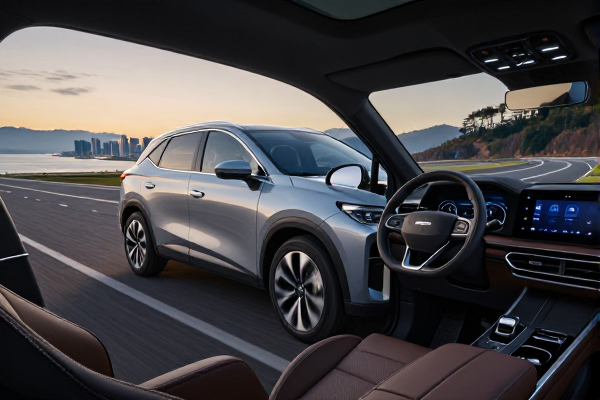
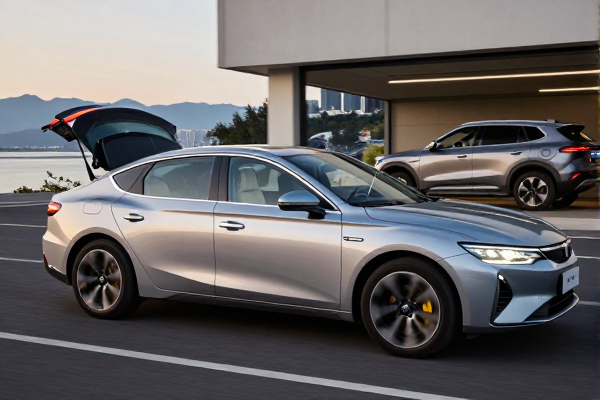
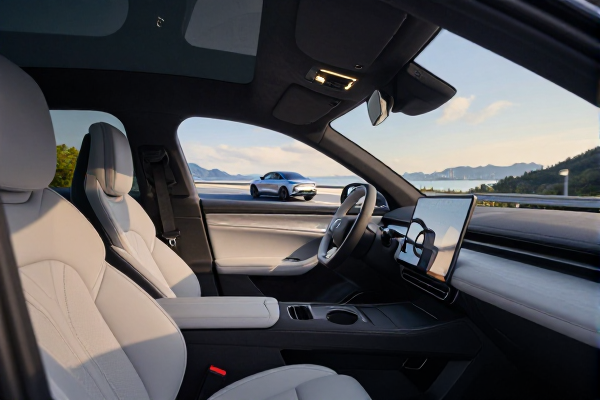
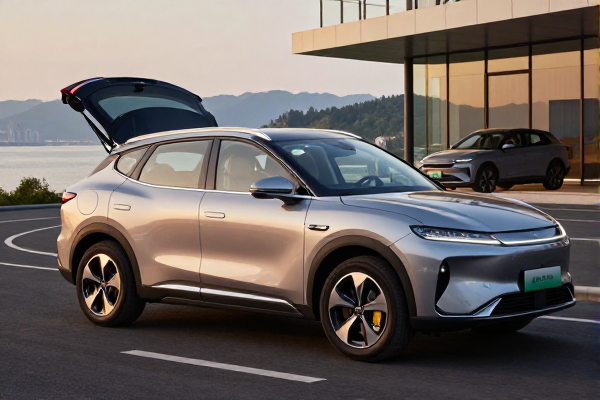
The first official images show a G9L that is visibly bigger and more formal than the standard G9, with a stretched wheelbase, a more upright rear section, and the clean, minimalist surface treatment that now defines XPENG's recent models. Slim full-width lighting, flush door handles, and aero-tuned wheels carry over the brand's current design language. Inside, the G9L is expected to follow the layout of the X9 MPV: a large central display, a digital driver's screen, and a strong emphasis on second-row space — the decisive battleground for family buyers in this class.
XPENG has not published dimensions, battery capacities, or power figures. Those details, along with trim structure and pricing, are being held back for the October launch, which suggests the company wants to make one sizable impression rather than dribble out information over time. The G9L will be built at XPENG's Guangzhou plant and, according to the company, at a European site as well — putting it in a small group of Chinese-branded models produced on two continents.
The headline is the simultaneous arrival of BEV and REEV variants. XPENG built its early reputation as a purist electric brand, and chairman He Xiaopeng has publicly played down the hybrid trend in the past. With the G9L, that stance is changing in the brand's most important model.
A range-extended car pairs a large battery with a small internal-combustion engine that works only as a generator. The wheels are always driven by electric motors, but the engine can top up the battery on the move, pushing total range well beyond what a comparably sized pure EV could manage. It is the architecture that turned Li Auto into one of China's most profitable premium brands, and it is now central to XPENG's flagship plan.
The shift is driven by hard numbers. Range-extended models have been the fastest-growing powertrain category in China's new-energy market for two years running, while pure EV growth has decelerated. Large SUVs, with their heavy bodies and long-distance use cases, are precisely where charging anxiety carries the most weight. Li Auto's L-series has also shown that Chinese families will happily pay a premium for a cabin designed around rear passengers — a lesson XPENG appears to have absorbed.
Cost plays a part, too. A three-row electric SUV needs a large, expensive battery to reach competitive range, and batteries remain the single priciest component in any EV. The REEV approach lets XPENG offer a smaller, cheaper base pack while still advertising class-leading total range. That creates pricing flexibility and, potentially, healthier margins — priorities for a company still working toward steady profitability.
XPENG is positioning the G9L around "physical AI" — its shorthand for a vehicle that uses onboard sensors, powerful computing, and a software stack trained on fleet data to handle real-world driving tasks. The G9L is expected to ship with the latest version of XPENG's assisted-driving platform, which includes navigation-assisted highway and city functions delivered and improved through over-the-air updates.
The company has spent the past year repositioning itself as an AI automaker, not just an EV maker. The G9L is the clearest expression of that identity to date. The real test, though, will come at the launch event, where XPENG must show how the AI features translate into everyday usability — not merely a list of technical specifications.
The G9L's production story may prove as significant as its launch date. XPENG has been preparing local European assembly for some time; earlier this year it signed an agreement with Dutch industrial group VDL Groep covering potential manufacturing and sourcing work in the Netherlands. Bringing the G9L into that plan would make it the company's first flagship SUV built on European soil.
The benefits are straightforward. European Union tariffs on China-made EVs have reshaped the economics of importing from Guangdong, adding cost and uncertainty to every shipment. Local production cuts that exposure, shortens delivery times to customers, and gives XPENG a local-manufacturing narrative in markets where the "Made in China" label can still be a setback. XPENG's European sales base is growing steadily, and the company has been widening its dealer network across Germany, France, and the Nordics to support exactly this kind of model.
The G9L enters a segment that is lucrative and unforgiving at the same time. Li Auto's L9 defines the range-extended family SUV in China, NIO's ES8 and ES9 anchor the premium all-electric end, and Tesla has proven strong demand exists for large electric SUVs — before legacy European brands even field their own three-row entries.
XPENG's opening is in software. Rivals can match the G9L on space and range, but few can match the maturity of XPENG's assisted-driving features or its fast iteration cycle. For buyers who have never owned a car that improves after purchase, that difference can be decisive.
From a financial standpoint, the G9L is a hedge on a mid-decade market that has become harder to predict. EV demand is normalizing, European subsidy programs are being phased out, and price competition in China stays fierce. A dual-powertrain flagship lets XPENG steer its sales mix toward whatever each region favors at any given moment.
The downside is complexity. Two powertrain lines mean extra manufacturing parts, bigger inventories, and harder demand forecasting. If the REEV dominates sales, the BEV version could drag on margins; if the BEV stalls, XPENG will face questions about over-investing in charging infrastructure. Analysts are expected to scrutinize early order data after the October reveal to determine which scenario is unfolding.
The coming weeks will bring a steady trickle of teasers, but the decisive moment remains the October 12 event. Expected reveals include final pricing, battery options, range ratings, and the market rollout order — with China almost certain to lead, Europe close behind, and right-hand-drive markets such as the United Kingdom possibly waiting for a later phase.
What is clear already is that XPENG no longer intends to be a mid-sized EV player. The G9L is a statement vehicle: two powertrains, a two-continent production footprint, an AI-heavy software story, and a launch date the industry will be watching. The price — literally and in execution — will tell the rest of the story.