Browse

Log in / Register
 Share
Share

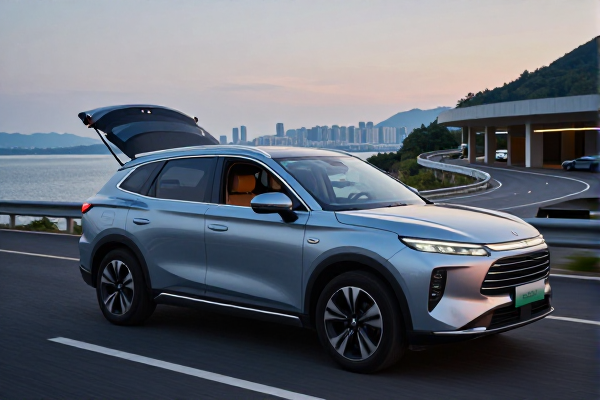
October 21, 2024 — XPeng pulled the covers off the G9L, a large three-row SUV, at this week’s Paris Motor Show. The big crossover is being engineered in two very different ways: as a full battery-electric vehicle and as a range-extender that pairs a substantial battery with a small petrol generator. I got a close look at a pre-production car on the stand, and while the G9L won’t be sold in the United States for now, it offers a clear idea of where XPeng is pushing its next-generation platform.
The G9L slots just under XPeng’s flagship GX, and sits alongside the G6, X9 and L03 in the brand’s export line-up. It went on sale in China in September as a five-seater, and right-hand-drive production is already underway at XPeng’s Guangzhou plant. European-bound cars will be assembled by Magna Steyr in Austria.
XPeng is leading with the range-extender version, which it calls Super Electric REEV. It teams a 63kWh lithium iron phosphate battery with a 1.5-litre turbo petrol engine. That engine is purely a generator — it never mechanically turns the wheels. According to XPeng, the system is good for up to 287km of WLTP electric-only driving, and as much as 1200km of total range.
Peak outputs are 430kW and 695Nm, with a 0-100km/h time of 5.4 seconds. The operating strategy is straightforward: around town it runs mostly on battery power, the petrol engine joins in on the highway, and both work together when towing, climbing or asking for serious acceleration. The engine uses the Atkinson cycle and can shut down individual cylinders to make restarts smoother. XPeng is targeting a cabin noise difference of less than 1dB between battery-only and range-extender running — a sign of how seriously it is chasing a premium feel.
The all-electric G9L offers the same 430kW and 695Nm, but swaps the smaller battery for a 110kWh pack. XPeng’s New Zealand release quotes up to 553km of WLTP range, while the European figure is a more optimistic 591km.
Both versions are built on an 800-volt electrical architecture. The EV can charge at up to 540kW, which lets XPeng claim a 10-80 per cent top-up in under 12 minutes on a suitably fast charger. The range-extender manages roughly the same charging time in that mode. Both are rated to tow two tonnes.
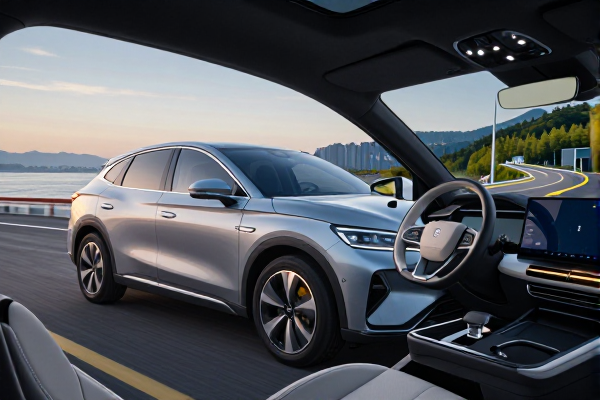
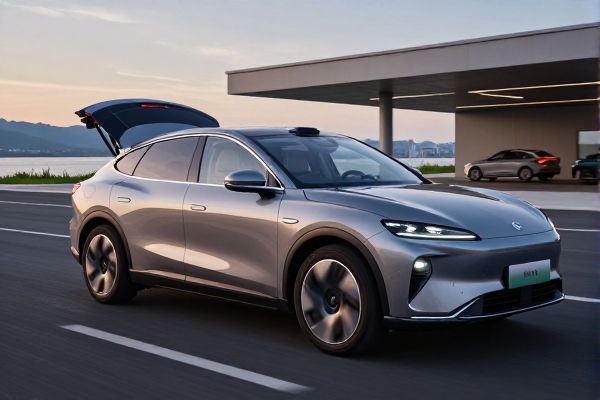
This is a genuinely large vehicle: 5120mm long, 1998mm wide, 1788mm tall, riding on a 3100mm wheelbase. XPeng has fitted double-wishbone front suspension and a multi-link rear setup, with dual-chamber air springs and continuously adjustable dampers. Rear-wheel steering is standard, and XPeng says that gives it a tighter turning circle than a Mini Cooper. That claim will have to be tested on local roads, but it points to real engineering effort around urban manoeuvrability.
XPeng quotes a drag coefficient of 0.238, and the headlights are more than just lights. They can project images onto the road and even work as a projector for screenings of up to 98 inches. Whether that counts as a gimmick or a genuinely useful feature will depend on where you take it.
Standard safety gear includes nine airbags, forward emergency braking that XPeng says operates at speeds up to 150km/h, and stability support after a tyre blowout. The company says the G9L accumulated more than 6.74 million kilometres of testing in 26 countries over three years. It has not yet been rated by ANCAP, the independent crash-test authority in New Zealand and Australia.
The NGP assisted-driving system, which runs on XPeng’s second-generation VLA model, is designed for navigation-guided driving in both urban environments and on highways. It can handle lane changes, traffic lights, intersections and roundabouts. New Zealand customers are expected to get it during 2027 — a timeline that shows how far XPeng is willing to go to bring its software-defined approach to right-hand-drive markets.
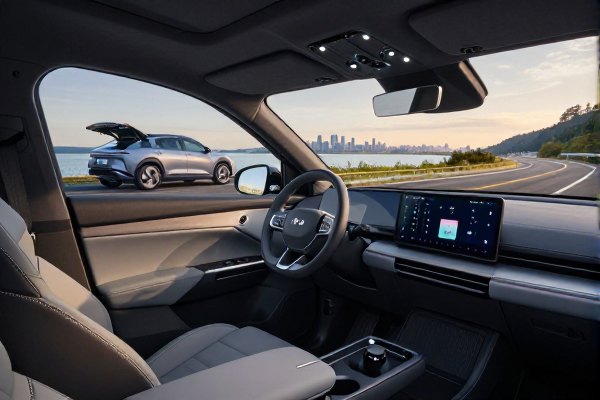
The car on display had a tan Nappa leather cabin, and almost every function is routed through the central touchscreen. That includes opening the glovebox and adjusting the steering wheel. Voice control was not active on the pre-production vehicle, which was a reminder that early software can still be a work in progress.
The small instrument display stays visible even with the steering wheel dropped to its lowest setting, which is good ergonomic news. Wireless Apple CarPlay and Android Auto are standard, along with a built-in dashcam and 50W wireless phone charging.
Front seats get heating, ventilation, memory, 16-point massage and adaptive side bolsters. The passenger seat can recline into a zero-gravity position. There are power-operated front doors, which feel a little showy but fit the premium brief.
Second-row passengers sit in power-adjustable seats that are also heated, ventilated and massaging, with electric window blinds. There’s a roof-mounted display, a dedicated control panel for media, climate, seats and the fridge, USB-C ports and fold-out tables. The 12.5-litre fridge, nested in the back of the centre console, can heat, cool or freeze. A 26-speaker sound system rounds out the interior spec.
Getting into the third row was the weak point during my short look. The button that should move a second-row seat forward didn’t work on this pre-production unit, so access was awkward. Once inside, though, there was acceptable room for an adult — a reminder that final production build quality will be the real test.
Boot capacity is 1152 litres with the third row folded. The range-extender offers a 60-litre front boot; the EV version gives you 109 litres due to its smaller, more flexible packaging. Towing is rated at two tonnes on both powertrains.
Don’t expect to see the XPeng G9L in an American showroom anytime soon. XPeng does not currently sell cars in the United States, and the country’s trade policy remains a major obstacle. The Biden administration’s 100% tariff on Chinese-made EVs, introduced in 2024, effectively prices these vehicles out of the market before a single unit is shipped.
Still, the G9L is worth watching for at least two reasons. First, it shows how quickly Chinese automakers are moving from cut-price niche players to serious, tech-heavy contenders. Second, the range-extender concept — big battery, small engine as a generator — is emerging as a practical mainstream answer for buyers who want heavy EV capability without the charging anxiety.
Pricing for New Zealand and Australia will be announced in the coming months, and XPeng representatives have indicated the G9L should land under A$100,000 in Australia. In US terms, that would put the extended-range version in an eye-catching price bracket. But for now, it remains a Paris showroom star rather than a US global product. A full local review will have to wait until the first cars reach New Zealand.