Browse

Log in / Register
 Share


LONDON — Chinese electric-vehicle maker Xpeng plans to expand its European production footprint to comply with new European Union rules that mandate minimum local content in electric cars, vice president Yeqing Zheng said Saturday, Oct. 12, on the sidelines of the Paris Motor Show. The move underscores how Brussels' trade crackdown is turning Chinese exporters into local manufacturers.
Zheng said Xpeng is preparing for the tightening requirements, under which vehicles supported by government programs or large public contracts will need a minimum share of locally sourced components and assembly. Expanding production inside Europe, the executive argued, is the simplest way for the company to stay eligible under the coming regime.
He gave no investment figures and did not name a site. The company is weighing several paths, he said, including partnerships with established European plants and contract manufacturing, with a decision expected over the next year. Part of the work is technical: Xpeng's vehicle architecture would need to be adapted to European production methods, logistics and supplier standards.
Brussels has not fixed one uniform content threshold. Instead, it is layering requirements into procurement rules, state-aid conditions and support for zero-emission vehicles. The direction is rooted in the EU's Net-Zero Industry Act, in force since June, which already asks public buyers to weigh supply-chain resilience in clean-tech purchases. Automakers expect the content bar to rise in stages rather than all at once.
The stated goal is to keep the bloc's green-transition spending in Europe and to protect a sector that employs millions across Germany, France, Italy and Spain. The approach has broad backing in Brussels even as member states disagree over how hard to hit Chinese rivals.
That disagreement surfaced early this month, when EU governments approved definitive countervailing duties on Chinese-built EVs after an anti-subsidy investigation. France and Italy were among the clearest supporters, eager to protect domestic producers from a wave of cheaper imports. Germany — home to BMW, Mercedes-Benz and Volkswagen, all with big sales exposure in China — declined to back the measures, worried about retaliation against its export-driven industry.
The duties take effect at the end of October, on top of the EU's standard 10% import tariff. Xpeng faces an additional 20.7% levy, while some rivals face rates around double that level. In a price-sensitive market, the math shifts quickly: a car assembled in Europe avoids the duty entirely and meets the local-content agenda at the same time.
Xpeng is not the only Chinese automaker to reach that conclusion. BYD is building a vehicle plant in Hungary. Chery is setting up assembly in Spain. Leapmotor, which operates a European joint venture with Stellantis, is already producing models at the group's plant in Tychy, Poland. The era of relying on exports alone is ending for China's leading EV makers.
What sets Xpeng apart is how openly its leadership links factory decisions to the EU's regulatory calendar. Zheng framed local manufacturing not just as a defensive answer to tariffs but as a deliberate strategy tied to the content rules themselves. The framing points to a broader shift: Chinese executives increasingly treat localization as a competitive asset, not a compliance cost.
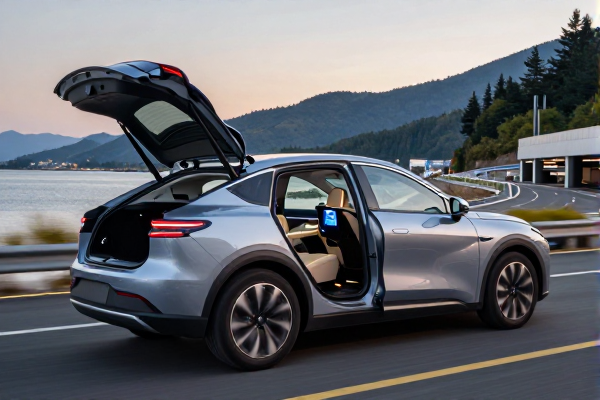
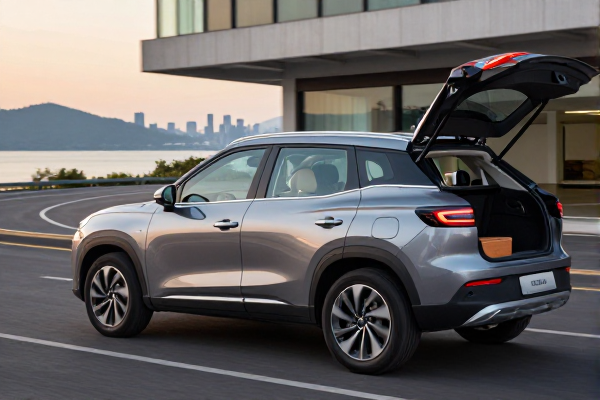
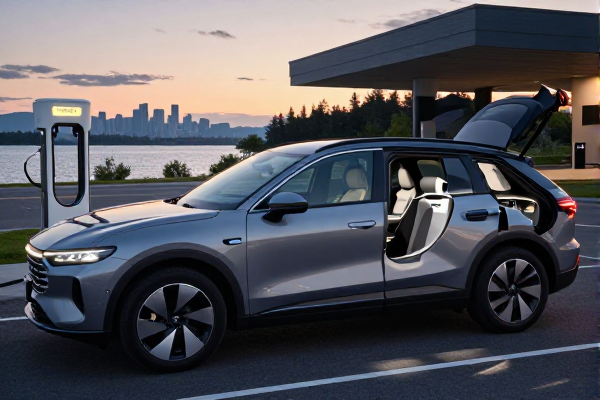
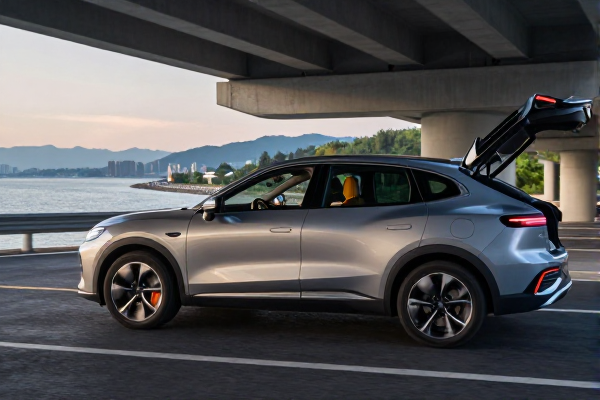
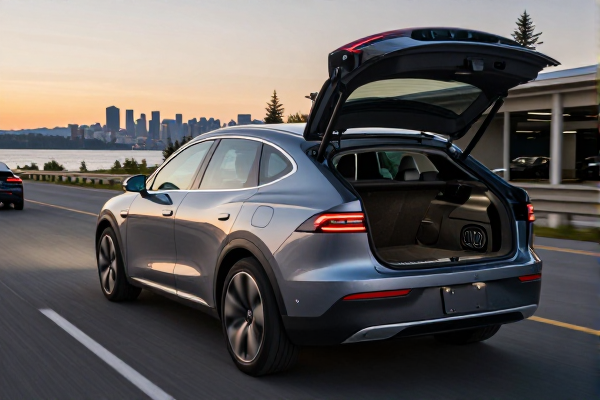
Europe is Xpeng's largest growth market outside China. The company entered the region in 2020 with deliveries in Norway and has since added Germany, France, the Netherlands, Sweden, Denmark and other countries. It chose the Paris show to present its new P7+ fastback, joining a lineup that includes the G6 and G9 SUVs. The brand competes on software, driver-assistance and a more premium design language than many of its Chinese peers.
Zheng also cited the perception benefit. European buyers increasingly ask where a vehicle is made, he said, and producing in the region gives a young brand credibility in a market built around century-old nameplates.
The expansion push also reflects momentum at home. The Guangzhou-based automaker delivered 21,352 vehicles in September, a monthly record and a 39% jump from a year earlier, helped by the new MONA M03 sedan. Stronger domestic volumes give Xpeng more financial room to fund a costly European entry.
For American readers, the story highlights a transatlantic split over how to handle Chinese EVs. The United States has effectively sealed its market: Inflation Reduction Act tax credits require final assembly in North America and strict battery-content thresholds, and 100% tariffs on Chinese-built cars close the import route. Brussels has combined penalties with content rules that still allow Chinese brands to participate if they invest locally. So far, Chinese production capacity is flowing into Europe — with jobs and investment — while the U.S. has drawn almost no Chinese auto investment by comparison.
Trade analysts are watching the European approach closely. Some question whether an outright ban on Chinese EVs is workable in a market where even Tesla and legacy automakers struggle to profit on affordable models. Europe's tariffs-plus-investment model offers a different data point, and the next few years will show which strategy produces more jobs and a stronger local industry.
Obstacles remain. Batteries may be the hardest problem: even if Xpeng assembles cars in Europe, the source of its cells — likely Chinese-owned gigafactories in the region — will determine whether the finished vehicle meets the EU's definition of local content. European cell capacity is still scaling, and competition for what exists is intense.
There is also the unresolved EU-China negotiation over a possible price-undertaking deal, in which Chinese exporters would pledge minimum sale prices in exchange for shelving the duties. A deal would soften the urgency to localize. Xpeng is planning as if the content regime will hold, which most industry observers consider the safer assumption.
The company is expected to announce concrete production plans after Brussels finalizes the rules. Several