Browse

Log in / Register
 Share


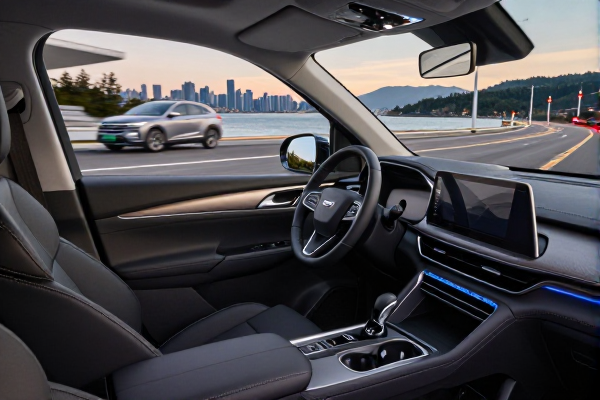
April 26, 2026 — Xpeng will bring Google Play directly into its AI-powered cockpit for global buyers, starting in early 2027. The integration builds on a Google partnership that began with a Maps integration last July and gives overseas drivers access to hundreds of apps without needing to pair a phone.
The in-car app store will carry apps developed across more than 100 countries and regions, covering music, podcasts, video, navigation, charging, parking, news, and games designed for use while parked. According to the company, the system runs on Android Automotive OS and connects with Xpeng’s multilingual voice assistant. Drivers can ask the assistant to open a downloaded app and control it by voice.
Android Automotive OS is already used by automakers such as Volvo, Polestar, and General Motors. By adopting the same platform, Xpeng joins an ecosystem that developers already know how to support. That shortens the time needed to build a mature app catalog compared with creating a proprietary store from zero.
There is also an operational benefit. Because apps are updated through Google Play, developers can push changes to cars the same way they do to phones. Xpeng does not have to bundle every software tweak into a full-vehicle over-the-air update, which keeps the cabin experience fresher between larger platform releases.
The announcement is the second product of a relationship that already had a visible payoff in Xpeng’s export lineup. Google Maps currently supplies navigation and core map data for the automaker’s driver assistance systems outside China. Adding Google Play extends that work from a single mapping service to an entire application ecosystem.
Dr. Xianming Liu, Xpeng vice president and head of its General Intelligence Center, framed the move as a natural next step. “Our work with Google Maps demonstrated what our two companies can achieve together to integrate global technologies into a distinctive intelligent vehicle experience,” he said. “That success created the foundation for deeper collaboration.”
Xpeng has not said which models or markets will receive Google Play first. The rollout is likely tied to its next product cycle, since early 2027 suggests new vehicles rather than a retrofit across its current overseas lineup. Local certification requirements, app availability rules, and vehicle-specific screen formats may also influence the order of launch.
The company did not disclose commercial terms with Google, including possible revenue sharing, preinstall agreements, or data-sharing boundaries. That silence leaves open questions, particularly in Europe, where data protection rules are strict and in-car data collection has become a regulatory focus.
For Chinese EV brands, digital services have been a persistent weak spot in Europe. Domestic app ecosystems are built around Chinese payment systems, map data, and media platforms that do not transfer cleanly to Western users. Some rivals have relied on smartphone mirroring, which only partly closes the gap. Xpeng’s use of Google Play removes that friction and gives buyers a catalog many of them already use daily.
But there is a strategic trade-off. Google becomes the operator of a central part of the cabin experience. Xpeng has been marketing itself as a “physical AI” company, leaning into an in-house brand for autonomy, cabin intelligence, and robotics. Handing app distribution to a US company could complicate that narrative, even if it solves an immediate user need.
The partnership also gives Google a high-profile Chinese automaker inside its Android Automotive ecosystem. It strengthens Google’s argument that Android Automotive is ready for global EV brands, and it opens a doorway into China’s rapidly expanding software-defined vehicle industry. That relationship may face pressure if US-China technology restrictions tighten further.
Xpeng still has to prove the integration in practice. The key tests are whether the voice assistant handles third-party apps reliably, whether developers update their apps for car-specific aspect ratios and interaction styles, and whether the app store launches in the markets where Xpeng needs the strongest local appeal. The collaboration does not guarantee instant polish, but it gives Xpeng a launchpad that most Chinese brands lack abroad.
This is not the final piece of Xpeng’s overseas software strategy. The company will still be judged on cabin design, driver assistance, and brand trust. With Google Play embedded in its AI cockpit, however, one of the biggest practical hurdles for European and other overseas buyers is being pulled down. The next test is execution.
Source: Xpeng.