Browse

Log in / Register
 Share

March 20, 2025 – When Xpeng finally launches in the Philippines this September, the Chinese EV maker is betting that its AI-first approach will set it apart from a crowded field of both established automakers and fellow Chinese brands. While electrified vehicles with impressive range and equipment have become increasingly common in the archipelago, Xpeng argues that the next battleground is not hardware specs but intelligent mobility: how a car perceives, understands, and adapts to its environment.
“Changing what powers a car is one thing, but changing what a car can understand and do is another,” said a company spokesperson, summarizing the philosophy behind what Xpeng calls “AI Mobility.” Founded in 2014, the company designs, develops, manufactures, and markets smart EVs, targeting a global base of tech-savvy consumers. With the rapid advancement of artificial intelligence, Xpeng has made it its mission to drive the Smart EV revolution using cutting-edge technology to shape the future of mobility.
Xpeng’s AI capabilities help its vehicles perceive, understand, and interact with the real world, making journeys easier, safer, and more intuitive. The company currently dedicates a massive 40 percent of its 8,845-member workforce to R&D. Their work spans traditional vehicle engineering, software (intelligent driving, AI software), and even robotics. Xpeng maintains key offices not only in Beijing and Shanghai but also in Silicon Valley, Munich, and Amsterdam—a global footprint that signals its ambition to compete on a worldwide stage.
This R&D investment directly shapes how Xpeng builds its vehicles at smart factories in Zhaoqing and Guangzhou, Guangdong, China. These factories use automation, connected production systems, and AI-powered quality controls to improve manufacturing precision, consistency, and efficiency. The result is a vehicle platform that treats technology as a core capability rather than an added feature.
Beyond cars, Xpeng’s AI research extends to humanoid robotics—Iron, a bipedal robot that applies Xpeng’s movement and interaction algorithms—and low-altitude mobility via its affiliated company Aridge. This diversification demonstrates that Xpeng sees AI as a foundational layer for all future mobility, not just a dashboard gimmick.
Two models, one vision
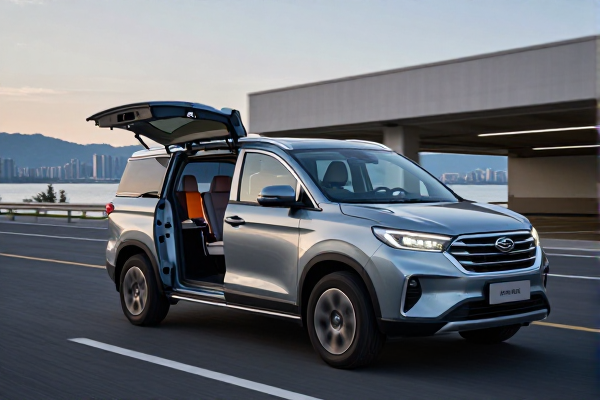
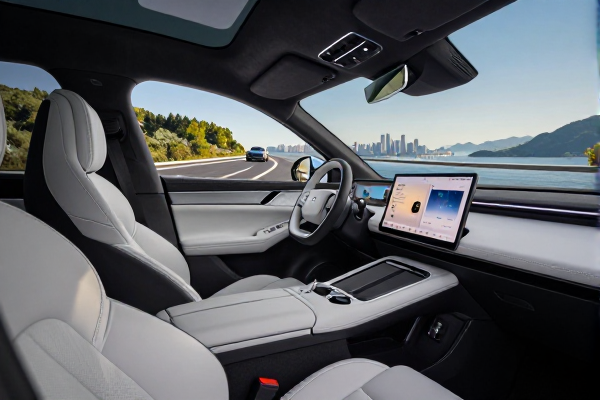
The Philippines will first receive the Xpeng X9 and L03. The X9 is a flagship intelligent seven-seater that combines executive comfort, intelligent technologies, and a premium cabin for modern families, business leaders, and professionals who value innovation. The L03 offers a sportier expression of the same vision, blending contemporary design with intelligent features for a smarter everyday mobility experience.
Both vehicles will feature Xpeng’s own powertrain and electrical/electronic architecture (EEA), as well as a full-stack advanced driver-assistance system (ADAS) and an in-house developed intelligent in-car operating system. These are not off-the-shelf components; every layer is designed and optimized by Xpeng’s own engineers.
“Xpeng’s arrival in the Philippines is not simply about introducing another electric vehicle brand. We want to help establish AI Mobility as a category in its own right and show Filipino motorists how artificial intelligence can make every journey safer, more intuitive, and more responsive to their needs,” said Sam Chu, General Manager for Southeast Asia, Xpeng. “The X9 and L03 represent two distinct expressions of that vision, but both are founded on the same belief: the next generation of mobility will be defined not only by how vehicles are powered, but by how intelligently they serve the people who use them.”
Industry context and competitive advantage
The Philippine EV market is still nascent but growing rapidly, with Chinese brands leading the charge thanks to competitive pricing and generous range figures. However, Xpeng believes that simply offering a long-range battery pack or a large touchscreen is no longer enough. The company points to its industry-leading XNGP (Xpeng Navigation Guided Pilot) system, which uses a combination of cameras, radar, lidar, and high-definition maps to enable autonomous driving on highways and city streets. Xpeng was among the first Chinese automakers to deploy a city-level NOA (Navigate on Autopilot) feature, and it continues to expand its coverage.
To add further perspective, Xpeng’s R&D spending ratio (40% of headcount) is notably higher than the industry average of around 15–20% for traditional automakers, and even above many EV startups. This heavy investment in AI and software positions Xpeng closer to a tech company than a conventional car manufacturer—a distinction it deliberately cultivates.
What’s next?
Philippine specifications, variants, introductory pricing, and exact availability will be announced at the brand’s official launch in September. Analysts expect Xpeng to price the X9 and L03 aggressively to compete with models from BYD, Neta, and others already present in the market. However, the real differentiator may not be the price tag but the AI-driven experience—something that