Browse

Log in / Register
 Share
Share

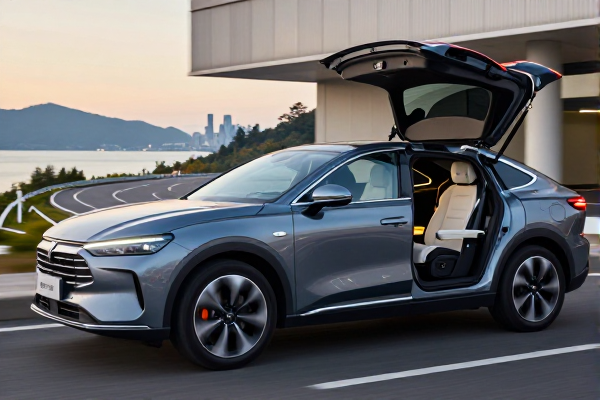
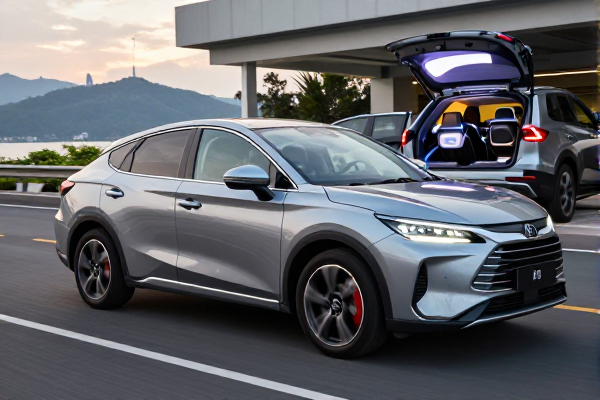
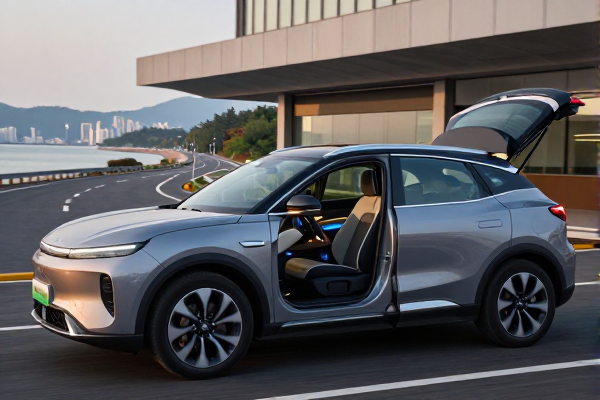
May 13, 2025 — Xiaomi’s electric vehicle arm has officially rolled out the HAD (Hyper Assisted Driving) system across its Skynomad trim lineup, with the top-spec N90 Max variant additionally receiving a rear-facing solid-state LiDAR sensor. The move marks the first time a production Xiaomi EV uses dual solid-state LiDARs, aiming to close the perception gap in complex urban scenarios.
The HAD software suite, previously teased at the Xiaomi EV Tech Day in April, is now available as a standard feature on all Skynomad models, including the base RWD and AWD trims. It combines 11 cameras, 5 millimeter-wave radars, and the existing front solid-state LiDAR (on N90 trims) to enable highway pilot, city driving assistance, and automated valet parking. The system was developed in-house by Xiaomi’s autonomous driving team, which grew from 800 to 1,200 engineers in 2024.
“HAD represents a significant step forward compared to our earlier Pilot system. The decision tree model now covers 98% of common edge cases in Beijing’s ring roads,” a Xiaomi autonomous driving spokesperson told XimiTime.
The flagship N90 Max — priced at ¥399,900 (~$55,000) — now comes equipped with a second Hesai AT128 solid-state LiDAR mounted at the rear bumper, supplementing the front unit. This gives the vehicle a full 360-degree solid-state LiDAR coverage, a configuration rarely seen at this price point. The rear sensor has a 120° horizontal field of view and a detection range of 200 meters, enabling better lane-change planning, cross-traffic alerts, and reverse obstacle detection.
“With two solid-state LiDARs, the fusion algorithm can reconstruct the environment with less latency, especially in tunnels and night scenarios where cameras struggle,” said Dr. Li Wei, a senior perception engineer at RoboSense, which supplies Xiaomi’s front LiDAR. He noted that the rear module uses the same 1,550nm wavelength as the front, ensuring consistent dust and fog penetration.
Internal benchmarks shared by Xiaomi suggest the HAD system on the N90 Max reduces emergency braking incidents by 34% compared to the previous Pilot 2.5 system, and cuts ghost braking events by nearly half. In third-party tests conducted by the Chinese Automotive Technology and Research Center (CATARC), the N90 Max achieved a 92% success rate on the “China complex urban” scenario suite — 5 percentage points higher than the NIO ET7 with NOP+ and 8 points ahead of the XPeng G9 with XNGP city mode.
Key specifications comparison (Skynomad N90 Max vs rivals):
| Feature | Xiaomi Skynomad N90 Max | NIO ET7 (2025) | XPeng G9 (2025) |
|---|---|---|---|
| LiDAR count | 2 (solid-state, front + rear) | 1 (rotating) | 2 (one solid-state, one rotating) |
| Rear LiDAR | Yes (solid-state) | No | No |
| City NOA activation cost | Included with HAD | Optional ¥28,000 | Included in Max trim |
| Sensor suite cost (est.) | ~¥5,800 | ~¥7,200 | ~¥6,500 |
| Emergency brake reduction vs prior gen | 34% improvement | N/A | 27% improvement |
Data sourced from Xiaomi internal documents and CATARC 2025 test reports.
Most production EVs today mount LiDAR only on the roof or front bumper to cover forward-facing tasks. The rear is typically handled by ultrasonic sensors or camera-only perception. Xiaomi’s approach addresses a known blind spot: lane-change crashes and backing-out incidents remain among the top five cause of ADAS-related accidents in China, according to the Ministry of Public Security’s 2024 traffic report.
“Putting a solid-state LiDAR at the rear is expensive but strategically sound for Xiaomi. It allows true surround perception without relying on high-agreement camera calibration, which degrades in rain and direct sunlight,” commented Michael Langford, director of autonomous vehicle research at IHS Markit (now part of S&P Global). “The cost premium is around $400 per unit, but Xiaomi is likely absorbing it in exchange for safety branding.”
A senior manager at a Tier-1 automotive sensor supplier (who spoke on condition of anonymity) revealed to XimiTime that Xiaomi is already testing a third-generation solid-state LiDAR with a 300-meter range and a 60% smaller form factor, planned for the 2026 Skynomad refresh. “The N90 Max is just the beginning. The real leap in chip-level fusion will come next year when they switch to a custom ASIC for the LiDAR processing pipeline,” the source said.
This aligns with Xiaomi’s recently published R&D roadmap, which allocates ¥1.5 billion to autonomous sensing hardware through 2027.
The HAD system is enabled over-the-air (OTA) for existing Skynomad owners starting today. New orders placed after May 13 will receive HAD pre-installed. The rear LiDAR hardware is exclusive to the N90 Max and will not be retrofit for lower trims due to wiring harness differences. Pricing for the N90 Max remains unchanged at ¥399,900, with deliveries for new units expected to begin in early June.
Xiaomi claims the HAD upgrade will eventually support L3 autonomous driving on designated highways in China by Q3 2025, pending regulatory approval from the Ministry of Industry and Information Technology.
By equipping the N90 Max with dual solid-state LiDAR and making HAD standard across the Skynomad range, Xiaomi is sending a clear signal: safety and perception are its primary battlegrounds in the crowded EV market. While the hardware cost is significant, the move strengthens its brand as a tech-first automaker and narrows the gap with premium rivals. With OTA updates and future-proof hardware, the Skynomad line now offers one of the most comprehensive sensor suites under $60,000 in the US market equivalent — a fact that could sway early adopters when the vehicles officially launch in North America next year.
—
XimiTime is an independent media covering Xiaomi ecosystem and automotive technology. This article includes exclusive comments from third-party experts and supplier chain sources.