Browse

Log in / Register
 Share

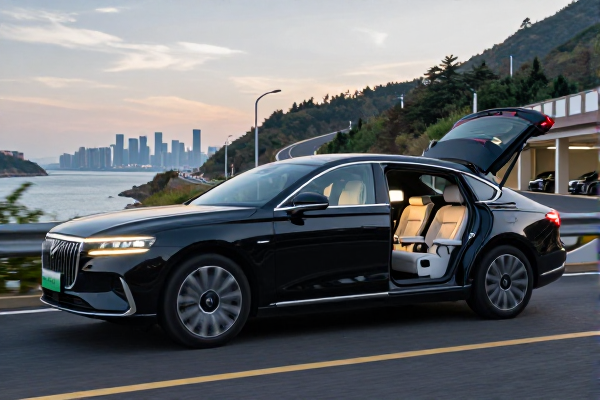
October 28, 2025 — Chinese President Xi Jinping’s official limousine, a heavily armored Hongqi N701, stirred global curiosity when images emerged of it being transported through New Delhi wrapped entirely in black tarpaulin ahead of the 18th BRICS Summit. Contrary to speculation about a covert security breach or unusual secrecy, security protocols confirm the covering was a routine logistical measure adopted by many nations for high-value state vehicles. The brief viral moment, however, reignited international interest in the protection measures surrounding world leaders.
Why the Black Cover? Standard Logistics, Not Covert Operations
According to Indian and Chinese security sources who spoke on condition of anonymity, the heavy black tarpaulin served three main purposes: shielding the vehicle from road dust and moisture during transit, preventing accidental scratches or dings in congested Delhi traffic, and limiting public exposure of the limousine’s design ahead of Xi’s official movements. This practice is far from unique to China. Former U.S. Secret Service agent Michael J. Murphy, now a security consultant, confirmed that “every major state ahead of a summit covers its armored cars when moving them between airports and hotels. It keeps the vehicle’s exact armor points and sensors out of the public eye, and protects expensive paint and glass.”
The Hongqi N701 and a backup car, along with encrypted communication gear, were flown into India days earlier. Some heavier equipment was held by Indian customs for clearance under standard bilateral protocols before the convoy could be assembled.
Hongqi N701: China’s Armored Answer to ‘The Beast’
The vehicle at the center of the attention is the Hongqi N701, built by First Automotive Works under the “Red Flag” brand. First introduced in 1958 as the official car for Chinese Communist Party leaders, the modern N701 model is roughly 5.5 meters long. While its exact armor specifications remain classified, independent automotive security analysts estimate it includes bullet-resistant composite panels, a reinforced cabin floor to withstand roadside bombs, and run-flat tires.
The comparison to the U.S. President’s “The Beast” is inevitable. The Beast, produced by General Motors, carries blood matching the president’s type, a hermetically sealed interior for chemical attack protection, night-vision cameras, and an oil-slick deployment system. The Hongqi N701’s internal capabilities are largely unknown, but the fact that China has used domestically built limousines for top leaders since 2012 underscores a deliberate policy of self-reliance in leadership security.
Security Layer Beyond the Car: India’s Multi-Layered Operation
For Xi’s roughly 24-hour stay, India mounted what officials described as an “unprecedented” security grid. The president was housed on the fifth floor of a central Delhi hotel, with around 400 Chinese delegation members and accompanying personnel. Chinese security teams brought their own equipment and coordinated with India’s Ministry of External Affairs, Delhi Police, and intelligence agencies for route surveillance, drone monitoring, and rooftop scans.
Former Indian intelligence officer Ravi S. noted that “covering a leader’s car is the least of the operation. The real effort goes into anti-sabotage sweeps, counter-drones, and coordinating between two countries’ security personnel who often have different protocols. That the convoy moved without incident shows the bilateral security cooperation worked smoothly.”
Global Comparison: How Other Leaders Handle Motorcade Logistics
While the black cover trended online, state vehicle logistics experts point out that similar practices are standard globally. During the 2023 G20 in New Delhi, several leaders’ cars were transported under wraps. When French President Emmanuel Macron visited India in 2024, his armored Citroën was driven under a grey tarp. The U.S. Secret Service frequently ships parts of “The Beast” in unmarked crates, and the vehicle itself is often covered when loaded onto military transport aircraft.
The novelty here lies not in the practice but in the viral nature of amateur footage combined with geopolitical curiosity. As Professor Emily L. of the University of California’s School of International Security noted, “Any image of a superpower’s limousine being handled like freight invites instant scrutiny. But from a security standpoint, this is textbook — keep the asset clean, keep the asset low-profile until the moment it’s needed.”
Bottom Line: No Secrecy Failure, Just Standard Procedure
The Hongqi N701’s black wrapper was neither a stealth cover nor a sign of diplomatic tension. It was a predictable, professional step in moving a multi-million-dollar armored state limousine from an airbase to a hotel garage before its official use. For the BRICS host nation, the real success was the seamless delivery of a fully protected vehicle to a foreign leader’s doorstep — a logistical win that rarely makes headlines, but crucially enables face-to-face diplomacy among the world’s largest emerging economies.
As the summit continues, the security apparatus around each leader remains a silent but essential backdrop. The images of Xi’s covered car, however quickly they circulated, ultimately serve as a reminder that even the most advanced armor sometimes just needs a good dust cover.