Browse

Log in / Register
 Share

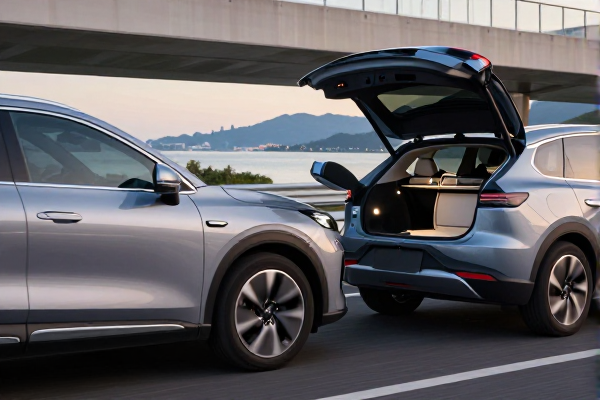
A 35-year-old woman died late Sunday night when a wrong-way driver traveled south in the northbound lanes of DuSable Lake Shore Drive and triggered a three-car crash on Chicago's South Side. Chicago police said the collision occurred at about 11:21 p.m. near the Oakwood Boulevard exit. The man driving the black SUV that police say caused the wreck was taken into custody at the scene. As of Tuesday, March 25, no charges had been announced, and the Major Accident Investigation Unit continued its inquiry.
The SUV entered the Drive moving against the flow of traffic and collided head-on with a white car. The force of the impact shoved the white car into a black coupe traveling in an adjacent lane, creating a pileup that left all three vehicles damaged and debris scattered across the roadway.
Paramedics found the woman in the white car in critical condition. She was rushed to Northwestern Memorial Hospital, where she was later pronounced dead, police said. The driver of the black SUV was unhurt and was taken into custody, while the driver of the black coupe escaped injury.
Police have not released the woman's name. The Cook County medical examiner's office typically waits until relatives are notified before publicizing an identity in a fatal crash. No family statement had been released as of Tuesday morning.
The man arrested at the scene has not been named, and police have not said what caused him to enter the wrong side of the Drive. Whether alcohol, drugs, distraction, a medical emergency, or simple confusion played a role is unknown. Determining that is the central task of the investigation.
The Major Accident Investigation Unit, which handles all fatal crashes on Chicago streets, is in charge of the probe. Its investigators will map the scene, photograph the wreckage, and document the positions of all three vehicles before they are towed. They will also look for mechanical issues—bad brakes, tire failure, or steering problems—that could explain the wrong-way entry.
Modern vehicles can add a layer of digital evidence. Event data recorders, often called automotive black boxes, capture speed, throttle position, braking, and steering in the moments before a crash. If the vehicles involved have them, investigators can compare the data to the physical evidence.
Traffic cameras mounted along DuSable Lake Shore Drive and its interchanges may have recorded the entire sequence. That footage could reveal where the SUV entered the northbound lanes and how long it traveled against traffic before the impact.
Prosecutors typically wait for toxicology results before filing charges in a fatal crash, and those results in the Chicago area commonly take three to six weeks. The test will determine whether the SUV driver had alcohol or drugs in his system at the time of the collision, a factor that would significantly reshape any potential criminal case.
The deliberate timeline reflects the stakes: a charging decision based on incomplete evidence can be challenged in court, and an impaired-driving case depends heavily on lab findings that cannot be rushed.
Illinois law provides several avenues for prosecution if the evidence supports it. Reckless homicide, a Class 3 felony, requires proof that the driver consciously disregarded a substantial risk of death. Driving the wrong way on a limited-access highway at night is the kind of behavior Illinois courts have treated as reckless in past cases.
If toxicology tests find alcohol or drugs, aggravated driving under the influence causing death carries significantly stiffer penalties. Intentional murder is not suggested by the facts outlined so far.
Wrong-way collisions on divided highways kill about 400 people each year in the United States, according to analyses of federal crash data compiled by the AAA Foundation for Traffic Safety. The crashes are a small fraction of all highway accidents, but their fatality rate is far higher because of the physics of head-on impacts, where closing speeds are the sum of both vehicles' speeds.
The majority of wrong-way crashes occur during nighttime hours and on weekends, according to National Transportation Safety Board research. More than half of wrong-way drivers involved in serious crashes had been drinking, and drivers over 70 are also statistically overrepresented, as are male drivers.
DuSable Lake Shore Drive is a lakefront limited-access highway running from the city's northern boundary to the South Side. Much of the corridor separates northbound and southbound traffic with a wide landscaped median rather than a continuous concrete barrier, so the principal risk of a wrong-way entry comes at entrance and exit ramps.
The roadway was renamed in 2021 in honor of Jean Baptiste Point DuSable, recognized as Chicago's first permanent non-Native settler. It remains one of the most heavily traveled roads in the city, and late-night crashes on the Drive tend to draw wide attention because of the road's prominence and the severity of high-speed collisions.
Low-tech countermeasures include rumble strips laid across exit ramps, which produce a loud vibration when a vehicle crosses them, and bright "wrong way" signs positioned within headlight beams. Newer detection systems use radar to spot a vehicle entering a ramp in the wrong direction and automatically send an alert to traffic management centers, which can light up warning boards and dispatch officers.
The Illinois Tollway has deployed such systems across its network, and the Illinois Department of Transportation has installed them at selected ramps in the Chicago region. Whether the Oakwood Boulevard interchange has any of these safeguards has not been disclosed.
The Cook County medical examiner will issue the official cause and manner of the woman's death. The crash reconstruction will take weeks, and a charging decision will follow only after toxicology results are in and the full picture has been assembled.
The broad outline, though, is already clear: a woman driving legally in the proper lane is dead because a man drove his vehicle into her path at highway speed. Investigators must now establish exactly why.