Browse

Log in / Register
 Share

Date: April 3, 2025
Every year, automakers roll out fresh features promising more comfort, convenience, or safety. But in practice, many of these innovations end up frustrating drivers instead of helping them. Consumer complaints, safety watchdogs, and even some automakers’ own regret lists have highlighted a growing backlash against tech that feels more like a burden than a benefit.
As of today, the National Highway Traffic Safety Administration (NHTSA) has received over 1,200 complaints per month in 2025 related to “driver distraction from safety alerts” alone. Meanwhile, new models from Tesla, Ford, Hyundai, and Cadillac are drawing fire for features that range from impractical to downright dangerous. Here’s a breakdown of the five most hated new car features—and why experts say they should be optional or redesigned.
It’s hard to argue with the visual appeal of a massive panoramic glass roof. In a showroom, it looks stunning. But on a sunny day, it turns your car into a greenhouse. The Tesla Model Y, for example, continues to be a top offender in 2025, with its fixed glass roof and no integrated shade. In states like Arizona, Texas, and Florida, owners report cabin temperatures reaching 140°F even with the air conditioning on full blast.
The problem isn’t just discomfort—it’s health. Prolonged UV exposure through untreated glass can increase skin cancer risk, especially for drivers with long commutes. The American Academy of Dermatology has warned that factory glass roofs often block only UVB, not UVA, which penetrates deeper. Some automakers, like Ford in the new 2025 Mustang Mach-E, now offer a retractable shade as standard, but others (looking at you, Tesla) still treat it as an afterthought.
Bottom line: If you live in a warm climate, test the roof in real sunlight before buying. Aftermarket shades are a band-aid, not a fix.
Engineers love safety systems, but drivers have a breaking point. Speed warning alarms that beep when you’re 2 mph over the limit (often on roads with inaccurate speed data) are a common complaint. Even worse, many cars now ding at you for looking over your shoulder to check blind spots, treating a normal safety check as a distraction.
The 2025 Hyundai Ioniq 6 and Kia EV6 have been criticized by Consumer Reports for “excessive alert fatigue.” In their latest road test, evaluators noted that the lane-keeping assist on these models yanks the wheel so aggressively that it feels like a sudden arm wrestle at highway speeds—potentially causing a loss of control.
Even Tesla’s Autopilot nags have ramped up: the 2025 Model 3 now requires touch-screen confirmation every 15 seconds if you take your hands off the wheel, which many drivers find more distracting than simply holding the wheel. The Insurance Institute for Highway Safety (IIHS) has called for standardized alert levels that are “informative, not intrusive.”
Bottom line: These systems are often calibrated for worst-case scenarios. If you can turn them off, do—but check your state laws (some require them to be active).
Nobody ever said, “I wish my car’s door handles were harder to use.” Yet electric vehicles popularized the flush handle that retracts into the body to improve aerodynamics. The problem? In cold climates, they freeze shut. In rainy areas, they jam. And even when they work, they’re often flimsy.
The 2025 Cadillac Optiq (the brand’s new entry-level EV) has door handles so thin you’d think they were made of paper clips. Owners report that the heavy doors require two hands to open when the handle is flush, and the design is prone to snapping in extreme cold. Ford’s F-150 Lightning earlier had a similar issue, leading to a recall in 2024 for handles that failed to deploy in freezing rain.
Aerodynamics matter, but the drag difference between a conventional handle and a flush one is negligible—less than 0.5% at highway speeds, according to a study by SAE International. So why do automakers keep using them? Because they look cool. Functionality should win.
Bottom line: If you buy a car with flush handles, test them in your local climate. And keep a can of de-icer handy.
Traditional side mirrors have been around for over a century because they work. Camera-based mirrors, which display a video feed on small screens inside the car, were supposed to improve aerodynamics and eliminate blind spots. In practice, they’re a pain.
The Hyundai Ioniq 5 and Genesis GV60 offer camera mirrors in some markets, and the reviews are mixed. The screens are small, require refocusing your eyes from the road, and can be washed out in direct sunlight. Worse, the cameras are prone to dirt and water droplets, and there’s no quick way to wipe them off at a stoplight. In 2025, the European New Car Assessment Programme (Euro NCAP) noted that camera mirrors may actually increase cognitive load during lane changes, especially for older drivers.
Bottom line: Unless you’re chasing every last mile of range, stick with traditional glass. It’s simpler, cheaper, and safer.
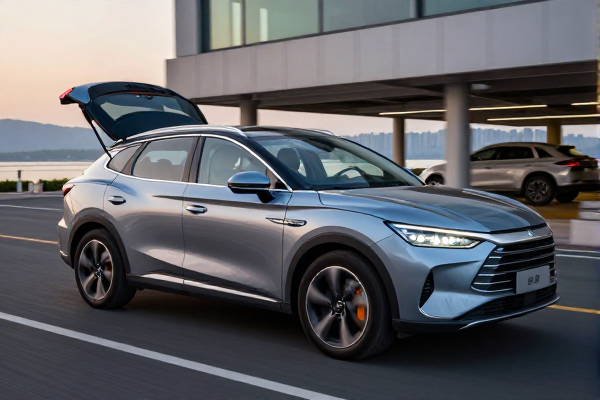
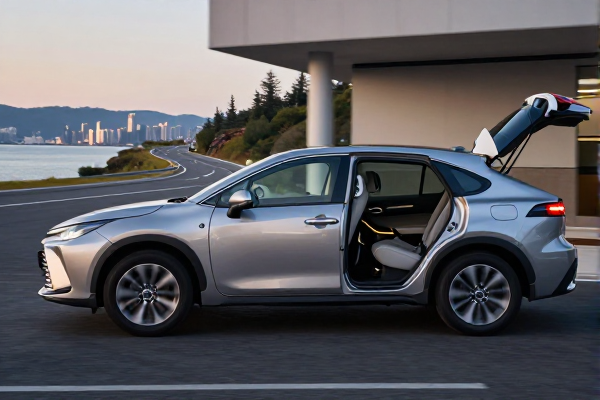
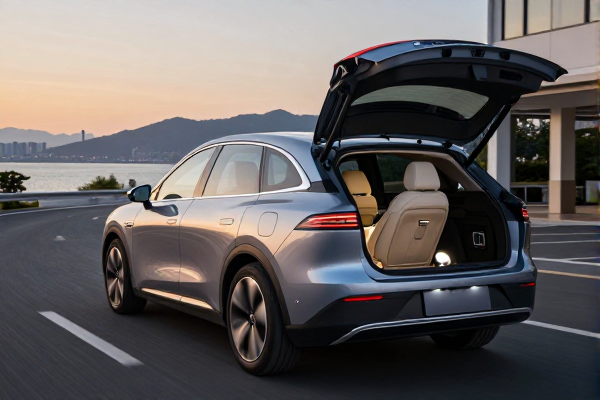
A power tailgate sounds great—until you need to quickly grab something from the trunk. Many current systems are painfully slow (taking 5–7 seconds to open), require precise foot gestures that often fail, and can be blocked by a small snow pile. The 2025 Mazda CX-70 GT, for instance, has a power tailgate that requires you to stand perfectly still for two seconds after the kick motion—if you move, it stops and beeps.
Consumer Reports has found that power tailgates are one of the most common failure points in newer SUVs, with repair costs averaging $1,200. And unlike a manual handle, there’s no quick way to override it if the motor fails. Some owners have reported being locked out of their trunk entirely.
Bottom line: A good old-fashioned manual tailgate is lighter, faster, and more reliable. If you absolutely need power, look for one with a mechanical release backup.
Not every new feature is bad—adaptive cruise control and blind-spot monitoring, when done right, genuinely improve safety. But the rush to justify premium prices with “innovative” tech has led to a glut of features that annoy drivers, increase costs, and sometimes even create new risks.
As automakers race to 2026