Browse

Log in / Register
 Share
Share
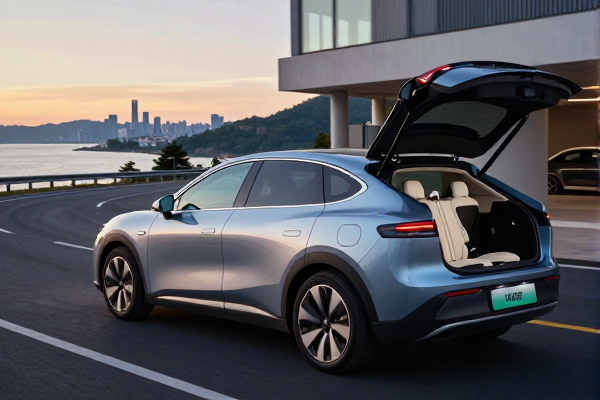
A Waymo self-driving car was captured on video traveling in the wrong lane towards oncoming traffic in Los Angeles, an incident that occurred amid heavy congestion related to World Cup events. The footage, recorded on June 15, 2024, in the Inglewood area near Century and Crenshaw boulevards, shows the autonomous vehicle (AV) operating to the left of the double yellow line before correcting its path. This event has ignited fresh debate on the real-world readiness of driverless technology under complex urban conditions.
The eyewitness who recorded the video, Kimoon Kim, reported a moment of alarm, fearing an imminent collision as the robotaxi navigated incorrectly. According to Kim's account, the Waymo vehicle eventually cut off his car to merge back into the proper lane, abruptly resolving the dangerous situation but leaving behind concerns about the decision-making logic of the autonomous system. Such firsthand reports from the public are becoming crucial data points for evaluating AV performance beyond controlled corporate testing.
This incident did not occur in a vacuum; it unfolded during a period of significantly altered and intensified traffic patterns due to crowds attending FIFA World Cup matches at SoFi Stadium. The abnormal congestion, unfamiliar routing, and potentially increased pedestrian activity create a high-stress environment that tests the edge cases of an AV's programming. Experts suggest that while AVs are trained on millions of miles of data, rare and chaotic real-world scenarios like major event traffic can still present unforeseen challenges.
In response to inquiries about the Inglewood incident, a Waymo spokesperson stated that the company is reviewing the event. They emphasized that safety is their core mission and that their systems are designed to comply with traffic laws. The spokesperson noted that their vehicles are constantly learning and that any verified incident contributes to the refinement of their technology. This statement aligns with the standard industry practice of using operational data, including errors, to improve algorithmic performance over time.
The safety record of autonomous vehicles is under continuous scrutiny by regulators. The National Highway Traffic Safety Administration (NHTSA) maintains public databases for AV crash reports and safety investigations. While Waymo has reported collisions, its data often indicates that many incidents are minor or caused by human drivers in other vehicles. However, a violation as clear as driving in the opposing lane—a primary cause of head-on crashes—is a more serious operational anomaly that regulators are likely to examine closely for systemic issues.
Public trust remains a significant hurdle for the widespread adoption of autonomous ride-hailing services. Incidents like the wrong-lane driving in LA, even if no crash occurs, can have a disproportionate impact on consumer perception. Videos of AV errors go viral quickly, reinforcing skepticism among those already wary of the technology. Building trust requires not only statistical safety superiority but also demonstrably competent handling of everyday driving nuances and unambiguous rule-following.
From a technical perspective, several factors could lead an AV to enter the wrong lane. Sensor misinterpretation of faded or obscured lane markings, especially under specific lighting or weather conditions, is a primary suspect. Another possibility is a high-level routing error or a discrepancy between the vehicle's detailed map and temporary changes to the road layout due to construction or event-related signage. The vehicle's subsequent correction suggests its perception system eventually recognized the error, triggering a safe, if abrupt, recovery maneuver.
The competitive landscape in the AV sector adds another layer of context. Waymo is considered a leader, operating commercial robotaxi services in multiple cities. Any publicized mistake becomes a point of comparison for competitors like Cruise, Zoox, and Tesla's developing FSD system. The industry narrative often pivots on which company can demonstrate not just technological prowess, but also the operational reliability and safety consistency needed for true scalability.
Looking forward, the path for autonomous vehicles will be paved by both technological advances and regulatory evolution. Incidents are inevitable in the development phase, but their frequency and severity must trend downward. Transparency from companies like Waymo in investigating and explaining the root causes of errors will be vital. Furthermore, developing robust communication protocols between AVs and human drivers—perhaps through external displays—could help mitigate confusion during rare operational discrepancies.
Ultimately, the Inglewood event serves as a critical reminder that the journey to full autonomy is iterative. Each mile driven and each incident analyzed contributes to a safer system. The true test for Waymo and its peers will be their ability to learn from episodes of wrong-lane driving and similar anomalies, ensuring that the algorithms governing our future roads are not just intelligent, but also impeccably prudent.