Browse

Log in / Register
 Share

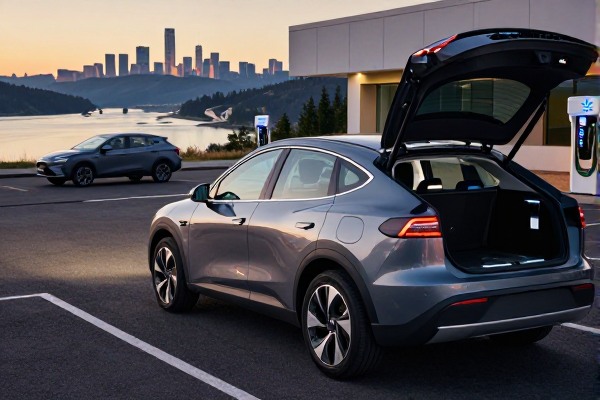
July 10, 2025 — Walmart has quietly become the second-largest operator of DC fast-charging stations in the United States, trailing only Tesla. The retail giant now operates more than 100 charging locations with over 1,000 plugs across 20 states, according to crowd-sourced data and permit filings. The move is part of a broader strategy to turn its massive parking lots into profit centers by luring electric vehicle drivers who spend 20–40 minutes shopping, dining, and using restrooms while their cars charge.
Walmart isn’t entering the charging business out of altruism. The company’s statement to Bloomberg News — “our broad footprint positions us to make EV charging more accessible” — downplays the real motive: money. With 4,600 Walmart stores and 601 Sam’s Club locations across the U.S., the retailer has prime real estate with existing electrical capacity. Analysts estimate that 90% of Americans live within 10 miles of a Walmart, making it a natural hub for EV charging.
The business model is simple: sell electricity at a small margin (or even at cost) while driving incremental sales from customers who are captive for 20–40 minutes. Studies show that stores with chargers see a 5% sales boost on average. Walmart already operates gas stations at many locations, and EV charging is a logical extension. The company has also learned from its existing partnership with Electrify America, which operates chargers at hundreds of Walmart parking lots. Now Walmart is building its own network to capture more value.
Because Walmart keeps its build-out quiet, exact numbers are hard to pin down. The company’s official website lists 72 active chargers in 17 states, with 11 more states “coming soon.” But crowd-sourced tracker Wattmart shows 100 stations with 838 plugs across 20 states, plus 116 stations under construction and 235 permits filed. That suggests Walmart’s internal count is outdated. The U.S. Department of Energy reports 61 stations with 512 plugs, but that data is also stale.
Walmart’s chargers are almost exclusively Level 3 DC fast chargers, capable of adding 200+ miles of range in about 30 minutes. The average price is just $0.42 per kilowatt-hour, significantly cheaper than networks like Electrify America ($0.56–$0.72/kWh) or EVgo ($0.50–$0.72/kWh). However, no locations are open yet in high-cost states like California, where plans are still in permitting. Walmart+ members get an additional discount when using the Walmart App to activate charging.
Recent permit filings reveal that Walmart is accelerating its build-out. In Q2 2025 alone, permits were filed for 47 new stations in 12 states, including California, New York, and Florida. The company has also partnered with ChargePoint to supply hardware, and some locations now feature two-level charging: one row for EVs and another for plug-in hybrids. Walmart is testing a membership program that bundles EV charging with free grocery delivery for Walmart+ subscribers, a move that could further boost loyalty.
The retailer is also retrofitting existing gas station canopies at some Supercenters to add EV chargers, a more cost-effective approach than building from scratch. This strategy is especially visible in Texas, where Walmart has the most active stations (over 30), followed by Florida and Georgia.
Walmart strongly recommends using the Walmart App to activate charging, and that’s the only way to get the Walmart+ discount. However, in states like California that mandate credit card readers, the machines also accept tap-to-pay and have a toll-free number (1-800-XXX-XXXX) for phone activation. The app is free and also allows drivers to check charger availability, reserve a slot, and pay.
For the 7.6 million EV and plug-in hybrid owners in the U.S., Walmart’s network offers a rare combination: cheap charging, abundant amenities, and consistent pricing. Unlike many standalone DC fast chargers that charge $0.50/kWh or more, Walmart’s $0.42/kWh average is a bargain. The presence of restrooms, food courts, and retail stores makes it a natural pit stop for road trips. And with 90% of Americans living within 10 miles of a Walmart, the network is already accessible to most drivers.
Walmart isn’t the only retailer betting on EV charging. Target, Kroger, and even Sheetz are installing chargers, but Walmart’s scale and real estate advantage make it a formidable competitor. If the company continues its current expansion pace, it could have 2,000+ plugs by the end of 2025, challenging Tesla’s Supercharger network in sheer volume.
Data sourced from Walmart’s official website, U.S. Department of Energy, Wattmart crowd-sourced tracker, and permit filings as of July 10, 2025.